Does Stress Lower Libido in Men? Understanding the Impact on Sexual Desire and Potential Solutions
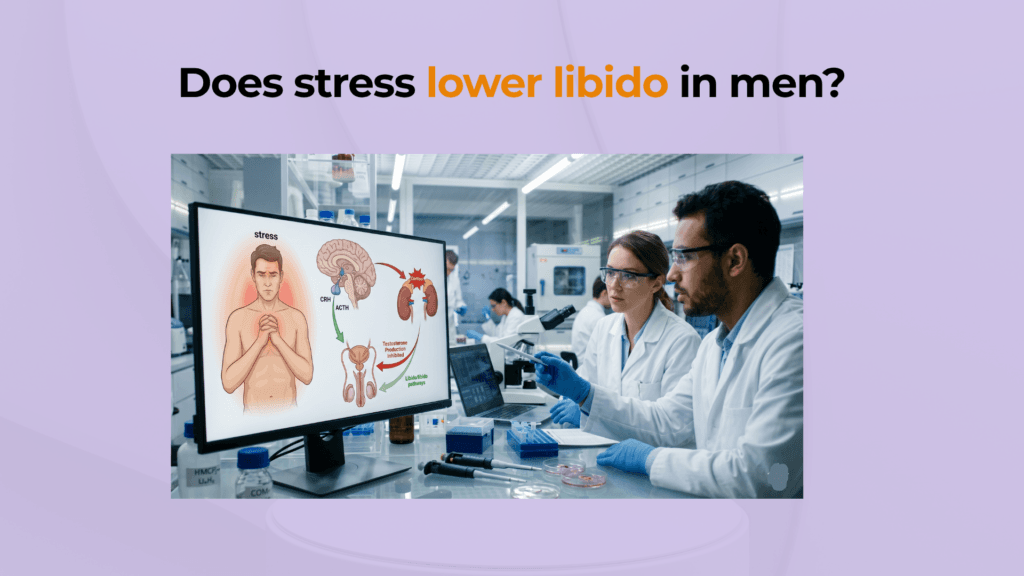
Stress lowers libido in men by triggering the release of cortisol, a hormone that can suppress testosterone production and redirect the body’s energy away from sexual desire as part of the fight-or-flight response, leading to diminished arousal.
Important Medical/Safety Disclaimer
This article provides general information and is not a substitute for professional medical advice. Persistent low libido should be discussed with a healthcare provider to rule out underlying medical conditions.
Stress as a Primary Driver of Low Libido in Men
Stress acts as a primary driver of low libido in men by initiating a cascade of physiological and psychological responses that deprioritize sexual function. When the body perceives a threat—whether it’s a looming work deadline, financial pressure, or a relationship conflict—it shifts into survival mode. In this state, functions deemed non-essential for immediate survival, such as sexual desire, are put on the back burner.
Stress’s broad definition in the context of male sexual health
In the context of male sexual health, stress is defined as any physical, emotional, or psychological strain that disrupts the body’s hormonal and mental equilibrium required for sexual desire. This isn’t limited to major life crises; it includes chronic, day-to-day pressures from work, family, and personal responsibilities. The body doesn’t differentiate between these sources; it reacts with the same chemical toolkit. The cumulative burden of this chronic stress, known as “allostatic load,” can gradually erode non-essential functions, with libido often being one of the first casualties.
Why libido is often one of the first functions to decline under stress
Libido is often one of the first functions to decline under stress because sexual desire is a biologically non-essential activity for immediate survival. When the brain perceives a threat, it triggers a resource allocation hierarchy. Energy is diverted to systems crucial for survival, such as increasing muscle tension and sharpening sensory awareness. Complex processes like digestion, immune response, and reproduction are down-regulated.
Think of it like a company cutting its research and development budget during a financial crisis to keep the factory running. The body does the same with libido, seeing it as an energy-intensive luxury it can’t afford when survival is on the line. This is not a weakness but a highly evolved and protective survival mechanism.
How Cortisol and Adrenaline Suppress Sexual Desire
Cortisol and adrenaline, the primary stress hormones, suppress sexual desire by directly interfering with the hormonal and neurological signals required for arousal. These chemicals are the frontline soldiers of the body’s stress response, designed for short-term action but damaging when chronically elevated.
The fight-or-flight response and its redirection of energy away from sex
The fight-or-flight response redirects the body’s energy and blood flow away from the reproductive system to prioritize muscle function and immediate survival, directly inhibiting sexual readiness. This is the work of the sympathetic nervous system, the body’s “gas pedal.” Adrenaline release increases heart rate and blood pressure, shunting blood to the limbs and brain. Simultaneously, this state is fundamentally opposed to the “rest-and-digest” state, governed by the parasympathetic nervous system (the “brake pedal”), which is essential for relaxation and sexual arousal. You cannot be physiologically ready for a threat and ready for intimacy at the same time.
How elevated cortisol can interfere with testosterone production
Chronically elevated cortisol levels can directly interfere with testosterone production by suppressing the signaling pathway from the brain to the testes. This command chain, known as the Hypothalamic-Pituitary-Gonadal (HPG) axis, is sensitive to high levels of stress hormones. Cortisol can essentially tell the brain to dial down the signals that command the testes to produce testosterone. The relationship is often inverse: as chronic stress and cortisol go up, testosterone production can go down, leading directly to a lower libido. While stress is not the only cause of low testosterone, it is a significant contributing factor.
The short-term vs. long-term effects of stress hormones on desire
The short-term effects of stress hormones may cause a temporary drop in desire, while their long-term effects can lead to chronic suppression of libido and hormonal dysregulation. An acute stressor, like a near-miss in traffic, might kill the mood for an hour, but the body quickly returns to baseline. However, chronic stress from job insecurity or relationship strain keeps cortisol levels persistently high. This is like a constant “brownout” for your hormonal system, weakening its ability to function optimally and leading to a sustained state of low desire.
Psychological Pathways: How Anxiety and Burnout Dampen Libido
Beyond hormonal effects, the psychological pathways of anxiety and burnout dampen libido by consuming mental energy, disrupting focus, and diminishing the capacity for pleasure. Your mind’s state is just as important as your body’s chemistry for sexual desire.
Anxiety’s impact on focus and arousal
Anxiety impacts libido by trapping focus in a loop of worry and threat-monitoring, making it mentally impossible to be present and engaged in sensual or erotic experiences. Sexual arousal requires a mental shift into the present moment, focusing on physical sensations and emotional connection.
Anxiety does the opposite, creating “cognitive noise”—a stream of distracting thoughts about work, finances, or other worries. This mental clutter hijacks your cognitive resources, preventing you from processing or responding to sexual cues. This distracted state is the antithesis of the mindfulness required for genuine desire.
Burnout’s effect on energy, motivation, and pleasure
Burnout, a state of chronic emotional and physical exhaustion from prolonged stress, directly erodes libido by depleting the energy, motivation, and capacity to experience pleasure required for sexual desire. According to the World Health Organization, burnout has three key dimensions: profound exhaustion (leaving no physical energy for sex), increased mental distance or cynicism (leaving no emotional capacity for intimacy), and a sense of ineffectiveness (eroding self-esteem). Sex is an activity that requires energy and enthusiasm, two resources that are utterly drained by burnout, making what should be a pleasurable act feel like another exhausting chore.
The cycle of low libido and self-doubt fueled by stress
Stress can fuel a negative cycle where low libido leads to performance anxiety and self-doubt, which in turn creates more stress and further suppresses sexual desire. This vicious cycle often unfolds in steps: 1) An external stressor lowers libido. 2) You or your partner notice the change. 3) This creates internal pressure to perform or worry about the relationship. 4) This new performance anxiety becomes another potent stressor. 5) This added stress further inhibits libido, reinforcing the belief that something is wrong and strengthening the cycle. The focus shifts from connection and pleasure to a stressful test of performance, a powerful inhibitor of desire.
Distinguishing Stress-Induced Low Libido from Other Causes
To effectively address low libido, it is crucial to distinguish between a primary driver like stress and other potential causes such as hormonal imbalances, medical conditions, or relationship issues. While stress can cause or worsen nearly every other factor, understanding the unique signs of each can help guide your next steps. The following table provides a general guide, but a professional diagnosis is always recommended.
| Cause | Key Differentiator | Overlap with Stress |
|---|---|---|
| Stress | Libido fluctuates with stress levels; often accompanied by burnout or anxiety. | High. Stress can cause or worsen all other factors. |
| Low Testosterone | Often includes other physical symptoms like fatigue, muscle loss, and mood changes, independent of life stressors. | High. Chronic stress can suppress testosterone. |
| Depression/Anxiety Disorder | Low libido is paired with persistent low mood, anhedonia, or pervasive worry that defines a clinical disorder. | High. Chronic stress is a major risk factor for both. |
| Relationship Issues | Desire is often low only with a specific partner but may be present otherwise (e.g., in fantasy). | High. Relationship issues are a significant source of stress. |
| Medication Side Effects | Low libido began or worsened after starting a new medication (e.g., certain antidepressants, blood pressure meds). | Low. The link is primarily pharmacological, not stress-based. |
Stress Management Strategies to Restore Libido
A proactive approach to stress management is one of the most effective strategies to restore libido, as it directly targets the root cause of the hormonal and psychological disruption. The goal is to activate the body’s relaxation response and break the cycle of chronic stress.
- ✓Mindfulness and Relaxation: Dedicate 10-15 minutes daily to meditation, deep breathing exercises, or yoga to activate the body’s relaxation response.
- ✓Improve Sleep Hygiene: Aim for 7-9 hours of quality sleep per night by creating a consistent routine and a dark, cool sleep environment.
- ✓Incorporate Physical Activity: Engage in at least 30 minutes of moderate exercise (like brisk walking, jogging, or weightlifting) most days of the week to reduce cortisol and boost mood.
- ✓Set Firm Boundaries: Learn to say “no” to new commitments when overloaded. Schedule dedicated time for rest and hobbies where you are not “on call” for work or family.
- ✓Practice Open Communication: Talk to your partner about your stress and its effect on your libido. Removing the pressure and secrecy can itself be a powerful stress reliever.
When to Seek Professional Help for Low Libido Related to Stress
While stress management is highly effective, seeking professional help is essential when low libido persists for several months despite your efforts or is accompanied by other concerning symptoms. It’s important to know when self-help is not enough and a medical evaluation is needed.
| Symptom / Situation | What It May Indicate | Action to Take |
|---|---|---|
| Libido remains low after 3+ months of active stress management. | The root cause may not be stress alone or the stress is too severe for self-management. | Consult a doctor or a therapist. |
| Low libido is accompanied by physical symptoms (e.g., erectile dysfunction, fatigue, muscle loss). | Potential underlying medical condition (e.g., low testosterone, thyroid issues). | Schedule a full physical and bloodwork with your doctor. |
| You experience persistent low mood, hopelessness, or loss of pleasure in all activities. | Possible signs of clinical depression. | See a doctor or a mental health professional immediately. |
| Low libido is causing significant distress in your relationship. | The issue has become a primary stressor itself. | Consider couples counseling or therapy. |
Taking Control: A Holistic Approach to Stress and Libido
Taking control of stress-related low libido requires a holistic approach that recognizes sexual desire not as an isolated function, but as a sensitive indicator of your overall mental and physical well-being. By understanding the deep connection between your mind, your hormones, and your sexual health, you can move from a state of worry to one of empowered action. Addressing stress isn’t just about restoring libido; it’s about reclaiming your overall quality of life.