Libido
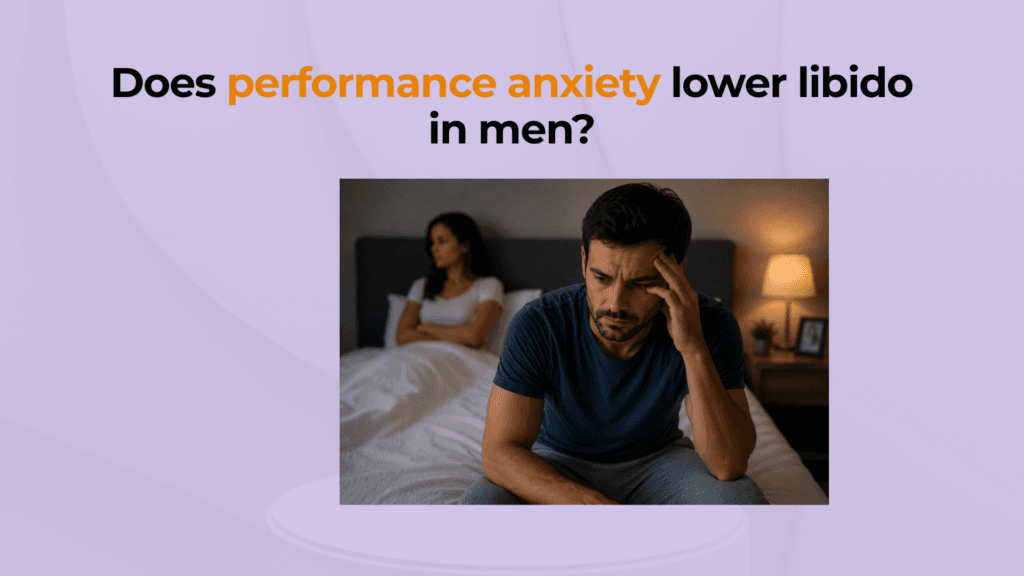
Does Performance Anxiety Lower Libido in Men?
Direct Answer
Yes. Performance anxiety can lower male libido when sex starts to feel like a test instead of a source of pleasure. The main pathway is threat monitoring, self-criticism, avoidance, and sympathetic nervous system arousal—not a simple “cortisol shuts desire off” mechanism.
Performance anxiety lowers libido when the brain begins to predict judgment, failure, embarrassment, or pressure before intimacy begins. Desire usually grows when the mind feels safe enough to pay attention to sensation, attraction, and connection. When the mind instead monitors performance, the body may be physically capable, but sexual interest becomes harder to access.
This is why performance anxiety often overlaps with low sexual confidence. A man may still love his partner and still be attracted, yet avoid sexual situations because the expected pressure feels stronger than the expected pleasure.
What Is Performance Anxiety and How Does It Affect Libido?
Performance anxiety is fear-based self-monitoring during sexual situations. Instead of experiencing intimacy from the inside, the man mentally steps outside himself and asks: “Am I hard enough?”, “Will I last?”, “Will she judge me?”, or “What if it happens again?”
General stress can reduce libido by draining sleep, mood, and energy. Performance anxiety is narrower: the sexual situation itself becomes the trigger. That trigger can reduce desire before physical arousal even has a chance to build.
Physiological Mechanism: Anxiety Shifts the Body Away From Sexual Readiness
Sexual arousal depends on attention, safety, and autonomic balance. Anxiety activates the sympathetic nervous system, which prepares the body for alertness and defense. Sexual arousal depends more on parasympathetic relaxation, genital blood-flow signaling, and mental absorption in sensation.
The problem is not that anxiety “destroys” libido in a single hormone event. The problem is that threat appraisal competes with sexual reward. When the brain treats sex as an exam, attention shifts away from desire and toward risk control.
This matters because erectile dysfunction and low libido can feed each other. Fear of losing an erection may reduce desire, and reduced desire can make erections less reliable because the man is not mentally absorbed in arousal.
The Psychological Feedback Loop: Why One Bad Experience Can Reduce Future Desire
Performance anxiety becomes persistent when the brain turns one difficult sexual event into a prediction system. The man stops asking “Do I want intimacy?” and starts asking “What if I fail again?” That question can reduce libido before touch, closeness, or attraction can develop.
A common pattern is called spectatoring: the man watches and grades his own performance instead of participating. This divides attention and replaces sexual curiosity with self-surveillance.
How to Tell Performance Anxiety From Medical Causes
Performance anxiety is more likely when libido drops mainly around sexual situations, especially after a past difficult experience. A medical cause is more likely when low desire is persistent across all situations, when morning erections disappear, when fatigue is severe, or when symptoms appear with diabetes, sleep apnea, medication changes, depression, pain, or cardiovascular risk.
| Pattern | Performance anxiety is more likely when… | Medical evaluation is more important when… |
|---|---|---|
| Onset | Symptoms began after a stressful sexual experience. | Symptoms appeared suddenly without a clear psychological trigger. |
| Context | Desire returns when pressure is removed. | Desire is low in almost every context, including private sexual thoughts. |
| Erections | Morning or solo erections are still present. | Morning erections are reduced or absent over time. |
| Health clues | Symptoms follow anxiety, shame, avoidance, or relationship tension. | There are diabetes, vascular, medication, sleep, hormonal, or neurological concerns. |
A basic medical check can help reduce fear. If hormone symptoms are present, low libido labs may include morning testosterone, glucose or A1c, lipid profile, thyroid testing when indicated, and medication review. Testosterone should not be assumed from anxiety symptoms alone.
Strategies to Restore Libido When Performance Anxiety Is the Driver
The goal is to make intimacy feel safe, voluntary, and sensory again. Recovery usually works best when the man stops treating every sexual moment as a pass-or-fail performance test.
1. Remove the performance goal
Use non-demand touch, affection, and closeness without penetration or orgasm as the immediate goal.
2. Name the anxiety out loud
A simple partner conversation can reduce secrecy, shame, and pressure.
3. Shift attention to sensation
Breathing, grounding, and touch-based awareness can interrupt self-monitoring.
4. Rule out medical contributors
Medical evaluation is especially important if symptoms are new, persistent, or paired with broader health changes.
Structured stress management can help when anxiety spreads beyond sex. For couples, sensate-focus style exercises may help because they move attention away from “performing” and back toward touch, communication, and sensory experience.
If anxiety remains strong, sex therapy, cognitive behavioral therapy, couples therapy, or treatment for a broader anxiety disorder may be appropriate. Medication changes, including antidepressant or erectile-dysfunction medication decisions, should be handled with a clinician rather than self-adjusted.
References & Evidence Sources
- European Association of Urology. Guidelines on Sexual and Reproductive Health: Management of Erectile Dysfunction.
- Endocrine Society. Testosterone Therapy for Hypogonadism Guideline Resources.
- Sexual Medicine Society of North America. What Is Sensate Focus and How Does It Work?.