
What Is Libido in Men? Meaning, Causes and Assessment
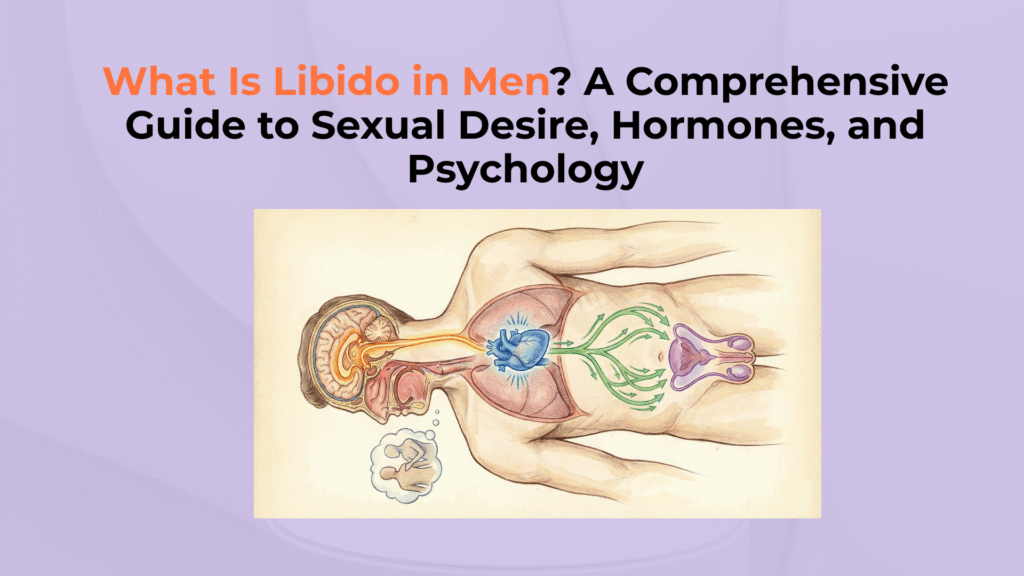
Libido in men means sexual desire: the interest or motivation to engage in sexual activity. Male libido reflects physical health, mood, personal experience and relationship context. Desire differs from an erection, orgasm and fertility. These functions require separate assessment. [1]
Male libido assessment connects sexual desire with hormones, health, medicines and relationships. The separate male sex drive guide focuses on terminology, measurement and common myths.
What does male libido include?
Male libido includes sexual thoughts, fantasies and interest in sexual activity with a partner or alone. The 14-item Sexual Desire Inventory separates partnered, or dyadic, desire from solitary desire. This distinction helps describe a man’s pattern without assuming that all sexual interest changes together. [1]
For example, a man who wants masturbation but has little interest in partnered sex reports a different pattern from a man who loses interest in both. These examples describe symptoms; they do not identify a cause.
Is libido the same as an erection?
Male libido describes wanting sexual activity; erectile function describes achieving and maintaining a penile erection. Erectile dysfunction (ED) means difficulty getting or keeping an erection firm enough for sex. A man reports desire and erection difficulties separately during assessment. [2]
| Sexual function | What it describes | Example question |
|---|---|---|
| Libido | Interest in sexual activity | Do I want sexual contact? |
| Erection | Penile firmness | Do I get and maintain an erection? |
| Orgasm | Sexual climax | Do I reach climax? |
| Ejaculation | Release of semen | Has ejaculation changed? |
ED involves vascular, nerve, hormonal or psychological factors. ED also creates worry about sexual performance, which contributes to changes in desire. Treating erection difficulty and understanding low libido require different questions. Read the comparison of libido and erectile function. [2]
What is a normal male libido?
Normal male libido varies between people and over time; no single frequency of sex defines a healthy sex drive. Assessment compares current desire with the person’s previous pattern, satisfaction and distress. A difference between partners’ desire does not, by itself, establish illness. [3]
Low libido and male hypoactive sexual desire disorder are different terms. Clinical assessment considers persistent or recurrent reductions in sexual thoughts and desire, relevant personal circumstances and alternative explanations. A symptom label alone does not establish a diagnosis. [1]
How does testosterone affect male libido?
Testosterone supports male libido, but a testosterone result does not predict an individual’s desire. Testosterone deficiency requires compatible symptoms and consistently low blood levels. The Endocrine Society recommends repeating a morning, fasting total testosterone measurement to confirm a low result. [4]
The hormone pathway involves distinct organs. The hypothalamus releases gonadotropin-releasing hormone (GnRH). GnRH stimulates the pituitary to release luteinizing hormone (LH) and follicle-stimulating hormone (FSH). LH stimulates testosterone production in the testes; FSH supports sperm production. This pathway regulates reproductive hormones rather than measuring sexual interest. [5]
What does a testosterone trial show about libido?
Testosterone treatment improved male sexual desire in a one-year placebo-controlled trial of 470 men aged 65 or older with low libido and average testosterone below 275 ng/dL. These eligibility criteria limit the result to a selected clinical population. [6]
The trial found improvement in 10 of 12 sexual activity measures. Changes in hormone levels were associated with changes in desire and activity, but not erectile function. Researchers found no clear testosterone threshold for these responses. The findings do not support prescribing testosterone to everyone with low libido. [6]
What causes low libido in men?
Low male libido is associated with stress, depression, relationship difficulties, certain medicines and some medical conditions. Different causes produce overlapping symptoms. A timeline of changes helps distinguish a new medicine effect from a longstanding desire pattern. [3]
- Review mood and stress: Identify low mood, anxiety, fatigue and worries that coincide with reduced sexual interest.
- Review relationship context: Describe conflict, discomfort, desire differences and changes in intimacy.
- Review medicines: Record new prescriptions and dose changes, including antidepressants. Discuss alternatives with the prescriber; do not stop treatment independently.
- Review health changes: Report erection problems, thyroid symptoms and symptoms of testosterone deficiency.
Stress does not prove that cortisol blocks dopamine or that testosterone is low. Avoid using an unmeasured hormone mechanism to explain an individual symptom. See the focused guides to stress and male libido and testosterone and desire.
How do clinicians assess low male libido?
Clinicians assess low male libido through medical and sexual history, examination and tests selected for the symptoms. The assessment includes mood, medicines, relationship context and other sexual difficulties. Hormone testing addresses suspected endocrine disease; it does not replace the history. [1]
- Describe the change: Record when desire changed and whether it affects partnered sex, solitary sex or both.
- Separate sexual symptoms: Identify reduced interest, erection difficulty, pain and orgasm or ejaculation changes.
- List exposures: Bring prescription medicines, supplements and alcohol or drug use details.
- Explain the effect: Describe personal distress and relationship effects without assigning a required sexual frequency.
- Discuss relevant tests: Ask about testosterone, prolactin or thyroid testing when the history suggests a hormonal condition.
How is low male libido treated?
Low male libido treatment addresses the identified cause, such as a medicine effect, depression, a relationship difficulty or hormone deficiency. Treatment goals reflect the person’s concerns. No single supplement or hormone treatment corrects every cause of low desire. [3]
Testosterone treatment requires a confirmed diagnosis and a discussion of risks and monitoring. The Endocrine Society recommends against testosterone treatment in men planning fertility in the near term and in men with certain conditions, including untreated severe obstructive sleep apnea. [4]
When should a man seek help for low libido?
A man should seek assessment for low libido when a persistent change causes concern, distress or relationship problems. Book a consultation for accompanying erection difficulties or suspected medicine effects. Bring the symptom timeline and medication list to support a specific treatment plan. [3]
References for male libido
These male libido references distinguish clinical guidance from a treatment trial. The trial reports results for eligible older men, not a universal treatment effect.
- European Association of Urology: Low sexual desire and male hypoactive sexual desire disorder.
- NIDDK: Symptoms and causes of erectile dysfunction.
- NHS: Low sex drive (loss of libido).
- Endocrine Society: Testosterone therapy for hypogonadism guideline.
- MedlinePlus: Hypogonadotropic hypogonadism.
- Cunningham GR et al. Testosterone treatment and sexual function in older men with low testosterone levels. JCEM. 2016;101:3096–3104.



4 Responses