FactBasedUrology · Libido & Metabolic Health
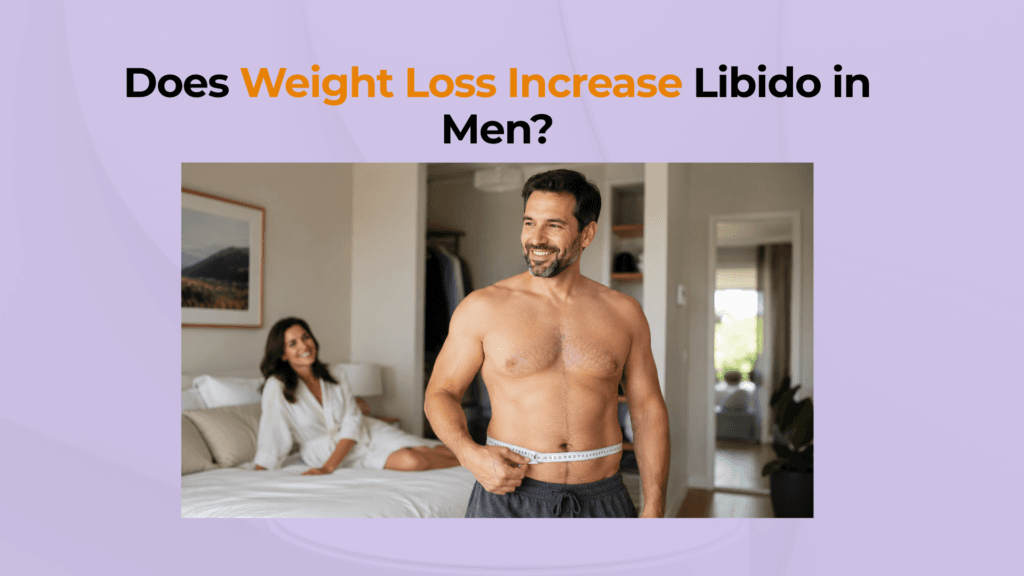
Does Weight Loss Increase Libido in Men?
Weight loss can improve male libido when excess body fat, insulin resistance, low testosterone, poor cardiovascular fitness, or low body confidence are part of the problem — but it is not a universal cure for every case of low desire.
Direct Answer
Weight loss can increase libido in men when the low desire is linked to excess body fat, metabolic dysfunction, low free testosterone, poor blood flow, fatigue, or reduced sexual confidence. The strongest expectation is not “fat loss automatically creates desire,” but “sustainable fat loss can remove several biological and psychological brakes on desire.”
This article is educational and does not replace medical care. Persistent low libido, sudden loss of morning erections, infertility concerns, severe fatigue, depression, testicular changes, chest symptoms, or medication-related sexual problems should be discussed with a qualified clinician.
Who Is Most Likely to Notice Libido Improvement After Weight Loss?
Weight loss is most likely to help libido when excess body fat is part of a larger metabolic pattern: low activity, increased waist size, insulin resistance, poor sleep, low cardiovascular fitness, reduced confidence, or symptoms consistent with low androgen availability.
| Pattern | Why weight loss may help | What still needs caution |
|---|---|---|
| Overweight or obesity with low energy | Fat loss may reduce inflammatory and hormonal stress while improving energy and movement tolerance. | Fatigue can also come from sleep apnea, anemia, depression, thyroid disease, or medication effects. |
| Large waist size and metabolic risk | Improved insulin sensitivity and blood pressure can support vascular health and sexual function. | Diabetes, hypertension, and cardiovascular symptoms need medical assessment. |
| Low confidence after weight gain | Body confidence, stamina, and sexual self-image can improve before hormones fully shift. | Performance anxiety or relationship conflict may continue even after weight loss. |
| Low testosterone symptoms with excess weight | Weight loss can increase testosterone in some men, especially when obesity is contributing. | True hypogonadism requires proper morning blood testing and clinical interpretation. |
The Hormonal Mechanism: Fat Tissue, Aromatase, and Testosterone
Body fat is not just stored energy. Adipose tissue behaves like an endocrine organ, and one key pathway involves aromatase, an enzyme that can convert testosterone into estradiol. In men with excess adipose tissue, this can contribute to a lower androgen signal and a less favorable hormonal environment for desire.
The key libido-relevant issue is often not only total testosterone. Free testosterone is the portion more directly available to tissues, and it can be influenced by obesity, SHBG changes, metabolic health, medication use, age, and underlying endocrine disease.
This is why the article should not promise that weight loss will raise desire in every man. A safer statement is: men with excess fat mass and obesity-related hormonal suppression may see testosterone and sexual function improve as weight loss becomes sustained.
The Metabolic and Vascular Mechanism: Insulin, Blood Flow, and Arousal Capacity
Libido is desire, but sexual response also depends on vascular capacity, energy, stamina, and arousal confidence. Weight loss may support libido indirectly by improving insulin sensitivity, lowering blood-pressure strain, reducing inflammation, and improving endothelial function.
Cardiovascular health matters because penile erection is a vascular event. When metabolic disease damages the endothelium, sexual performance can suffer, and that performance worry can feed back into desire.
How Much Weight Loss May Matter?
A practical first target is often 5–10% of body weight because this range can improve metabolic risk markers in many adults. For libido, that does not mean 5–10% is a guaranteed sexual-health threshold. It means the body is more likely to experience meaningful changes in insulin sensitivity, inflammation, blood pressure, fitness, and sometimes testosterone as weight loss becomes sustained.
| Weight-loss range | Likely dominant benefit | Libido expectation |
|---|---|---|
| Early loss First few pounds or kilograms | Confidence, motivation, less bloating, better movement. | Some men notice psychological desire before hormones change. |
| About 5% | Early metabolic improvement, better activity tolerance, possible sleep and energy gains. | May help if low libido is linked to fatigue, inactivity, or confidence. |
| About 10% or more | Greater chance of measurable improvements in metabolic markers and testosterone in men with obesity-related suppression. | More plausible hormonal contribution, but still not guaranteed. |
| Rapid/extreme loss | High stress load, muscle loss risk, low energy availability, poor recovery. | Can reduce libido, especially with overtraining or severe caloric restriction. |
Timeline: When Could Libido Improve?
Libido changes after weight loss usually do not follow a clean calendar. Confidence, energy, and stamina may improve early. Metabolic and hormonal changes usually require sustained lifestyle change over months. If low libido was caused mainly by medication, depression, sleep apnea, thyroid disease, relationship distress, or primary hypogonadism, weight loss alone may not solve it.
Is Low Libido From Weight, or From Something Else?
This is the most important safety layer. Low libido can be lifestyle-related, but it can also be a sign of endocrine, vascular, psychological, medication-related, or sleep-related disease.
| Signal | More consistent with weight/metabolic contribution | Needs stronger medical attention |
|---|---|---|
| Onset | Gradual decline after weight gain, inactivity, poor sleep, and low fitness. | Sudden libido loss, new erectile dysfunction, or abrupt loss of morning erections. |
| Erections | Desire is low, but morning erections still occur sometimes. | Morning erections disappear, erections weaken rapidly, or vascular symptoms appear. |
| Mood and stress | Lower confidence and avoidance after weight gain. | Depression, panic, severe anxiety, trauma, or relationship distress dominate. |
| Medication changes | No recent medication change. | Symptoms begin after SSRIs, opioids, finasteride, some blood-pressure drugs, or other libido-affecting medicines. |
| Hormone signs | Possible obesity-related low testosterone pattern. | Infertility, testicular shrinkage, breast tenderness, very low energy, hot flashes, or pituitary symptoms. |
When low desire overlaps with erection problems, it helps to separate desire from mechanics. Libido and erectile function are connected, but they are not identical systems.
A Safe 8-Week Libido-Support Weight-Loss Reset
The goal is not aggressive dieting. The goal is to remove metabolic brakes while protecting testosterone, sleep, muscle, and recovery.
| Phase | Action | Why it supports libido |
|---|---|---|
| Weeks 1–2 | Walk 10 minutes after meals, reduce sugary drinks, and set a consistent sleep window. | Improves glucose handling, energy stability, and recovery without shock dieting. |
| Weeks 3–4 | Add two full-body resistance sessions weekly and keep protein consistent. | Protects muscle and supports androgen-sensitive tissue while losing fat. |
| Weeks 5–6 | Build toward 150 minutes of moderate aerobic activity weekly. | Supports cardiovascular and endothelial health, which can improve sexual function capacity. |
| Weeks 7–8 | Track waist, weight trend, sleep, morning erections, energy, mood, and sexual desire. | Shows whether the problem is improving with metabolic change or needs medical workup. |
If you already suspect obesity-related low libido, the strongest plan combines fat loss, resistance training, aerobic fitness, sleep correction, and medical review when symptoms persist.
What Not to Do
- Do not assume low libido is only a weight problem.
- Do not crash diet or combine severe calorie restriction with heavy training.
- Do not start testosterone therapy without proper testing and clinical diagnosis.
- Do not ignore loss of morning erections, chest symptoms, severe fatigue, depression, infertility concerns, or testicular changes.
- Do not judge progress only by scale weight; waist size, energy, sleep, strength, and sexual function matter too.
This matters because extreme dieting can create the opposite of the desired outcome. Severe restriction can signal low energy availability, raise stress burden, impair sleep, reduce training recovery, and worsen sexual desire.
When to Test Testosterone or Seek Medical Evaluation
Medical evaluation is appropriate when libido remains low despite consistent lifestyle improvement, or when symptoms suggest endocrine, vascular, sleep, mood, medication, or relationship causes. A diagnosis of testosterone deficiency should not be based on desire alone. It requires symptoms plus consistently low testosterone on appropriate morning testing.
Ask a clinician about evaluation if you have:
- Persistent low libido for several months.
- Loss of morning erections or new erectile dysfunction.
- Severe fatigue, depressed mood, or reduced exercise tolerance.
- Infertility concerns, testicular changes, breast tenderness, or hot flashes.
- Diabetes, high blood pressure, sleep apnea symptoms, thyroid symptoms, or recent medication changes.
If testing confirms low testosterone and low libido, the next step is to identify the cause rather than jumping straight to treatment.
FAQ: Direct Answers
Can weight loss increase libido in men?
Yes, weight loss can increase libido when excess fat, insulin resistance, low testosterone, poor fitness, or low confidence are contributing to reduced desire. It is not guaranteed when libido loss is caused by medication, depression, thyroid disease, sleep apnea, relationship stress, or primary hypogonadism.
How much weight loss is needed before libido improves?
Some men notice confidence and energy improvements early, but metabolic and hormonal improvements usually need sustained weight loss over months. A 5–10% body-weight reduction is a practical first target, not a guaranteed libido threshold.
Can rapid weight loss lower libido?
Yes. Rapid weight loss, severe calorie restriction, poor sleep, and overtraining can lower libido by increasing stress load and reducing energy availability. Sustainable loss is safer for hormone and sexual health.
Should I test testosterone before losing weight?
Testing is reasonable when low libido is persistent or comes with loss of morning erections, severe fatigue, infertility concerns, testicular changes, or other low-testosterone symptoms. A clinician usually confirms low testosterone with repeated morning blood tests.
Can weight loss improve erections too?
It can, especially when erectile problems are linked to obesity, poor endothelial function, high blood pressure, insulin resistance, or low fitness. Desire and erection quality are connected, but each should be assessed separately.
Evidence Sources Used
The evidence layer supports cautious wording rather than absolute promises. The strongest sources show that obesity is associated with lower testosterone, weight loss can improve testosterone in many men with obesity, lifestyle weight loss can improve erectile function in obese men with erectile dysfunction, healthy weight loss should be gradual, and testosterone deficiency diagnosis requires symptoms plus consistently low testosterone.
- Impact of weight loss on testosterone levels
- Endocrine Society testosterone therapy guideline
- Endocrine Society patient guidance on hypogonadism testing
- CDC guidance on steady weight loss
- CDC physical activity guidance
- Lifestyle changes and erectile dysfunction in obese men
- American Heart Association scientific statement on obesity and cardiovascular disease