Can Obesity Lower Libido in Men?
An evidence-based review of how excess adiposity can affect sexual desire, erectile quality, hormone balance, and overall metabolic health.
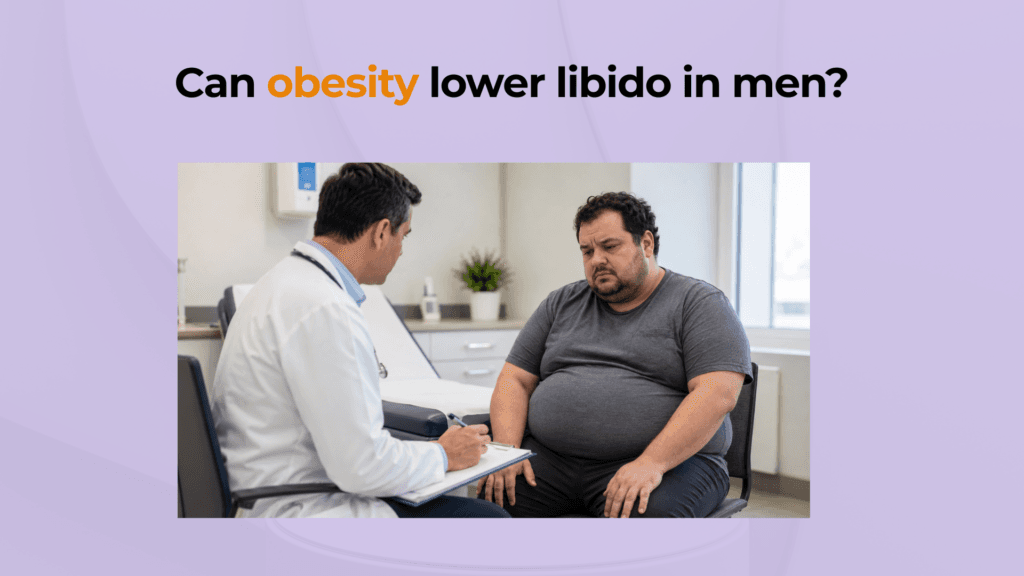
The relationship between body composition and sexual desire is not just about appearance or confidence. In many men, obesity changes hormone handling, vascular health, sleep quality, mood, and energy availability at the same time. That is why low libido in obesity often reflects a broader metabolic picture rather than one isolated cause.1,4,5
Obesity is also linked to sexual dysfunction more broadly, including erectile problems and lower satisfaction, so the complaint may involve both desire and performance rather than desire alone.3,4,6
This page explains the main biological and psychological pathways linking obesity with reduced libido, highlights common comorbidities that make symptoms worse, and outlines the management strategies most strongly supported by current evidence.1,3,6
What Is the Biological Mechanism Behind the Obesity-Libido Connection?
The obesity-libido connection is biologically real, but it is more nuanced than a single “low testosterone” story. In men with obesity, total testosterone is often lower and SHBG is commonly lower as well; free testosterone may remain normal in milder obesity but is more likely to fall as obesity becomes more severe. Adipose tissue can also increase peripheral conversion of testosterone to estradiol through aromatase activity, adding further pressure to the reproductive axis in some men.1,2
How does body fat affect testosterone and estradiol?
Fat tissue is not metabolically passive. Adipose tissue influences androgen handling, and visceral adiposity is associated with lower measured testosterone concentrations. Current endocrine reviews emphasize that a large part of the fall in total testosterone in obesity reflects lower SHBG, while more severe obesity is more likely to suppress free testosterone as well.1
Adipose tissue also contains aromatase, an enzyme that converts testosterone to estradiol. That does not mean every obese man has the same estrogen-driven picture, but it is one biologically plausible pathway by which excess adiposity can push sex-hormone balance in an unfavorable direction.2
- Higher adiposity: more metabolic and endocrine disturbance.
- Lower SHBG: lower measured total testosterone is common in obesity.1
- Greater obesity severity: free testosterone is more likely to fall as well.1
- Aromatase activity: can increase peripheral testosterone-to-estradiol conversion.2
Does circulatory damage also play a role?
Yes. Obesity is strongly linked to endothelial dysfunction, inflammation, insulin resistance, and reduced nitric oxide bioavailability. Those vascular changes matter most for erectile function, but repeated erection problems can also feed back into libido by reducing confidence, sensation, and willingness to initiate sex.3,6
Insulin resistance, dyslipidemia, and chronic inflammatory signaling help drive that vascular injury. That is one reason why article pages such as cardiovascular health and libido matter in this topic: obesity-associated sexual symptoms are often part of a broader cardiometabolic syndrome rather than a stand-alone sexual disorder.3,6
Are Psychological and Lifestyle Factors Also Involved?
Yes. Obesity is linked not only to hormonal and vascular changes, but also to depression, stigma, body-image distress, relationship strain, fatigue, and inactivity. These can all reduce sexual interest even when hormone changes are modest.4,5
Mood, self-image, sleep, and motivation
Reviews of obesity, mental health, and sexual function describe a pattern in which depressive symptoms, anxiety, and poor body image can reduce sexual motivation and satisfaction. Those mental-health effects do not make the problem “less real”; they are part of the total disease burden associated with obesity.4,5
Obstructive sleep apnea is another common obesity-related factor. It is associated with poorer sexual quality of life and lower testosterone in many men, particularly when apnea is severe.1,7
What Steps Can Men Take to Restore Sexual Health?
The strongest evidence supports treating the underlying metabolic problem. In obesity-related low libido, management usually centers on weight reduction, physical activity, treatment of sleep apnea and depression when present, optimization of diabetes and cardiometabolic risk, and careful hormone evaluation when symptoms are significant.1,6,7
Can losing weight reverse low libido?
In many men, yes. Weight loss is associated with higher testosterone concentrations and better sexual function, and bariatric-surgery meta-analyses report improvements in erectile function, sexual desire, and satisfaction in men with severe obesity. The degree of hormonal improvement tends to track with the amount of weight lost rather than with glucose control alone.1,6
Figure 3: Mood and Motivation Pathway. The revised pathway ties obesity-related low mood and poor sleep to neuroendocrine stress signaling and lower sexual initiation, rather than showing them as a vague psychological effect alone.4,5,7
That is why a page such as weight loss and libido is not just a lifestyle topic. It sits at the center of restoring sexual health in obesity because it can improve hormonal balance, cardiovascular health, sleep quality, confidence, and energy at the same time.1,6
Clinical Intervention Checklist
| Factor | Why it matters | Primary response |
|---|---|---|
| Lower testosterone / lower SHBG | Common biochemical pattern in obesity | Weight reduction and targeted hormone evaluation1 |
| Aromatase activity in adipose tissue | Can shift androgen-estrogen balance | Reduce excess adiposity2 |
| Endothelial dysfunction | Impairs nitric oxide signaling and erections | Exercise, cardiometabolic treatment, risk-factor control3 |
| Sleep apnea | Worsens fatigue and sexual quality of life | Sleep evaluation, CPAP when indicated, weight loss7 |
| Depression / body-image distress | Reduces desire, initiation, and satisfaction | Mental-health treatment and broader obesity care4,5 |
Bottom line
Obesity can lower libido in men, but usually through a cluster of mechanisms rather than one isolated defect. Hormonal changes, endothelial dysfunction, depression, poor sleep, and sleep apnea often overlap, which is why the complaint should be approached as a cardiometabolic and quality-of-life issue as much as a sexual one.1,3,4,5,7
If symptoms persist, further evaluation may include early-morning hormone testing, review of medications and sleep, and assessment for pathologic hypogonadism when clinically appropriate. Routine testosterone therapy is not the default answer for simple obesity-related low testosterone; significant weight loss and treatment of obesity-related comorbidities remain the most evidence-supported first-line strategy.1
Always discuss persistent low libido, erectile dysfunction, or suspected hormonal symptoms with a qualified urologist, endocrinologist, or primary care clinician.
References
- Muir CA, Grossmann M. Low Testosterone Concentrations in Men With Obesity. Journal of Clinical Endocrinology & Metabolism. 2025. Available at: https://academic.oup.com/jcem/article/110/9/e3125/8058933
- Cohen J, Nassau DE, Patel P, Ramasamy R. Low Testosterone in Adolescents & Young Adults. Frontiers in Endocrinology. 2020. Available at: https://www.frontiersin.org/journals/endocrinology/articles/10.3389/fendo.2019.00916/full
- Moon KH, Park SY, Kim YW. Obesity and Erectile Dysfunction: From Bench to Clinical Implication. World Journal of Men’s Health. 2019. Available at: https://pmc.ncbi.nlm.nih.gov/articles/PMC6479091/
- Sarwer DB, Spitzer JC. Obesity and Sexual Functioning. Current Obesity Reports. 2019. Available at: https://pmc.ncbi.nlm.nih.gov/articles/PMC6448569/
- Esfahani SB, Pal S. Obesity, mental health, and sexual dysfunction: A critical review. Health Psychology Open. 2018. Available at: https://pmc.ncbi.nlm.nih.gov/articles/PMC6047250/
- Xu J, Zhang Y, Fan Y, et al. Effect of Bariatric Surgery on Male Sexual Function: A Meta-Analysis and Systematic Review. Sexual Medicine. 2019. Available at: https://pmc.ncbi.nlm.nih.gov/articles/PMC6728768/
- Hammoud AO, Walker JM, Gibson M, et al. Sleep Apnea, Reproductive Hormones and Quality of Sexual Life in Severely Obese Men. Obesity. 2011. Available at: https://pmc.ncbi.nlm.nih.gov/articles/PMC3713783/