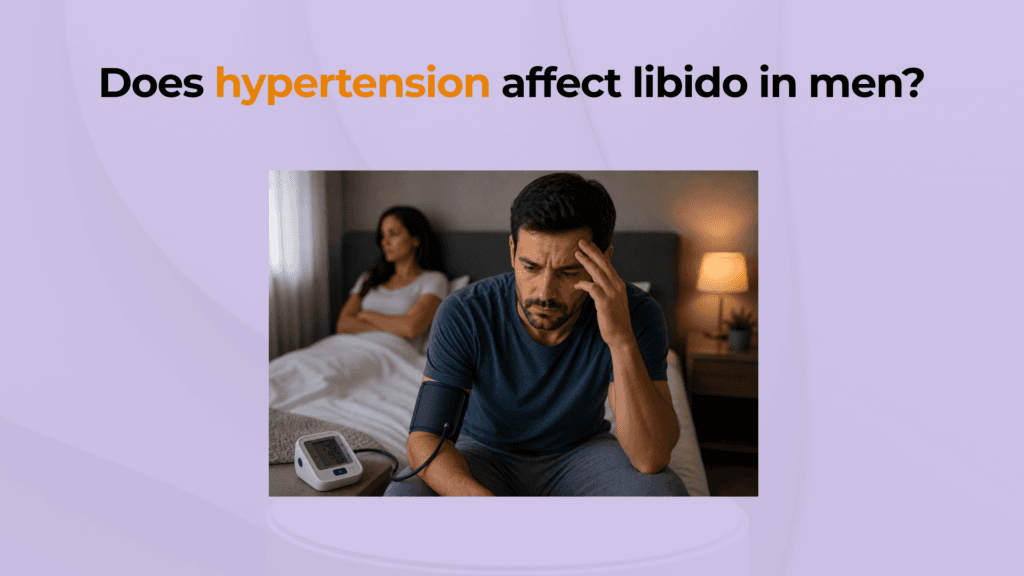
Does Hypertension Affect Libido In Men?
Yes. Hypertension can affect male libido through vascular damage reducing nitric oxide availability, certain medications creating side effects, and the psychological burden of chronic disease management.
Important Medical/Safety Disclaimer
Do not change or stop any prescribed hypertension medications based on this information alone. Always consult your prescribing physician before altering treatment plans. Abrupt cessation of blood pressure medication poses serious cardiovascular risks.
For many men facing a diagnosis of high blood pressure, questions inevitably arise regarding sexual health. While hypertension is primarily discussed in terms of heart risk and stroke prevention, it carries significant implications for intimacy and quality of life. Understanding the relationship between cardiovascular health and sexual wellness allows for proactive management rather than silent deterioration.
The impact of high blood pressure on libido is rarely simple; it involves a triad of biological factors, pharmacological interactions, and psychological adaptation. By distinguishing between direct vascular damage and medication side effects, patients can engage more effectively with their providers to maintain both heart health and sexual vitality.
The Direct Biologic Link Between Blood Pressure And Sexual Function
High blood pressure directly affects male sexual function by damaging endothelial tissue and reducing nitric oxide production necessary for vascular response.
How Endothelial Damage Impairs Sexual Response
Endothelial dysfunction from chronic hypertension impairs sexual response by limiting nitric oxide signaling required for healthy blood flow to genital tissues. This process is systemic; the arteries that supply the heart also supply the penis. When the endothelium—the delicate inner lining of blood vessels—becomes inflamed or damaged due to high pressure, its ability to produce nitric oxide diminishes. Since nitric oxide is the primary chemical messenger responsible for relaxing smooth muscle in erectile tissue to allow blood influx, a deficiency leads to poor rigidity and delayed onset of erection.
Crucially, this is a physiological deficit distinct from performance anxiety. It reflects the physical state of the vascular system. Chronic exposure to elevated blood pressure increases arterial stiffness, making the vessels less compliant. Over time, the loss of vascular elasticity means that even during periods of arousal, the penile tissue cannot expand sufficiently to trap blood, resulting in soft erections or an inability to maintain an erection throughout sexual activity.
Why Untreated Hypertension Increases Sexual Risk
Untreated hypertension increases sexual risk factors progressively as arterial hardening worsens and systemic circulation continues to deteriorate. The timeline matters significantly; men who maintain blood pressure within target ranges have better odds of preserved sexual function compared to those who endure years of uncontrolled pressure. Without intervention, micro-damage accumulates in the microvasculature, eventually reaching a point where reversal becomes difficult and permanent fibrosis sets in.
Early intervention, however, has been shown to significantly improve outcomes, potentially restoring partial endothelial function and improving responsiveness to standard therapies.
Blood Pressure Medications And Their Sexual Side Effect Profiles
Various blood pressure medications show different rates of sexual side effects depending on mechanism and generation.
Beta-Blockers And Their Potential Impact
Beta-blockers show higher rates of sexual side effects compared to other antihypertensive classes in multiple clinical comparisons. Historically used as first-line therapy, older generations like atenolol and metoprolol were associated with increased fatigue and decreased libido. This occurs because beta-blockers antagonize the sympathetic nervous system, which plays a role in sexual arousal and vasodilation pathways. By dampening these signals, some men experience reduced desire or difficulty achieving arousal despite adequate blood pressure control.
However, it is vital to contextualize these findings. Newer generations of beta-blockers often demonstrate improved tolerability profiles with fewer metabolic side effects. Furthermore, the severity of side effects varies widely among individuals. Many men tolerate beta-blockers perfectly well without noticing changes in their sex lives, suggesting that genetic metabolism and individual receptor sensitivity play roles alongside the drug mechanism itself.
Safer Alternatives For Blood Pressure Control
Several alternative blood pressure control medications show lower rates of sexual side effects in comparative clinical studies. Classes such as Angiotensin Converting Enzyme (ACE) Inhibitors and Angiotensin II Receptor Blockers (ARBs) are frequently preferred when sexual side effects are a major concern. These drugs work on the renin-angiotensin-aldosterone system, which regulates blood volume and vessel constriction, but tend to spare the sympathetic nervous system pathways crucial for sexual arousal.
Similarly, Calcium Channel Blockers are often noted for having neutral effects on sexual function. However, selection is never purely about sexual side effects. Medical contraindications may require a patient to remain on a beta-blocker—for example, if they have atrial fibrillation or coronary artery disease. Therefore, while alternatives exist, the decision to switch medications must be made within the context of the patient’s broader cardiovascular health profile.
Psychological And Lifestyle Factors Influencing The Relationship
Psychological and lifestyle factors significantly influence the relationship between hypertension and libido beyond physiological mechanisms.
The Stress-Chronic Illness Cycle
Chronic illness stress creates a cycle where hypertension anxiety compounds sexual worry, affecting both desire and performance. A diagnosis of hypertension can be a stressful event, triggering worries about longevity and lifestyle restrictions. This psychological burden can manifest as decreased libido, as the brain prioritizes survival vigilance over sexual drive. Performance anxiety follows, where fear of failure creates a feedback loop that further inhibits arousal, independent of physical capability.
Managing Sexual Health While Treating Hypertension
Effective sexual health management during hypertension treatment involves open provider communication, lifestyle modifications, and medication consideration discussions. The goal is not necessarily to abandon cardiovascular protection but to find the balance where both systems thrive. Patients often report feeling empowered simply by voicing their concerns; acknowledging the issue as a valid part of the treatment plan can alleviate the shame associated with sexual dysfunction.
Communication Strategies With Your Healthcare Team
Structured dialogue leads to informed joint decisions about treatment adjustments. Preparing for appointments can help frame the conversation professionally. Patients should document when changes were noticed relative to medication initiation. Bringing a complete medication list including dosages ensures accuracy. While insurance or coverage constraints may limit specialty referral options, establishing a partnership with the current provider is the most effective starting point for optimization.
Lifestyle Modifications That Support Both Conditions
Lifestyle modifications that support both blood pressure control and sexual health include regular exercise, balanced nutrition, sleep optimization, and weight management. Exercise, specifically aerobic activity, acts as a natural endothelial healer, boosting nitric oxide levels naturally. Diet patterns rich in fruits, vegetables, and low in sodium improve vascular flexibility. Sleep hygiene is equally critical; poor sleep disrupts hormonal regulation and elevates blood pressure, compounding the problem.
These non-pharmacological interventions serve as synergistic supports that can enhance the efficacy of medication and improve overall sexual resilience.
Actionable Self-Management Checklist
- Discuss openly: Prepare specific examples of concerns to share at next provider visit.
- Review medications: Bring complete current medication list including dosages to appointment.
- Document timeline: Note when sexual changes were first noticed relative to medication initiation or dose changes.
- Evaluate lifestyle: Assess current diet, activity, sleep, and stress management against recommendations.
- Plan follow-up: Schedule check-in to assess whether adjustments produced desired effects.
- Maintain treatment: Continue taking prescribed blood pressure medications until discussing alternatives with provider.
- Consider specialist: Ask about referral to urology or cardiology specialization for complex cases.