Hypertension and Male Libido: Desire, Erections, and Medication Effects
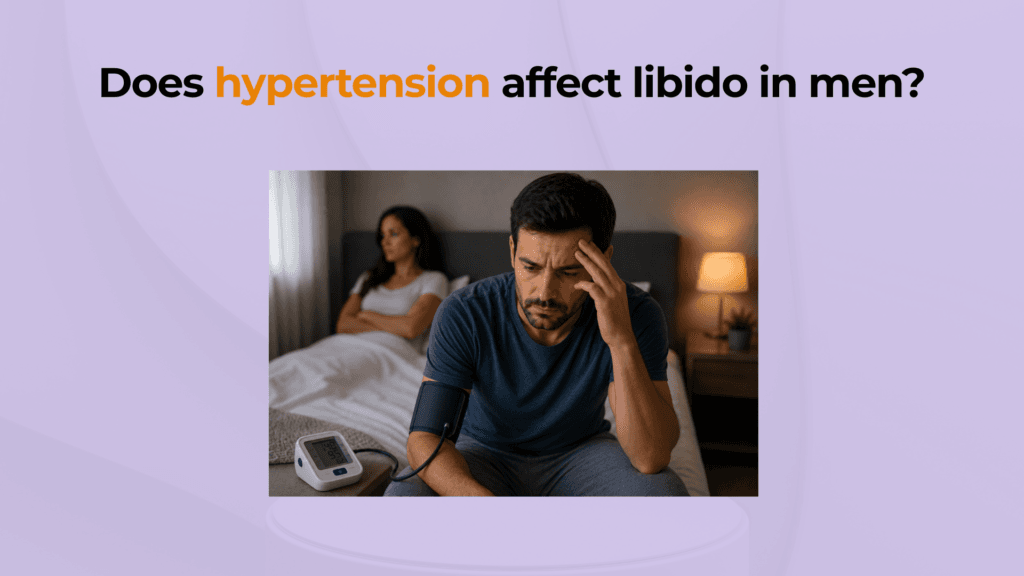
Men with hypertension sometimes experience low libido, but reduced sexual desire is not the same as the erection problems linked to high blood pressure. Assessment should distinguish medication effects, psychological factors, and other health conditions. [1] [2]
Hypertension means persistently high blood pressure. Libido means sexual desire. Erectile dysfunction means difficulty obtaining or maintaining an erection. These conditions overlap, but a blood pressure reading does not measure desire.
Does hypertension reduce blood flow or male sexual desire?
Hypertension damages blood vessels and reduces blood flow relevant to erections; this vascular explanation does not by itself establish why a man has low sexual desire. [1]
The American Heart Association explains that inadequate penile blood flow contributes to erectile dysfunction. Describe lack of interest in sex separately from difficulty achieving an erection. A man who wants sex but cannot maintain an erection needs a different assessment from a man with little interest and preserved erections.
| Symptom during hypertension treatment | Question to clarify it | Assessment focus |
|---|---|---|
| Low libido | Have sexual thoughts or interest decreased? | Medication history, mood, health, and sexual context. |
| Erectile dysfunction | Does an erection fail despite sexual interest? | Vascular health, medicines, and other erectile dysfunction causes. |
| Fatigue or dizziness | Does low energy or lightheadedness limit intimacy? | Symptoms, blood pressure readings, and treatment tolerability. |
| Fear of sexual activity | Does worry about heart health prevent intimacy? | Individual cardiovascular assessment and counseling. |
Do blood pressure medicines reduce male libido?
Some blood pressure regimens affect male libido, but sexual effects vary across drugs and individuals. A medication change preceding low desire is a reason for review, not proof of causation. [2]
A 2025 single-centre, open-label randomized trial studied 130 men with essential hypertension for six months. It compared allisartan plus amlodipine with allisartan plus extended-release metoprolol.
In the amlodipine combination group, total sexual function scores and several satisfaction measures improved, but sexual desire did not improve significantly (P=0.08). In the metoprolol combination group, desire scores declined (P=0.003). Both regimens lowered blood pressure.
This study supports discussing treatment tolerability; it does not establish that every metoprolol user loses desire or that amlodipine treats low libido. The study was open-label, used specific combination regimens, and followed patients at one centre. P values are not the percentage of men helped or harmed.
Read the beta-blockers and male libido guide for medication-specific evidence. A clinician considers the reason for the medicine and the rest of the cardiovascular history before changing it.
Can erection side-effect percentages be used as libido statistics?
Erection side-effect percentages cannot be used as libido statistics because they measure different outcomes. A study reporting erectile dysfunction does not establish the frequency of reduced sexual desire.
The Treatment of Mild Hypertension Study randomized 902 adults, including 557 men aged 45–69, to placebo or one of five blood pressure medicines. All participants received intensive lifestyle counseling. New erection problems through 24 months occurred in 17.1% of men assigned chlorthalidone versus 8.1% assigned placebo. [3]
The difference was 9 percentage points, not a 9% prevalence of low libido. Differences between chlorthalidone and placebo were not significant through 48 months. Erection-problem rates with acebutolol, amlodipine, and enalapril were similar to placebo.
This older trial assessed sexual function through physician interviews. Its results caution against assigning every sexual symptom to medication and do not provide a universal ranking of drugs for male desire.
What else explains low libido in men with hypertension?
Low libido in men with hypertension also requires assessment of stress, depression, relationship difficulties, other medicines, and coexisting illness. Treating blood pressure alone does not answer all these questions. [4]
Record whether desire changed before treatment, after a new prescription, or during a period of illness or stress. Report erectile problems separately. Review diabetes-related libido changes and antidepressant sexual side effects when relevant.
Ask whether hormone assessment is indicated rather than assuming that high blood pressure means low testosterone. A broader assessment helps select the next step without attributing desire to one unmeasured mechanism.
Should men stop hypertension medicines when libido falls?
Men should discuss reduced libido with their prescriber and continue hypertension medicines as directed until an agreed treatment change. Stopping prescribed treatment without review risks losing blood pressure control. [5]
Bring blood pressure readings, the medication list, doses, and symptom timing. The clinician reviews treatment benefit, side effects, interactions, and alternatives. A change requires follow-up for blood pressure and the specific sexual symptom.
- Record desire separately from erections, orgasm, fatigue, and dizziness.
- Compare symptoms with prescription starts and dose changes.
- List other medicines, supplements, and recreational substances.
- Ask whether a suitable alternative preserves the treatment’s cardiovascular purpose.
- Agree on a follow-up date and what improvement would mean.
Is sexual activity safe when hypertension and low libido coexist?
Sexual activity safety depends on cardiovascular stability and symptoms, not libido alone. Men with severe cardiovascular symptoms or unstable angina need assessment and stabilization before sexual activity. [6]
The American Heart Association considers sexual activity generally safe when heart disease is stable. Ask for an individualized assessment with associated heart disease, exertional symptoms, or uncertainty about activity.
Seek emergency help for chest pain, severe shortness of breath, or collapse. Tell the emergency team about any erectile dysfunction medicine taken. PDE5 inhibitors such as sildenafil or tadalafil must not be combined with nitrate treatment.
Erectile dysfunction medicines address erections rather than automatically restoring sexual desire. Discuss both symptoms with the clinician when they coexist.
How should men track libido while treating hypertension?
Men treating hypertension should track blood pressure control and libido as separate outcomes. Better blood pressure readings do not prove improved desire, and improved desire does not establish adequate cardiovascular treatment.
Use the same brief symptom description at each follow-up: frequency of sexual thoughts, interest in partnered or solitary sex, erectile reliability, and distress. Avoid treating a partner’s preferred sexual frequency as a medical target.
Discuss persistent low desire even after blood pressure is controlled. The aim is effective hypertension treatment alongside assessment of the sexual concern, with changes chosen for the individual’s clinical situation.
References for hypertension and male libido
Hypertension sources below distinguish vascular erection problems, medication-related desire outcomes, and treatment guidance.
- American Heart Association. High blood pressure and sexual function.
- Wang et al. Two allisartan-based antihypertensive regimens and male sexual function. 2025.
- Grimm et al. Treatment of Mild Hypertension Study sexual function results. 1997.
- NHS inform. Low sex drive.
- American Heart Association. Managing blood pressure medicines.
- American Heart Association. Sexual activity and heart disease.