
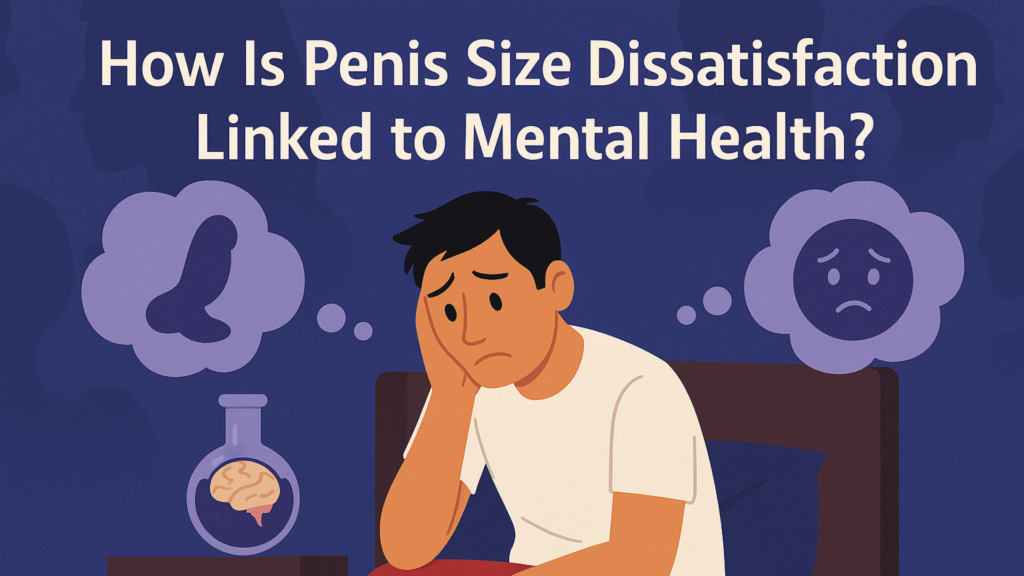
Penis size dissatisfaction is directly linked to the statistical manual of mental disorders classification of body image issues. mental health Through a powerful psychological feedback loop where negative self-perception and body dysmorphic disorder concerning penis size interact. performance anxiety can trigger or exacerbate conditions like depression and social anxiety.
Compare your measurement: Use the evidence-based penis size calculator to estimate a length or girth percentile from clinician-measured reference data.
The link between physical self-perception and one’s mental state is powerful. For many men, dissatisfaction with penis size is a significant trigger for serious mental health Challenges arise when individuals seek cosmetic surgery to address their concerns about penis size.
This isn’t a niche concern; male body dissatisfaction has tripled in the last 25 years, rising from 15% to 45%, with 28% of adult men now reporting anxiety specifically because of their body image issues can lead to men anxious about penis size, affecting their self-esteem..
This guide explains the direct link between “Penis size dissatisfaction and mental health can lead to a cycle of negative self-perception and avoidance of sexual activities..” We will explore how this specific concern can manifest as depression, anxiety, and other conditions, and explain the psychological cycle that drives it, particularly among men concerned about their penis size.
The connection between “small penis anxiety” (SPA) and poor mental health is not a sign of weakness but a complex psychological phenomenon rooted in cognitive biases and societal pressures.
Understanding this relationship is the first step toward dismantling its power and rebuilding both sexual confidence and a healthy self-image. The core issue of “penis size dissatisfaction and mental health” is about perception, not just anatomy.
Why Is Penis Size Dissatisfaction So Closely Linked to Mental Health?
“Penis size dissatisfaction” is so closely linked to perceptions of genital size and sexual confidence. mental health Because the brain’s response to perceived inadequacies in penis length can hinder arousal.
perception of self directly commands sexual function, the tendency to equate small penis size with personal value is strong, and the fear of not meeting perceived social expectations creates chronic stress. These factors intertwine, creating a heavy psychological burden where a physical attribute becomes a barometer for one’s entire sense of self-worth.
The “Erection Command Center™”: Where Mind and Body Meet
The brain acts as the “Erection Command Center™,” where a negative mental state born from “penis size dissatisfaction” sends inhibitory neurochemical signals that can directly impact physical performance and, over time, overall sexual health, particularly concerning penile length.
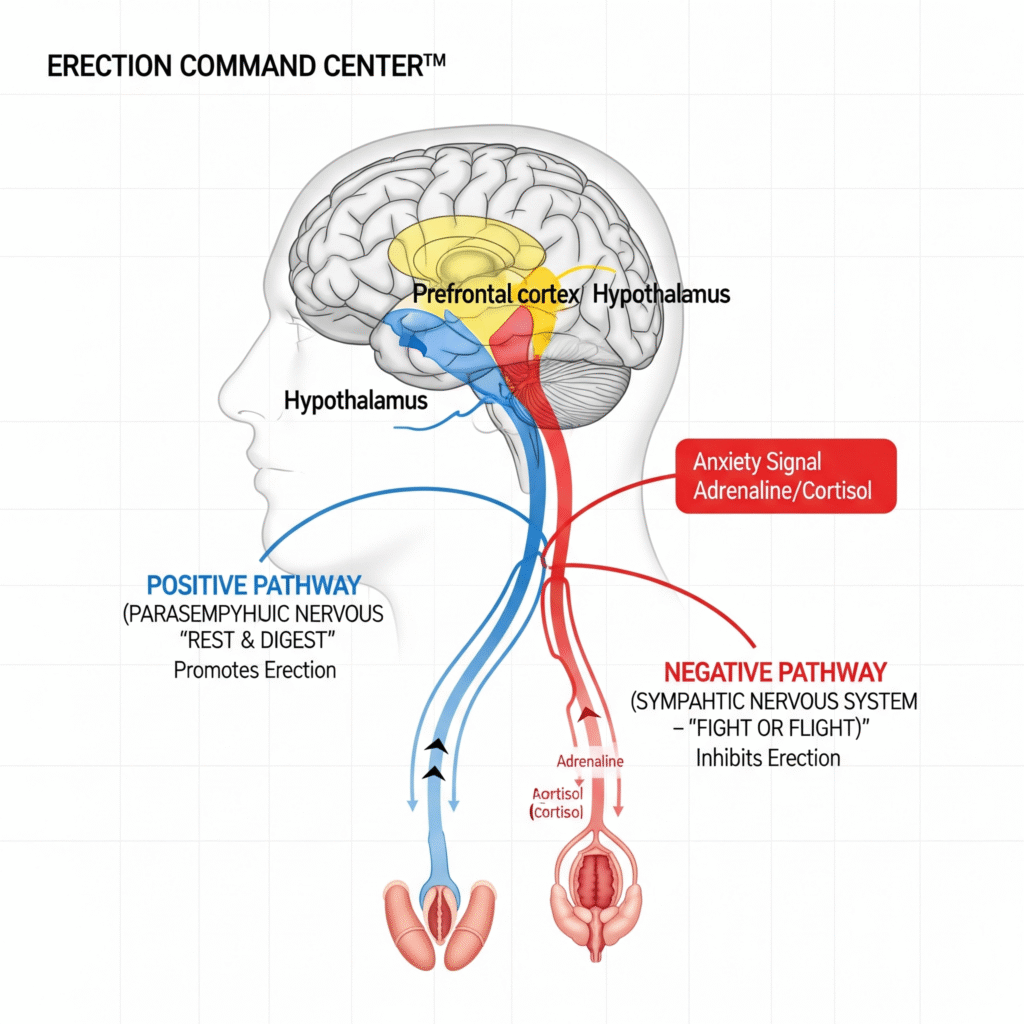
mental well-being. Arousal is governed by the parasympathetic nervous system, the body’s “rest and digest” state. Anxiety, on the other hand, activates the sympathetic nervous system the “fight or flight” response—which is fundamentally opposed to arousal during sexual activities.
The stress response from performance anxiety releases hormones like adrenaline and cortisol. These chemicals cause vasoconstriction (the narrowing of blood vessels), directly impeding the blood flow necessary for a firm erection.
This creates a state of anxiety that may negatively affect sexual functioning and behavior and overall sexual health and performance. Psychogenic erectile dysfunction can often be linked to anxiety about penile size and performance., where the origin of the physical issue is purely psychological.
Exploring how genital self-image affects mental health, particularly in relation to sexual orientation. penis size dissatisfaction is connected to mental health can also shed light on whether penis size affects sexual performance.
Equating Physical Size with Personal Value
A key psychological link occurs when individuals equate penis size with core aspects of their identity, such as masculinity, competence, and worthiness as a partner, causing “penis size dissatisfaction” to become a direct dissatisfaction with the self, particularly in men anxious about penis size.
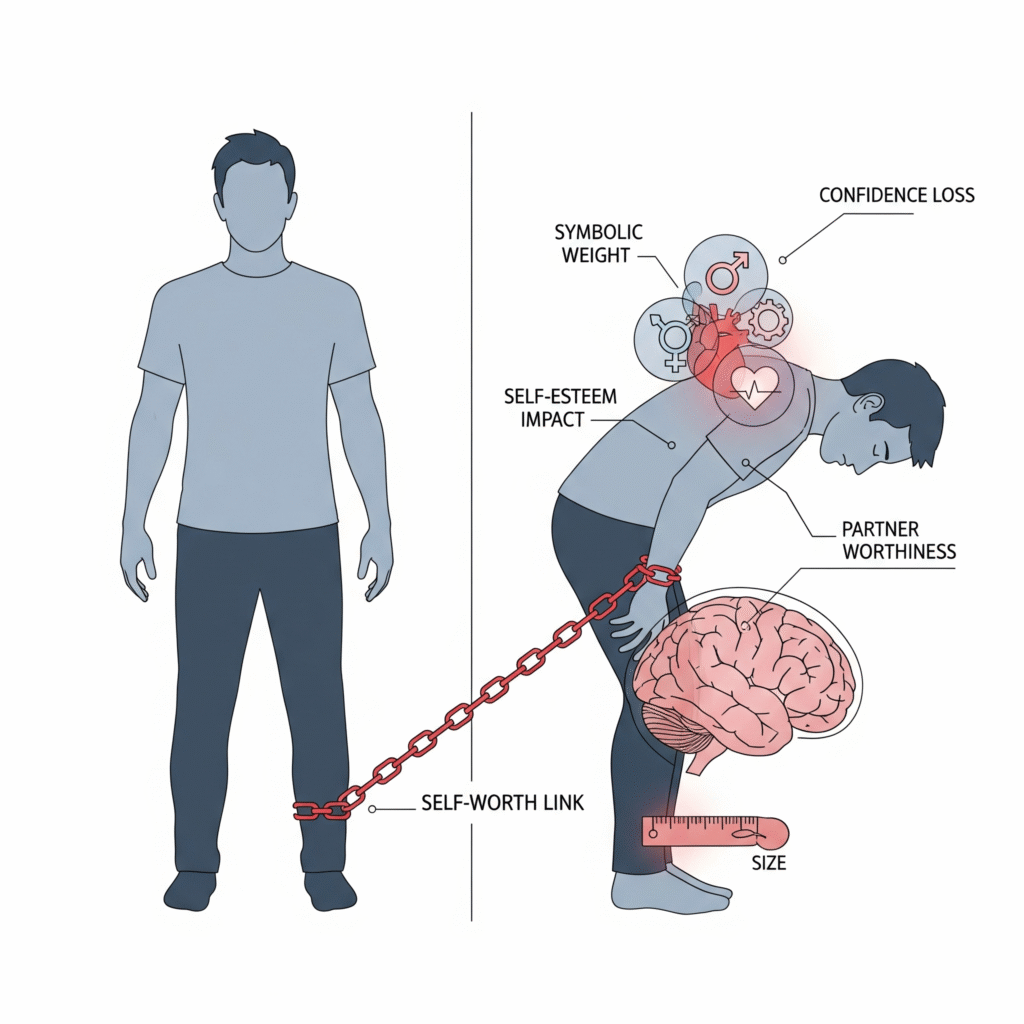
This cognitive error transforms a simple body image concern into a fundamental challenge to one’s self-esteem.
Evidence confirms this deep psychological connection. In studies analyzing motivations for penile augmentation, “improve self-confidence” is the most commonly cited reason among men anxious about their penis size, far outpacing any concerns about function.
This shows the obsession is rarely about the physical reality and almost always about the symbolic weight attached to it. Insights into how social behavior impacts men with BDD and SPA concerning penis size are crucial. penis size dissatisfaction relates to mental health Can deepen our understanding of how anxiety about penile size affects sexual health. how penis size affects self-esteem.
The Role of Perceived Social and Partner Expectations
The fear of failing to meet perceived expectations from partners or society regarding penis size creates a chronic, low-grade stress that can progressively erode mental health over time, contributing to the perception of a flaccid penis as a flaw. anxiety and feelings of inadequacy. This pressure creates a significant “perception gap.”
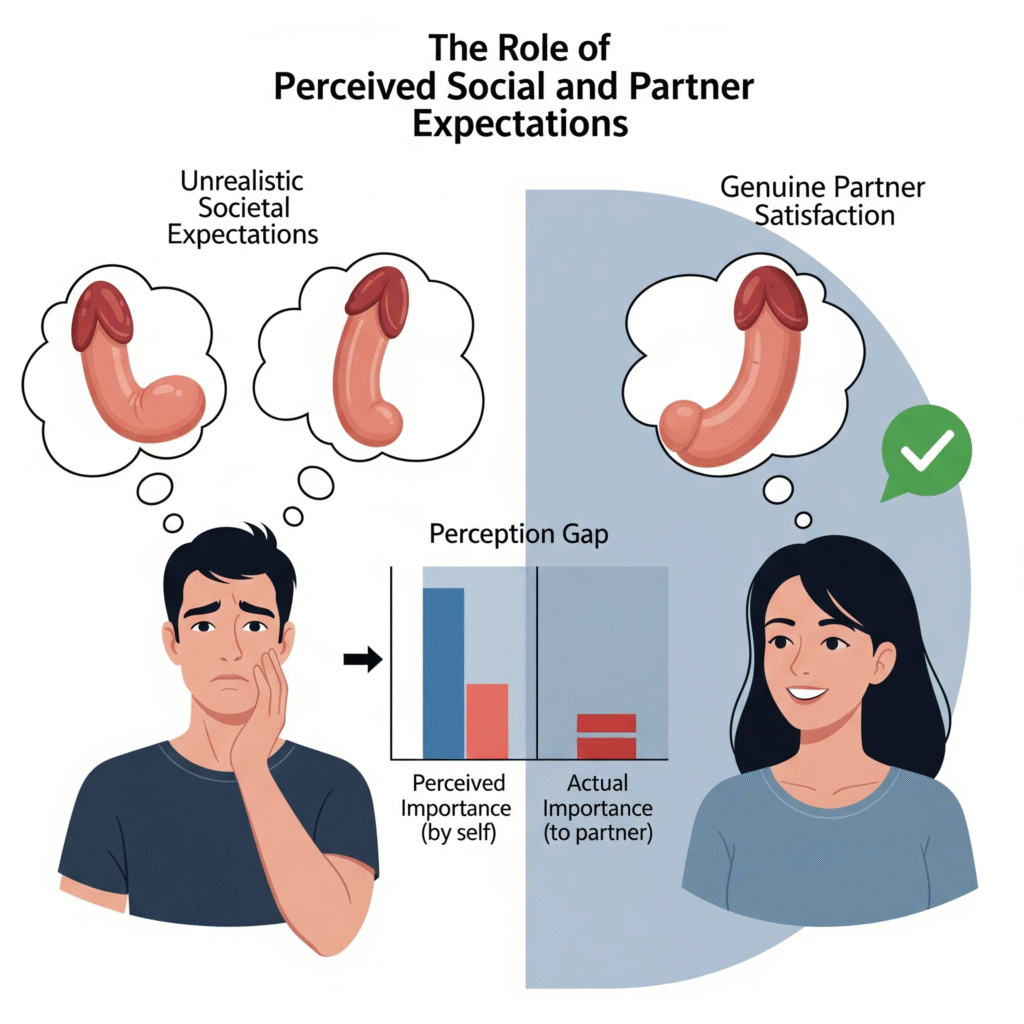
While a 2006 cohort study published in the context of sexual partner dynamics revealed significant findings. Journal of Sexual Medicine found that 45% of men want a larger penis, a staggering 85% of their female partners reported being satisfied with their partner’s size.
These perceived expectations are often based on the size of their penis and societal standards. unrealistic standards presented in pornography and media, not the reality of partner satisfaction.
Understanding how the flaccid penis is perceived can influence mental health. penis size dissatisfaction relates to mental health can also help explain why men are obsessed with penis size.
How Does Penis Size Dissatisfaction Manifest as Mental Health Challenges?
Penis size dissatisfaction can manifest as serious issues related to male genital self-image on depression. mental health challenges, including clinical depression fueled by feelings of inadequacy, the development of generalized and social anxiety, and in extreme cases, the obsessive preoccupation characteristic of Body Dysmorphic Disorder (BDD).
These conditions are not separate issues but direct outcomes of the psychological distress caused by persistent negative feedback loops related to genital self-image. body image.
The Link to Depression
A direct link to depression exists because chronic feelings of inadequacy, hopelessness, and low body image can lead to disorder concerning penis size compared. self-worth stemming from “penis size dissatisfaction” are classic psychological triggers for depressive episodes. This relationship is cyclical and mutually reinforcing.
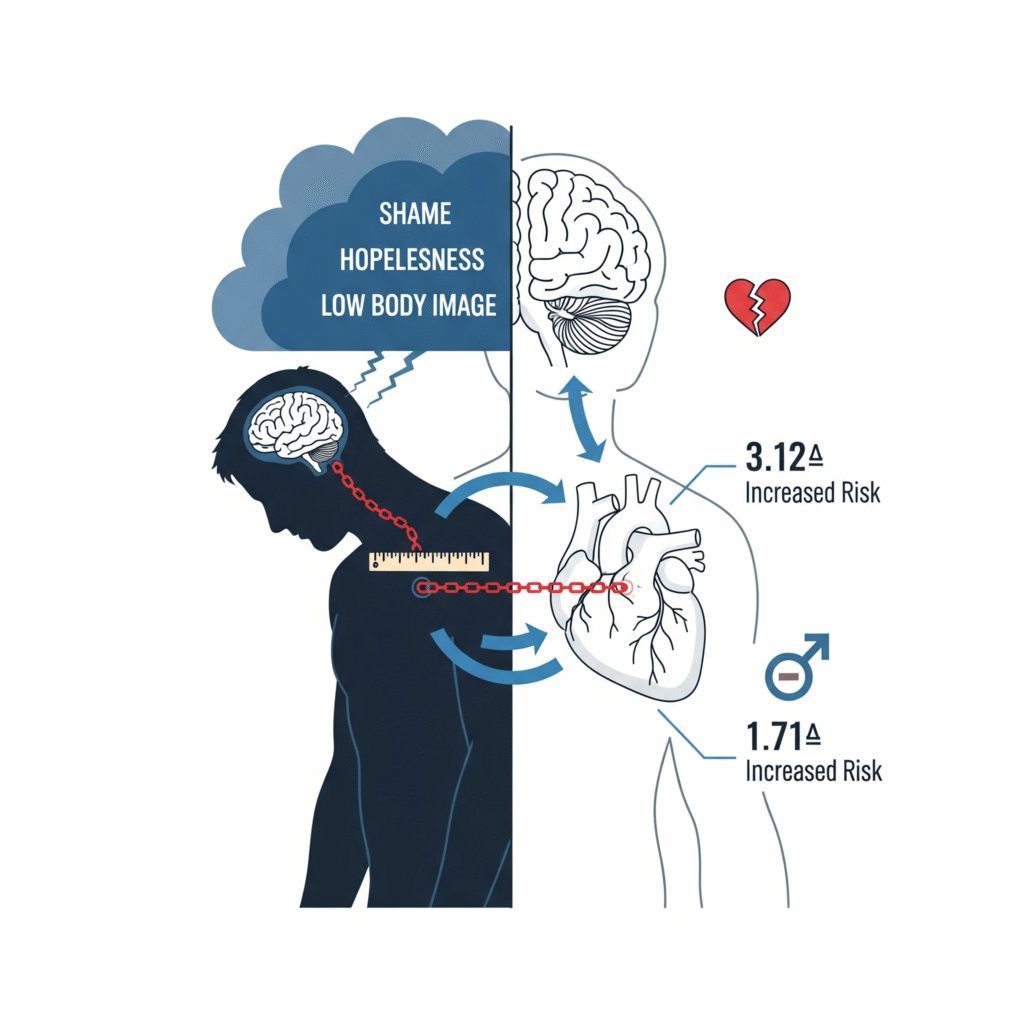
According to a major meta-analysis in the Journal of Sexual Medicine, the link is bidirectional: the size of their penis can affect their mental health and vice versa, especially regarding sexual intercourse.
sexual dysfunction can increase the odds of developing depression by up to 3.12 times, while depression increases the risk of developing sexual dysfunction by up to 1.71 times.
A man anxious about his size may experience psychogenic ED, which then feeds feelings of shame and hopelessness, particularly regarding the girth of their penis, deepening the depressive state. This, in turn, makes arousal even more difficult, especially when concerns about penile size arise.
The Development of Generalized and Social Anxiety
The specific fear of sexual performance related to “penis size dissatisfaction” can expand into a broader discussion about the psychological implications of penis size compared to men.
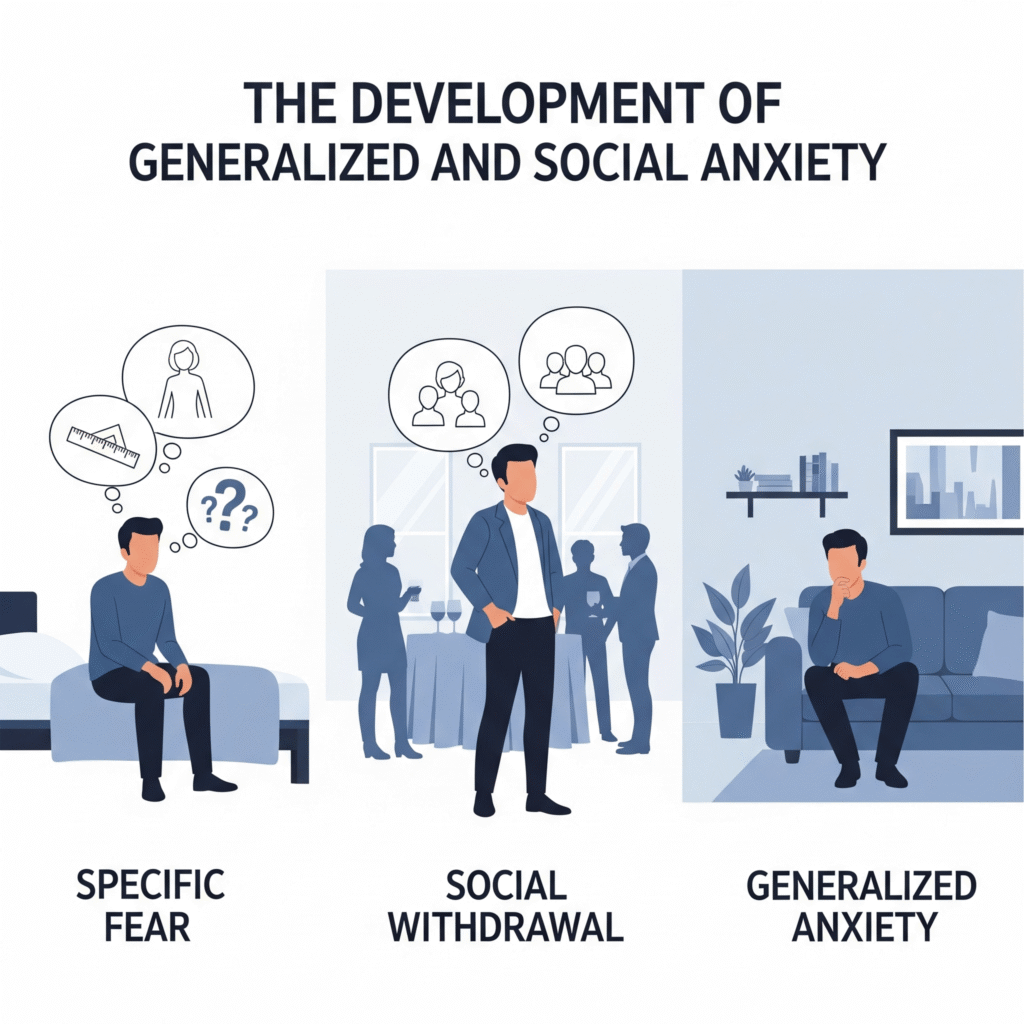
Social anxiety can exacerbate fears regarding penis length and sexual performance., causing individuals to withdraw from dating, social situations, and intimacy to avoid potential judgment or failure.
This psychological process is known as generalization, where a fear tied to one specific context begins to infect other areas of life.
This avoidance becomes a core symptom of Social Anxiety Disorder can lead to heightened concerns about flaccid and erect penis size.. By avoiding situations that trigger the impact of male genital self-image, individuals may experience heightened anxiety. fear, the individual never gets the chance to have a positive experience that could disprove their negative beliefs.
This withdrawal protects the anxiety and allows it to grow, further damaging one’s overall mental health and sense of connection.
Exploring how penis size dissatisfaction is linked to mental health can also reveal What psychological factors drive penis size concerns among those experiencing penile size dissatisfaction, especially in relation to their sexual orientation and the international index of erectile function?.
The Obsessive Nature of Body Dysmorphic Disorder (BDD)
An extreme manifestation of penis size dissatisfaction is Penile Dysmorphic Disorder (PDD) is a disorder concerning penis size compared to societal standards., a form of Body Dysmorphic Disorder (BDD) Where the concern about penile length becomes an obsessive, all-consuming preoccupation that severely impacts daily life and relationships.
mental health.As defined by sources like the Mayo Clinic, BDD is not simple vanity; it is a serious psychiatric condition that affects men with body dysmorphic disorder.
Penile Dysmorphic Disorder (PDD) is a clinical diagnosis, not just common among men with BDD and SPA. anxiety. Its key criteria include anxiety related to penis size compared to perceived norms.
- Obsessive Preoccupation: Spending at least one hour per day fixated on the perceived flaw can lead to a psychiatric disorder.
- Compulsive Behaviors: Men anxious about their penis size often engage in compulsive behaviors to cope with their insecurities. Repetitive actions like measuring, checking in mirrors, or constant comparison.
- Functional Impairment: The obsession causes significant distress and interferes with social, occupational, or other important areas of functioning.
This level of penis size dissatisfaction is a severe mental health issue that requires professional support, often through Cognitive Behavioral Therapy (CBT) is effective in addressing issues related to penile enhancement. And other clinical interventions, such as penile augmentation surgery, may help address these concerns.
Comparing Mental States: Dissatisfaction vs. Health
| Attribute | Mindset of Dissatisfaction | Healthy Mental State |
| Internal Dialogue can significantly impact how men anxious about penis size perceive themselves. | Self-critical, hopeless, and fearful, men may struggle with their body image related to sexual performance. | Self-accepting, functional, confident. |
| Emotional Baseline in relation to sexual health can significantly influence overall well-being. | Anxiety, shame, and depression. | Calmness, confidence, and contentment. |
| Social Behavior and its impact on body dysmorphic disorder concerning penis size can affect frequency of sexual intercourse. | Avoidant and withdrawn. | Engaged and open. |
| Focus | On a perceived, unchangeable flaw, such as the girth or length of the erect penis. | On controllable skills and connection. |
How Does a “Negative Feedback Loop” Connect Penis Size Dissatisfaction to Poor Mental Health?
A negative feedback loop directly connects penis size dissatisfaction to poor mental health by creating a self-perpetuating cycle where an initial anxious thought leads to a physical “failure,” which then reinforces the negative self-perception and deepens feelings of hopelessness. This loop is the engine that drives the anxiety.
The Anxious Thought as the Starting Point
The initial dissatisfaction, manifesting as an anxious thought like “I’m not big enough,” regarding penile size serves as the starting point and trigger that initiates the entire cycle of psychogenic erectile dysfunction.
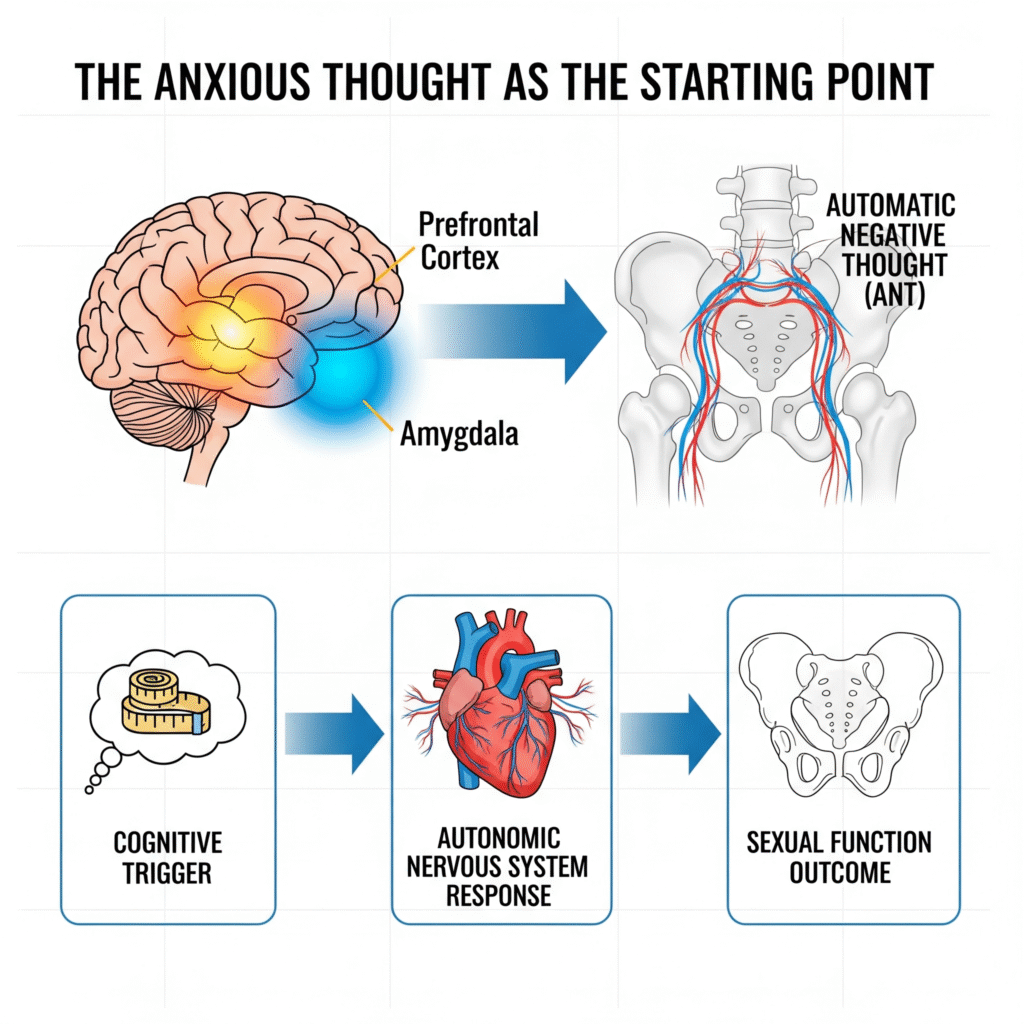
negative feedback loop affecting both sexual performance and the perception of the girth of their penis.mental health.” In Cognitive Behavioral Therapy (CBT), this is known as an Automatic Negative Thought (ANT)—an intrusive, reflexive belief that is accepted as true without challenge.
This single thought is the spark that ignites the entire downward spiral of performance anxiety.
The Physical Confirmation of Fear
The physical confirmation of fear occurs when anxiety from “penis size dissatisfaction” releases cortisol, leading to a poor erection, which is then misinterpreted not as a temporary stress response but as definitive proof of the underlying inadequacy. The anxiety-induced release of cortisol and adrenaline physically inhibits erectile function through vasoconstriction.
The critical error happens in the mind of men with body dysmorphic disorder concerning penis size compared to societal expectations. The brain misinterprets this temporary, stress-induced physical state as permanent, unchangeable evidence that the initial fear was justified.
This false “confirmation” is what gives the loop its immense psychological power, making the flawed belief feel like an objective fact.
The Spiral into Hopelessness
The spiral into hopelessness happens as each turn of this concern about their penis size amplifies feelings of inadequacy. negative feedback loop deepens the negative self-perception, making it harder to break out and contributing directly to the development of learned helplessness and clinical depression.
With each repetition of the cycle (anxious thought -> poor erection -> “proof” of inadequacy -> more anxiety), the core negative belief becomes more entrenched.
This can lead to a state of learned helplessness a psychological condition where a person comes to believe they have no control over a situation after repeated negative experiences.
They stop trying to change things because they feel the outcome is inevitable. This state is a direct pathway to the symptoms of major depression, including persistent low mood, loss of interest, and feelings of worthlessness related to penile size dissatisfaction.
Recognizing how penis size dissatisfaction is linked to mental health naturally leads to asking Does penis size affect sexual satisfaction, particularly in heterosexual men with dysmorphic disorder concerning penis size?.
What Are the Key Takeaways for Protecting Your Mental Health from Penis Size Dissatisfaction?
Key takeaways for protecting your “mental health” from “penis size dissatisfaction” include actively separating your self-worth from your size, shifting your focus to controllable factors like skill and health, learning to recognize and interrupt the anxiety loop, and seeking support from a mental health professional when needed.
A Checklist for Protecting Your Mental Health
- ☐ Separate Your Worth from Your Size: Understand that your self-worth should not be tied to the size and appearance of your penis. Actively work to disconnect your value as a person from a single physical attribute.
- ☐ Focus on Controllable Factors: Shift your mental energy to things you can improve, like your physical health, your skills as a lover, and your communication.
- ☐ Recognize the Loop: Identify when you are in a negative feedback loop of anxiety and use a pattern interrupt (like deep breathing or a mindset shift) to break it.
- ☐ Seek Professional Support: Understand that talking to a therapist about male genital self image scale can be beneficial. body image and mental health is a proactive and powerful step.
Conclusion
In conclusion, the link between penis size dissatisfaction and mental health is created and sustained by a powerful psychological feedback loop where negative thoughts impact physical response, which in turn reinforces those negative thoughts, potentially leading to serious challenges like depression and anxiety.
The central mechanism connecting “concerns about their penis size” with mental health issues is often rooted in societal expectations.penis size dissatisfaction” to poor “mental health” is this self-perpetuating psychological cycle that affects many men regarding their perceived normal size.
Because this cycle is psychological, it is a critical issue to address, especially in the context of penis enlargement and its societal implications.
Understanding this mechanism is the first step toward breaking the cycle and rebuilding both sexual confidence and overall mental well-being.
One Response