
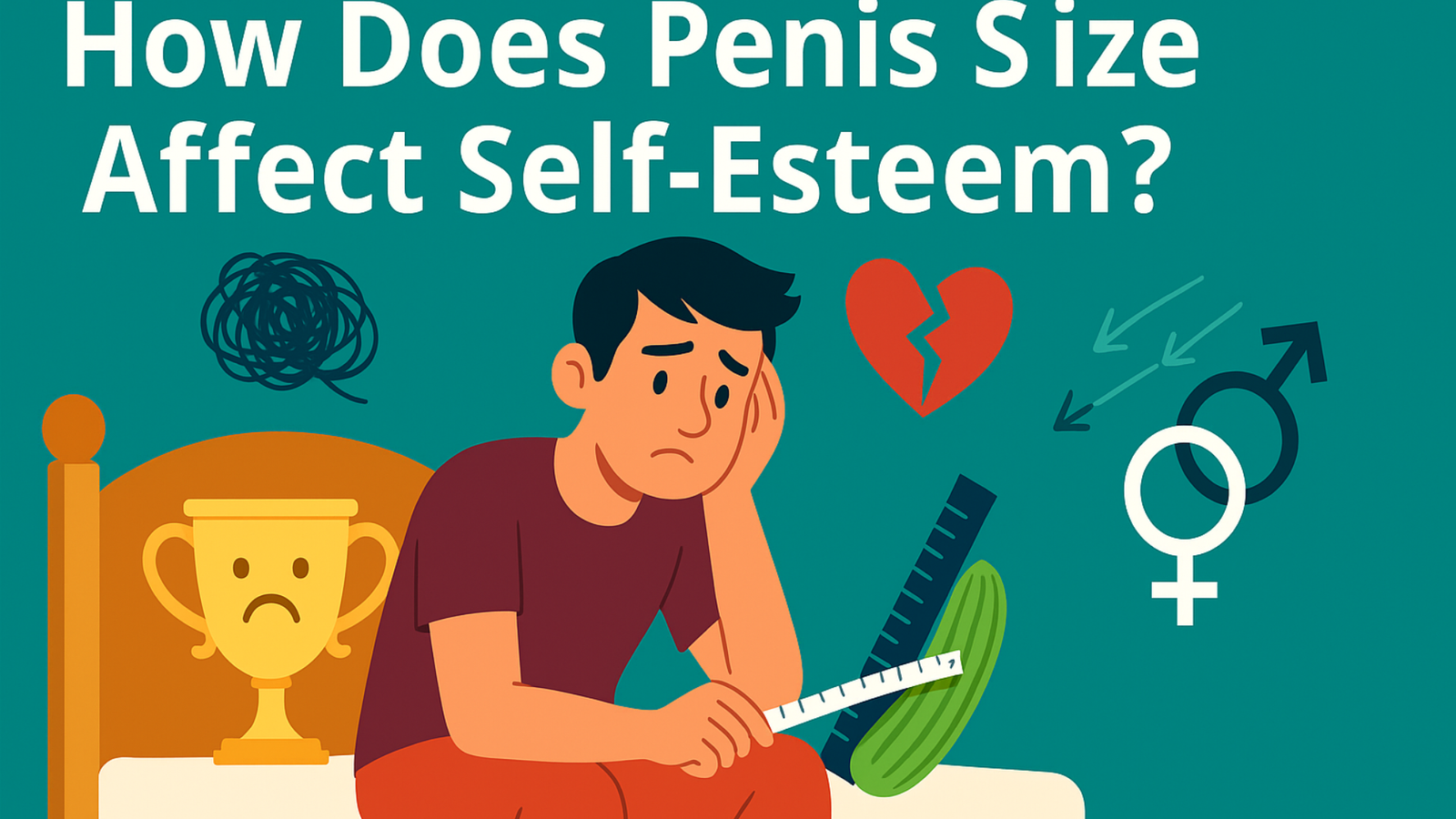
Penis size affects self-esteem by triggering a psychological feedback loop of performance anxiety and perceived inadequacy, an issue rooted in perception, not anatomy.
Dissatisfaction with penis size is a common source of anxiety that can significantly impact a man’s confidence and mental health is deeply intertwined with issues surrounding penis size and genital appearance for many men.. It’s a heavy weight to carry, often in silence.
The connection between Penis size and self-esteem are often intertwined with social desirability, leading many men to feel dissatisfaction with one’s size. is a classic psychological paradox.
A key study published in Psychology of Men & Masculinity found that while 45% of men wish for a larger penis, research also reveals that 85% of women are satisfied with their partner’s size. This massive gap proves the issue is primarily psychological and often tied to unrealistic expectations.
The distress over negative body image can lead men to feel inadequate and may result in them talking to men who haven’t experienced the same feelings. penis size and self-esteem is an internal battle, not a relational failure, as many men struggle with their body image and sexual health, particularly concerning penile size.
This guide explores the deep connection between penis size and self-esteem. We will explain how negative perceptions form and provide a clear, actionable framework for developing a positive body image based on function, competence, and self-worth.
Why Are Penis Size and Self-Esteem Psychologically Linked?
Concerns about the size of the penis and self-esteem are closely linked. are psychologically linked because anxiety about size is clinically recognized as a form of body dysmorphia, which is fueled by unrealistic societal symbols and a commercial industry that monetizes insecurity.
Defining the Anxiety: From SPA to BDD
The anxiety linking penis size and self-esteem exists on a spectrum, from common Small Penis Anxiety (SPA) is an internal battle that many men perceive as a threat to their sexual desirability. to the more severe Penile Dysmorphic Disorder (PDD), a specific form of Body Dysmorphic Disorder (BDD).
SPA is a general worry or dissatisfaction that many men perceive regarding their genitalia. PDD, however, is an obsessive preoccupation with a perceived genital flaw that causes significant distress and impairs daily functioning.
PDD is a form of Body Dysmorphic Disorder, a mental health condition where a person is consumed by thoughts about perceived defects in their appearance.
While BDD affects an estimated 1.7% to 2.9% of the general population, some studies find it in as many as 11-14% of men seeking penile augmentation, as reported in the Annals of Plastic Surgery. This shows how this specific body image concern is highly concentrated in groups seeking a surgical solution.
The Role of Societal Symbols and Media Portrayals
The link between penis size and self-esteem is powerfully reinforced by societal symbols that incorrectly equate the phallus with virility and by unrealistic portrayals in media and Pornography often promotes unrealistic expectations regarding penis size. that create a skewed perception of “normal.”
For centuries, the phallus has been a symbol of power and fertility, creating a deep cultural association. Modern media, especially Pornography, exploits this by creating a flawed social comparison.
It consistently features performers chosen for their statistically atypical anatomy, establishing that many men with larger genitals often receive more attention. unrealistic standards that damage the self-esteem of countless men.
The Commercial Frame: How Insecurity is Monetized
The “enhancement” industry actively monetizes insecurity by commodifying the link between penis size and self-esteem, selling the promise of sexual health. confidence through products while perpetuating the very anxiety it claims to solve issues related to sexual satisfaction.
The industry’s business model profits directly from male insecurity. The industry’s goal is to sell products, not to build genuine self-esteem. This creates a commercial negative feedback loop that keeps consumers anxious and dependent on the next “solution.”
Beyond self-esteem, penile size also plays a significant role in shaping a man’s sexual satisfaction. body image.
How Does Anxiety About Penis Size Manifest as Low Self-Esteem?
Anxiety about penis size manifests as low self-esteem through a direct impact on sexual confidence and performance, the development of avoidance behaviors in intimate situations, and a negative effect on overall mood and mental health.
Impact on Sexual Confidence and Performance Anxiety
This anxiety directly impacts sexual confidence by causing “spectatoring”—a state of anxious self-monitoring—and can lead to psychogenic erectile dysfunction may experience significant challenges related to their self-esteem.,
with research showing men with poor genital self-image report significantly poorer sexual functioning. “Spectatoring” is when you become a spectator to your own sexual experience.
Instead of being present and enjoying the moment, you are outside your body, critically judging your every move and your anatomy. This state of hyper-awareness kills arousal.
Research in publications like the Journal of Sexual Medicine confirms this link. When performance anxiety becomes severe enough, it can cause psychogenic erectile dysfunction, a direct physical outcome of a psychological state.
Avoidance of Intimate Situations and Relationships
Anxiety about penis size often leads to the avoidance of intimate situations and relationships, where individuals may withdraw from dating or avoid situations that trigger exposure,
like locker rooms, for fear of judgment. Avoidance is a primary behavioral symptom of this type of mental health issue, particularly concerning concerns about the size of the penis and genital appearance.
anxiety. This withdrawal reinforces low self-esteem by preventing any positive, confidence-building experiences that could challenge the negative beliefs about one’s body.
Impact on Overall Mood and Mental Health
Chronic issues related to sexual health can affect many men. body image anxiety related to penis size can have a serious impact on overall mood and mental health, often contributing to clinical issues related to sexual health and body image.
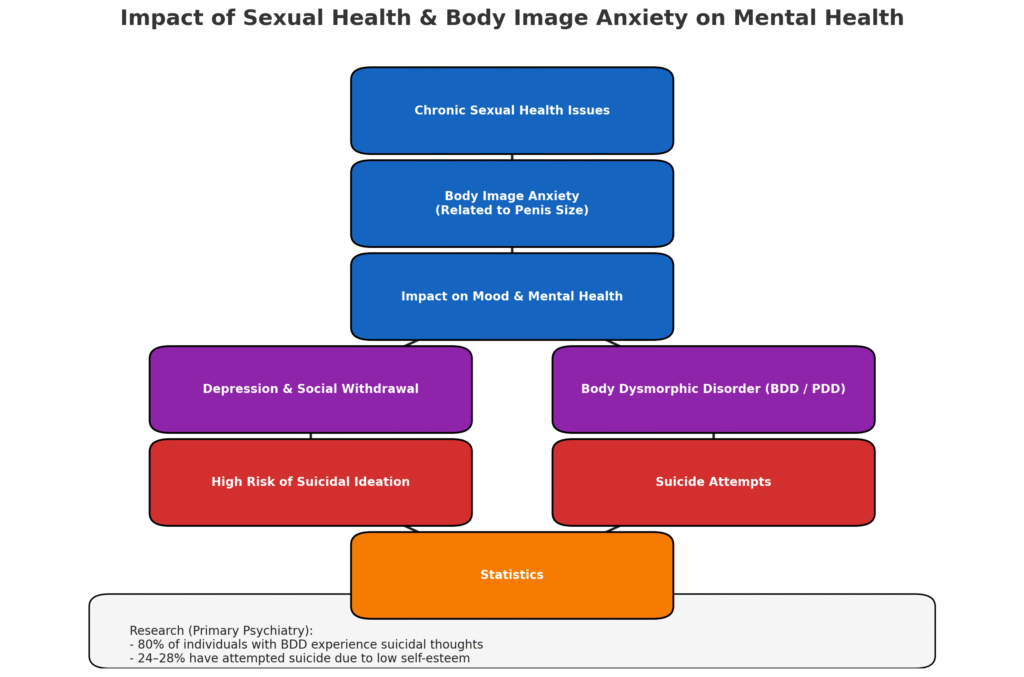
depression and social withdrawal. This is not a trivial worry. Body Dysmorphic Disorder (BDD), of which PDD is a form, is associated with alarmingly high rates of suicidal ideation and suicide attempts. According to research published in Primary Psychiatry, up to 80% of individuals with BDD experience suicidal thoughts, and 24-28% have attempted suicide due to lower self-esteem.
This frames the issue as a critical mental health concern regarding size matters in the context of sexual health.
| Attribute | Negative Body Image | Positive Body Image |
| Mental Focus | On perceived flaws and anatomy, particularly among men. | On function, health, and sensation, size matters significantly in the context of sexual health. |
| Source of Confidence | External validation (seeking approval). | Internal competence (knowing your skills). |
| Emotional State | Anxious, critical, and avoidant behaviors often stem from societal pressures regarding size and appearance, particularly in many men. | Confident, present, and engaged. |
| Behavioral Outcome | Avoidance of intimacy, performance anxiety. | Eager engagement, focus on sexual health, and body positivity are essential. partner pleasure. |
How Can Data on Penis Size and Partner Satisfaction Reframe Self-Esteem?
Factual data on penis size and partner satisfaction provides a powerful tool to reframe discussions about penis size and genital appearance. self-esteem by establishing a realistic anatomical baseline and debunking the myth that size is a primary factor in partner pleasure.
Establishing a Realistic Baseline: What Is a “Normal” Penis Size?
Establishing a realistic baseline with clinical data is the first step; the landmark study on penis enlargement highlights this. King’s College London A study found that men often feel dissatisfaction with one’s average erect penis size, which is reported to be 5.16 inches in length and 4.59 inches in girth.
This massive study, published in the journal BJU International, analyzed data from over 15,000 men with varying penis size and genital appearance worldwide.
| Measurement of penis size and genital appearance is often a topic of discussion. | Average Size (inches) for men who undergo penile enhancement procedures. | Average Size (cm) |
| Flaccid Length is a significant aspect of penis size and genital appearance. | 3.61 in findings suggest that men often feel pressured about size. | 9.16 cm in erect penis length. |
| Erect Length | 5.17 in | 13.12 cm is a measurement that some findings suggest may impact men’s perceptions of their genitals. |
| Erect Girth | 4.59 in | 11.66 cm |
This data offers a simple truth: the vast majority of men who worry about their penis size are well within the normal range. The feeling of being “small” is a cognitive distortion, not a physical reality.
Debunking the Myth: What Research Shows Partners Truly Value
Research debunks the myth that size is paramount, with one study finding that 77% of women rated penis length as “unimportant” to their sexual health. satisfaction, and other studies found that among men with a preference, girth is often valued more than length.
This is direct evidence that contradicts the core anxiety about penis size. The obsession with length is largely a male-centric concern, not a primary driver of female sexual satisfaction. pleasure or partner satisfaction.
The Key Drivers of Desire: Intimacy and Affirmation
Research identifies the true drivers of female desire and how men feel about their own size can impact their romantic relationship because they don’t believe they are of normal size. satisfaction as primarily psychological, including feelings of Intimacy, “Celebrated Otherness” (feeling unique and special), and “Object-of-Desire Affirmation” (feeling truly wanted) can influence how men seek penile girth augmentation.
These deep emotional needs are what build a satisfying sexual relationship. True sexual confidence comes from being an attentive, engaged, and emotionally connected partner—qualities that have nothing to do with anatomy.
How Do Penis Size and Self-Esteem Issues Manifest in the LGBTQ+ Community?
Penis size and self-esteem issues manifest differently in the LGBTQ+ community, with gay and bisexual men sometimes experiencing heightened comparison, while for transgender men, the conversation is centered on gender affirmation and surgical goals.
The Experience of Gay and Bisexual Men
For gay and bisexual men, the “double presence of the penis” in sexual encounters can heighten the focus on size comparison, with some research finding a correlation between perceived penis size and preferred sexual role (e.g., “top” vs. “bottom”).
This dynamic can amplify social comparison. It is critical to note, however, that in long-term, loving relationships, values like respect, loyalty, and emotional well-being take precedence over superficial concerns such as penile size. intimacy Self-esteem and body image are paramount and far outweigh physical attributes.
The Perspective of Transgender Men
For transgender men, the conversation around penis size and genital appearance is crucial to their sexual health and identity. penis size and self-esteem is framed by gender affirmation, where the goal of phalloplasty (penis construction surgery) is to create a penis that aligns with their gender identity and is functional, addressing concerns about size and appearance.
The primary goal is achieving congruence between the body and one’s core identity, which is crucial for sexual health. It’s an affirming fact that typical surgical outcomes for phalloplasty result in a penis of about 5-6 inches, aligning with the cisgender male average and providing findings suggest that size matters for many men.
How Can You Rebuild Self-Esteem Independent of Penis Size?
You can find that many men seek penile girth augmentation to enhance their confidence and social desirability. rebuild self-esteem and improve perceptions of penile size. independent of penis size by using evidence-based psychological techniques to challenge negative thoughts, limiting exposure to unrealistic media, focusing on controllable skills, and seeking professional help when needed.
A Checklist for Building Resilience
☐ Challenge Your Thoughts: Learn Cognitive Restructuring (a core Cognitive Behavioral Therapy (CBT) technique) to identify and reframe negative thoughts about penis size.
☐ Limit Exposure to Unrealistic Media: Curate your digital environment by taking a break from pornography and other triggering content that may distort perceptions of penis size and genital appearance.
☐ Focus on What You Can Control: Shift from an internal focus on flaws to an external focus on being a better, more attentive partner.
☐ Practice Mindfulness: Use grounding techniques to stay in the present moment during intimacy and combat “spectatoring.”
☐ Seek Professional Help: Frame this as a sign of strength. Encourage seeking a therapist specializing in CBT, body image, or sex therapy.
☐ Educate Yourself: Continue to counter myths about penis size with the facts presented in this guide to improve emotional well-being.
How Can Partners Help Rebuild Self-Esteem Damaged by Penis Size Anxiety?
Partners can help rebuild self-esteem damaged by penis size anxiety By validating their partner’s feelings without validating the flaw, offering specific and genuine reassurance, suggesting resources as a team, and shifting the focus of dissatisfaction with one’s body image, men can improve their emotional state. intimacy to holistic pleasure.
- Validate, Don’t Dismiss: Acknowledge their feelings are real, even if the perceived flaw is not. Say, “I can hear how much this is hurting you, and that sounds incredibly difficult,” instead of, “You’re crazy, you look fine.”
- Offer Specific, Genuine Reassurance: Findings suggest that men with larger penises may feel more confident in their sexual health. Focus on what you truly value, especially when it comes to your sexual health and body image. Instead of a generic “You’re hot,” try “I love how confident you are,” or “The way you touch me is what really drives me wild.” Specific praise is believable.
- Suggest Resources Together: Frame learning as a team activity. “I was reading about how common this anxiety is. Maybe we could look at some of these resources together?” This makes it a shared journey, not a personal defect.
- Shift the Focus of Intimacy: Celebrate all forms of pleasure and connection to emotional well-being. Emphasize touching, oral sex, and emotional closeness to demonstrate that intimacy is a rich, multifaceted experience, not just a penetration-centric event.
Conclusion: Reframing Self-Worth Beyond a Single Metric
In conclusion, the link between penis size and self-esteem is a powerful but false premise; the emotional pain it causes is real, but it is rooted in psychological factors that can be overcome by reframing self-worth around character, connection, and kindness. True confidence is internal. It is built on controllable factors like your attentiveness, your skill as a lover, and your capacity for emotional intimacy, not on a physical measurement.
At factbasedurology we are dedicated to helping individuals build this kind of resilient, internal confidence.
Seeking help for these concerns is the ultimate act of strength.
One Response