
Tight Foreskin (Phimosis): Symptoms, Complications, and Treatment Options
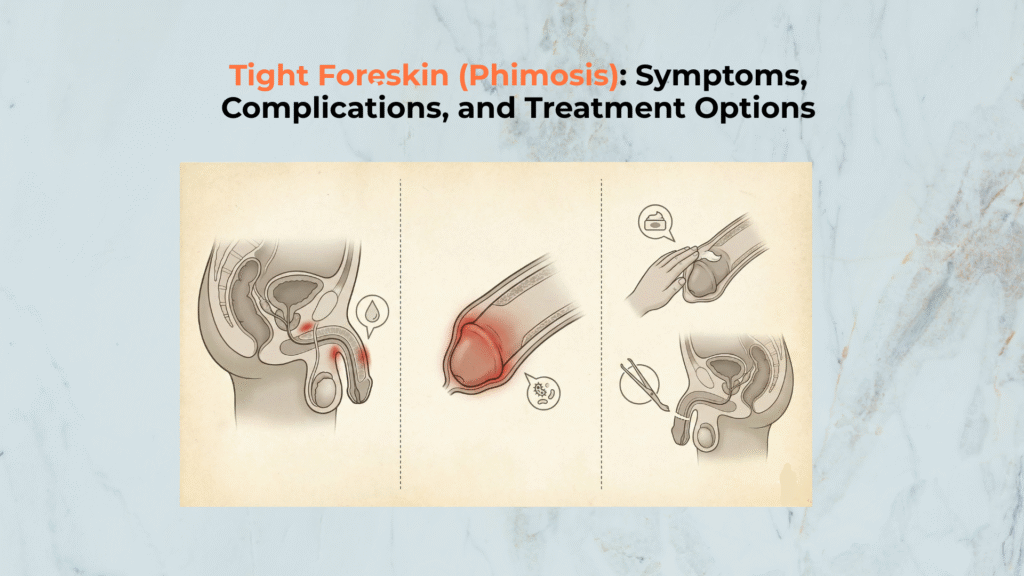
Tight Foreskin (Phimosis): Symptoms, Complications, and Treatment Options Clinical Guide • Updated: Oct 27, 2025 • FactBasedUrology Phimosis is a clinical condition involving a tight foreskin that cannot be easily retracted, necessitating proper management to prevent mechanical complications such as painful erections and the emergency risk of Paraphimosis. The clinical anatomy behind retractability starts at […]
Partially Circumcised Penis: Characteristics and Health Factors

Partially Circumcised Penis: Characteristics and Health Factors Analyzing Anatomy, Sensation, and Hygiene A Partially Circumcised Penis is a surgical outcome characterized by intermediate skin coverage, creating a unique anatomical profile that impacts hygiene practices, sensation via the scar line, and the risk of acquired tightening. For the full category context, see the Penis Types hub. […]
Uncircumcised Penis: Anatomy, Sensitivity, and Care
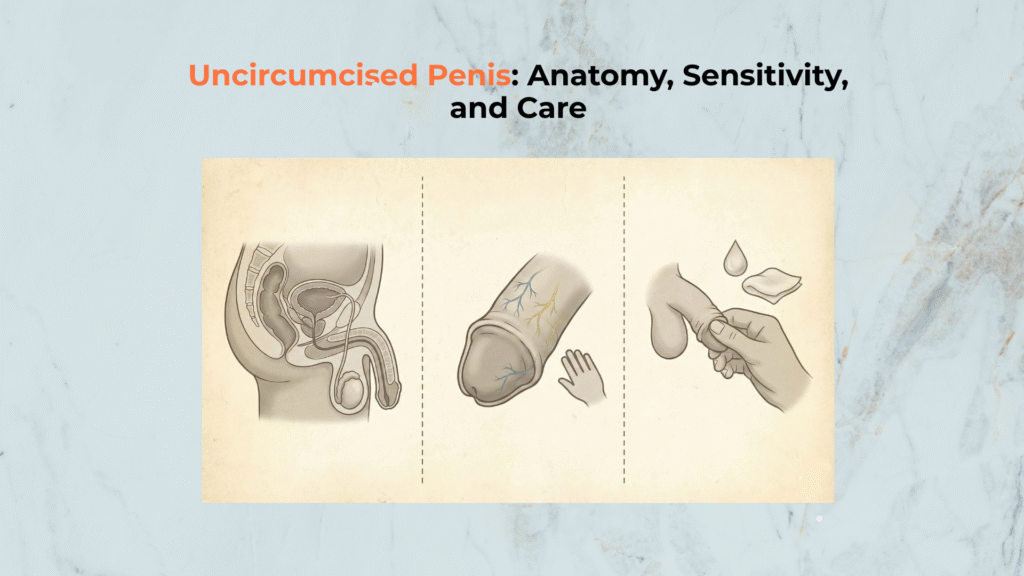
Uncircumcised Penis: Anatomy, Sensitivity, and Care (A Functional Guide) The uncircumcised penis represents the default human integumentary status, characterized by an intact prepuce (foreskin) that provides a movable mucosal sheath and specialized gliding mechanics. An Integumentary Status refers to the condition of the skin and associated membranes. In the context of the uncircumcised penis, this […]
Circumcised Penis: Benefits, Risks, and Aesthetic Variations (A Functional Guide)
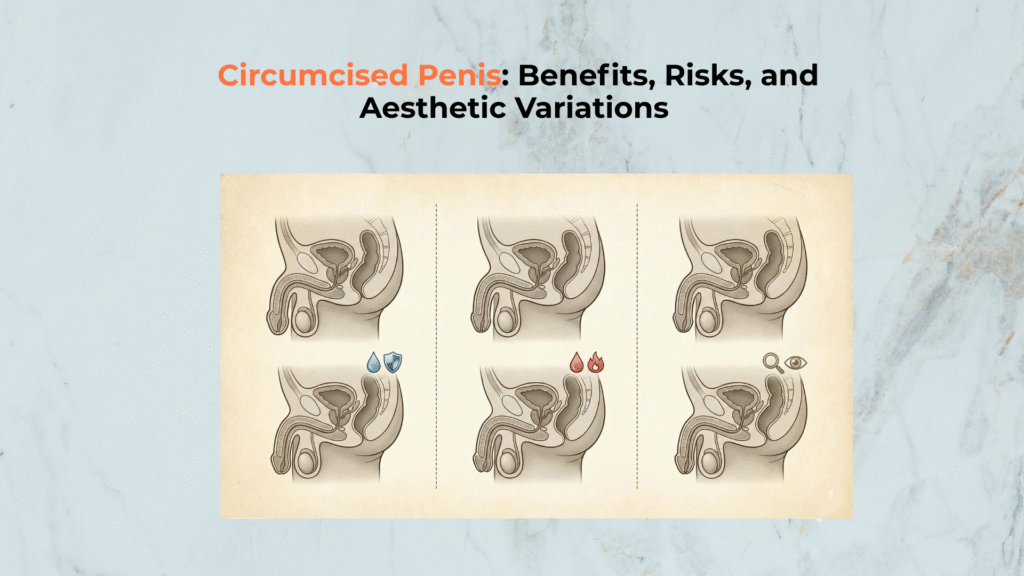
Circumcised Penis: Benefits, Risks, and Aesthetic Variations (A Functional Guide) A circumcised penis is a penis in which the prepuce (foreskin) has been surgically removed, permanently altering integumentary status, glans exposure, and skin movement mechanics [1]. To understand exactly what structures are removed and what remains, readers should consult the foundational Penis Anatomy guide. Decisions […]
Smooth Corona Penis: Visual Traits and Texture Differences
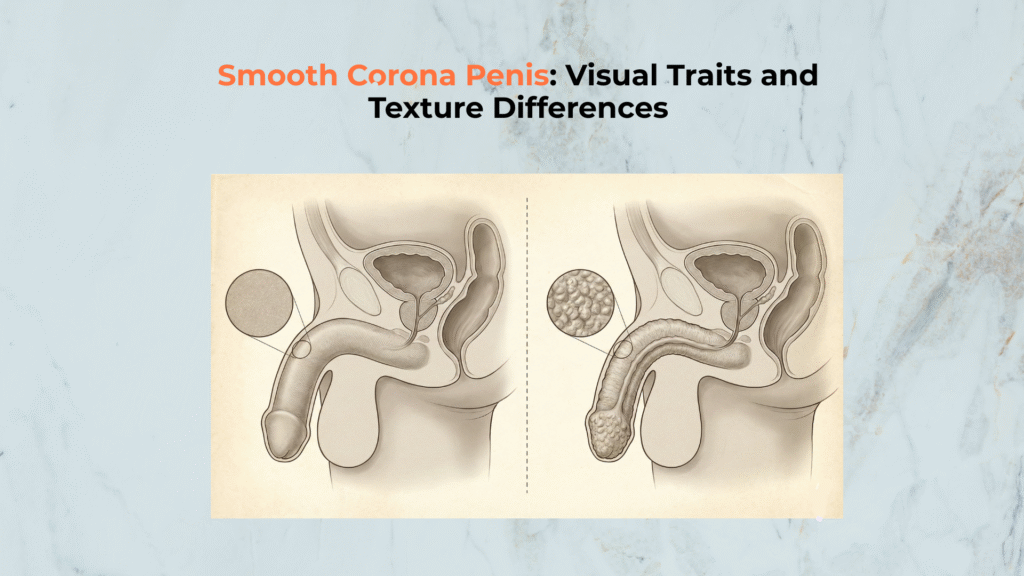
Clinical Anatomy & Mechanics Smooth Corona Penis: Visual Traits and Texture Differences The Smooth Corona Penis describes a penis with a relatively subtle coronal ridge (corona glandis), which can reduce abrupt “rim” contact at the vaginal entrance and shift perceived contact emphasis toward the shaft during penetration [1]. Anatomically, the proximal portion of the glans […]
Pronounced Corona Penis: What Defines It and How Does It Affect Stimulation?
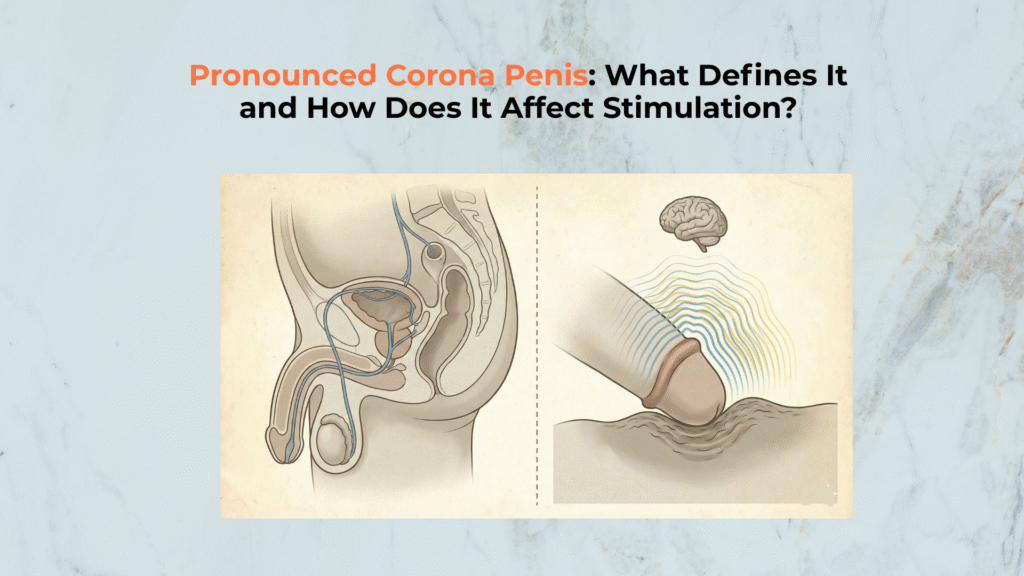
Anatomical Guide • Morphology Pronounced Corona Penis: What Defines It and How Does It Affect Stimulation? The Pronounced Corona Penis is characterized by a glans that significantly exceeds the diameter of the shaft, providing a focal point for intense entry and withdrawal friction mechanics. This anatomy is specialized for focal friction and terminal stimulation, which […]
Small Glans Penis: Is Size Affecting Sensitivity or Confidence?
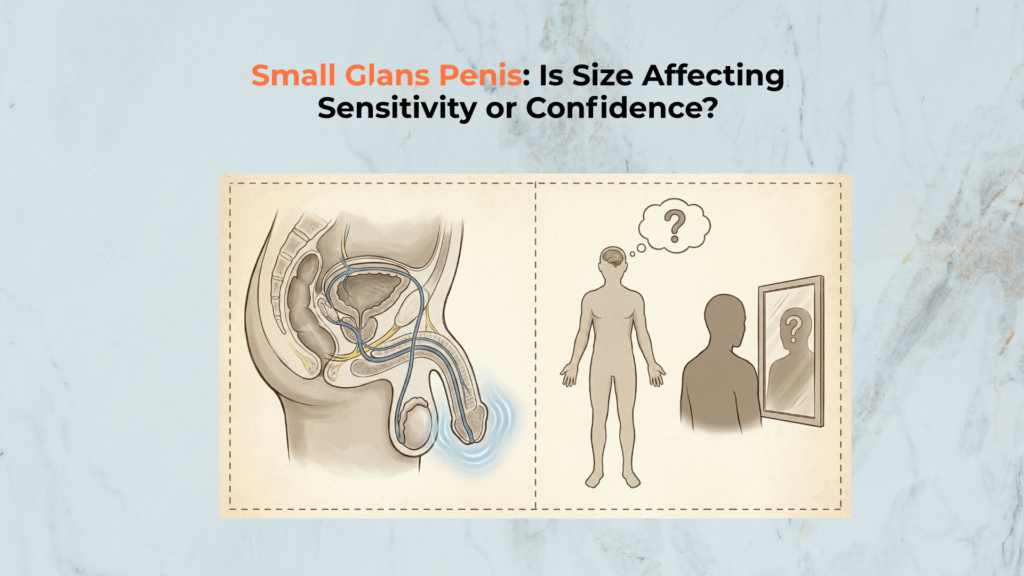
Anatomical Variant Analysis Small Glans Penis: Is Size Affecting Sensitivity or Confidence? Analyzing Function, Perception, and Friction Mechanics. The size of a small glans penis rarely affects functional sensitivity negatively; instead, its primary challenge is often Confidence due to media bias, while the reduced frictional surface may be functionally advantageous for male stamina. Important Medical […]
Large Glans Penis: Sexual Function and Sensitivity Impact
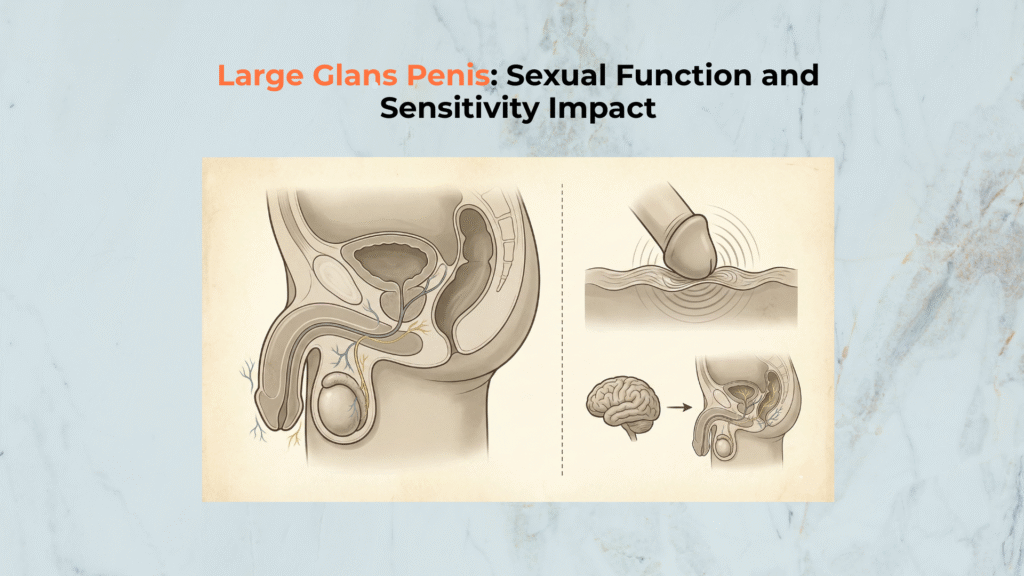
Peyronie’s-Type Curved Penis: What Is It and Why Does It Occur?
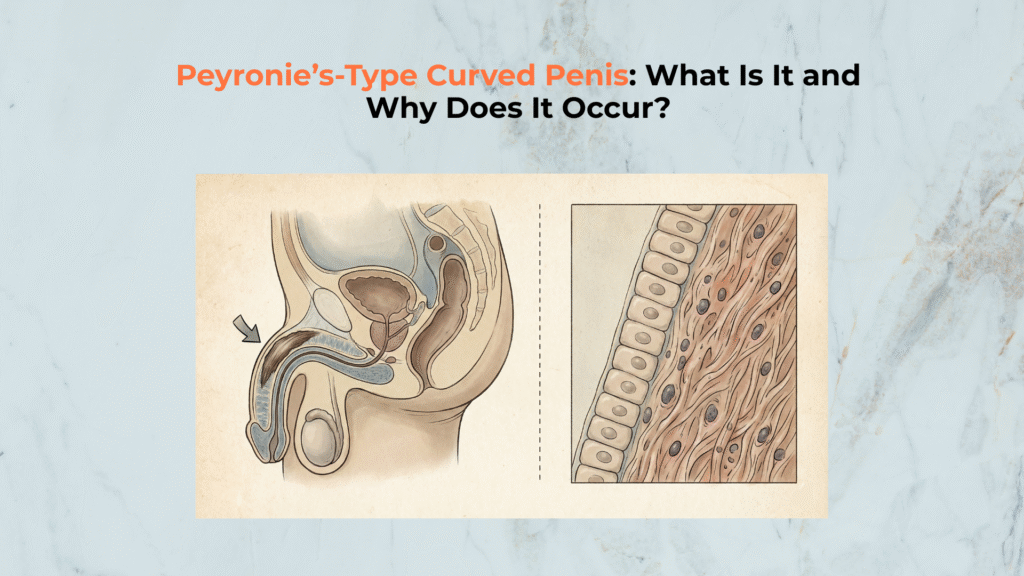
Peyronie’s-Type Curved Penis: What Is It and Why Does It Occur? The Peyronie’s-Type Curved Penis is an acquired inflammatory condition resulting in fibrotic plaque that causes painful, progressive penile curvature and is not a natural anatomical variation. Risk assessment of the Peyronie’s-Type Curved Penis is essential because timely diagnosis in the acute phase provides the […]
Downward-Curved Penis: Visual and Functional Considerations

Downward-Curved Penis: Visual and Functional Considerations An anatomical and biomechanical guide to ventral curvature, focusing on structural causes, comfort optimization, and positional adaptation. The Downward-Curved Penis (ventral curvature) is an anatomical variation where the erect shaft bends downward; when it’s congenital and stable, it is most often explained by relative disproportion of the tunica albuginea/corporal […]