FactBasedUrology • Hormonal Health
Does Zinc Support Libido in Men?
Zinc supports libido in men mainly when low zinc intake or zinc deficiency contributes to low testosterone physiology, poor general health, or reproductive dysfunction.
Zinc is not a direct aphrodisiac, not an on-demand erection treatment, and not a reliable libido booster for men who already meet zinc needs. Its useful role is correction: restoring adequacy when inadequate intake, malabsorption, restrictive diets, or medical risk factors have created a biological bottleneck.
Medical boundary: Persistent low libido can come from low testosterone, depression, sleep apnea, diabetes, vascular disease, medication effects, alcohol use, chronic pain, relationship distress, or other causes. Zinc should not delay medical evaluation when symptoms are sudden, persistent, severe, or accompanied by erection problems, fatigue, infertility concerns, pain, or mood changes.
The Verdict: Zinc’s Role in Male Libido
Zinc’s role in male libido depends on baseline zinc status, diet quality, and the cause of low desire. In men with low zinc status, repletion can support testosterone physiology and general reproductive health. In men who are already zinc-sufficient, extra zinc has no reliable evidence-based reason to raise libido above normal physiology.
Deficiency correction is not enhancement
Deficiency correction means restoring a missing requirement; enhancement means forcing function above normal. Zinc belongs in the first category. It helps the body run zinc-dependent processes, but it does not work like a sexual stimulant.
The practical logic is: low zinc intake can contribute to impaired reproductive physiology; correcting the low intake can remove that limitation. If libido is mainly driven by stress-related libido loss, depression, sleep loss, relationship conflict, medication effects, or unrelated endocrine disease, zinc alone is unlikely to solve the problem.
This distinction also prevents a common supplement-marketing error. Zinc does not act like a phosphodiesterase-5 inhibitor, because zinc does not create an acute blood-flow effect within minutes. Any meaningful effect from correcting inadequate zinc intake would be gradual and mediated through nutrition status, endocrine physiology, and overall health.
Pre-supplementation checklist
Diet check: Is intake consistently below the adult male RDA of 11 mg/day?
Risk check: Are vegetarian diet, gastrointestinal disease, heavy alcohol use, or malabsorption risk present?
Symptom check: Is low libido paired with fatigue, infertility concern, recurrent illness, poor wound healing, or low testosterone signs?
Biological Mechanisms Linking Zinc and Sexual Drive
Biological mechanisms linking zinc and sexual drive center on zinc-dependent reproductive physiology, not direct nerve stimulation. Zinc contributes to normal cellular function, protein synthesis, immune function, and reproductive biology, so inadequate zinc can weaken systems that indirectly shape libido.
Zinc and testosterone physiology
Zinc can support testosterone physiology when zinc intake is inadequate, but it should not be described as a guaranteed testosterone booster. Testosterone is made through steroidogenic pathways in the testes, and Leydig-cell function depends on adequate micronutrient status, energy availability, sleep, metabolic health, and pituitary signaling.
The safer clinical statement is that zinc deficiency can be associated with impaired testosterone status, and zinc repletion can help restore normal physiology when deficiency is part of the problem. This is relevant because testosterone and libido in men are connected, but they are not the only cause of sexual desire.
| Mechanism | Realistic libido relevance | Clinical boundary |
|---|---|---|
| Testosterone physiology | May improve when low zinc status contributes to suppressed hormone function. | Does not reliably raise testosterone in zinc-sufficient men. |
| General cellular function | Supports immune function, wound healing, and protein synthesis that affect overall health and energy. | General health support is not the same as an aphrodisiac effect. |
| Reproductive health | Supports semen and fertility-related biology when zinc adequacy is needed. | Fertility markers and libido are related but not identical outcomes. |
| Androgen-estrogen balance | Zinc may influence enzymes involved in hormonal balance, mostly as a sufficiency factor. | Aromatase-blocking supplement claims should not be treated as proven libido therapy. |
Clinical Evidence and Deficiency Correlations
Clinical evidence supports zinc as a deficiency-correction nutrient, not as a universal libido enhancer. Human data show that restricted or inadequate zinc can be associated with lower testosterone, while repletion in marginally deficient groups can improve testosterone status. That pattern does not prove that high-dose zinc improves sexual desire in men who already meet zinc needs.
Why baseline status changes the outcome
Baseline zinc status changes the expected response because a nutrient has a ceiling effect. Repletion can help when there is a deficit. Once adequate zinc status is reached, more zinc does not create a higher biological target.
This is especially important for men trying to understand low testosterone and libido. Low libido should not be reduced to one mineral. Testosterone testing, sleep quality, metabolic health, medication review, mood, alcohol use, and relationship factors can all change libido.
Dosage, Safety, and Interaction Risks
Dosage, safety, and interaction risks matter because zinc is a trace mineral with a narrow benefit-versus-excess boundary. The adult male Recommended Dietary Allowance is 11 mg/day, and the adult Tolerable Upper Intake Level is 40 mg/day from food, supplements, and fortified products combined.
Upper limits and copper antagonism
Upper limits and copper antagonism occur because high zinc intake can interfere with copper absorption. Long-term excess zinc can contribute to copper deficiency, anemia-like problems, immune dysfunction, and neurological symptoms in severe cases.
Men using zinc for libido should also review supplement risks for libido, because high-dose zinc can cause nausea, abdominal cramps, vomiting, appetite loss, diarrhea, and interactions with certain antibiotics or penicillamine. Zinc should be separated from interacting medications according to clinician or pharmacist instructions.
| Intake zone | Meaning | Practical action |
|---|---|---|
| Below likely need | Diet may not consistently meet the 11 mg/day adult male RDA. | Increase zinc-rich foods or discuss targeted supplementation. |
| Adequate range | Food pattern likely meets requirements. | Do not expect extra zinc to raise libido above normal physiology. |
| Near 40 mg/day | Total intake is approaching the adult tolerable upper intake level. | Avoid stacking multivitamins, zinc lozenges, and standalone zinc. |
| Above 40 mg/day | Risk of adverse effects and copper interference increases. | Use only with medical supervision and a defined reason. |
Supplement safety rule: Count zinc from multivitamins, immune products, lozenges, fortified foods, and standalone pills together. Do not stack zinc products for libido, and do not use high-dose zinc long term without medical supervision.
Which Zinc Sources Make the Most Sense?
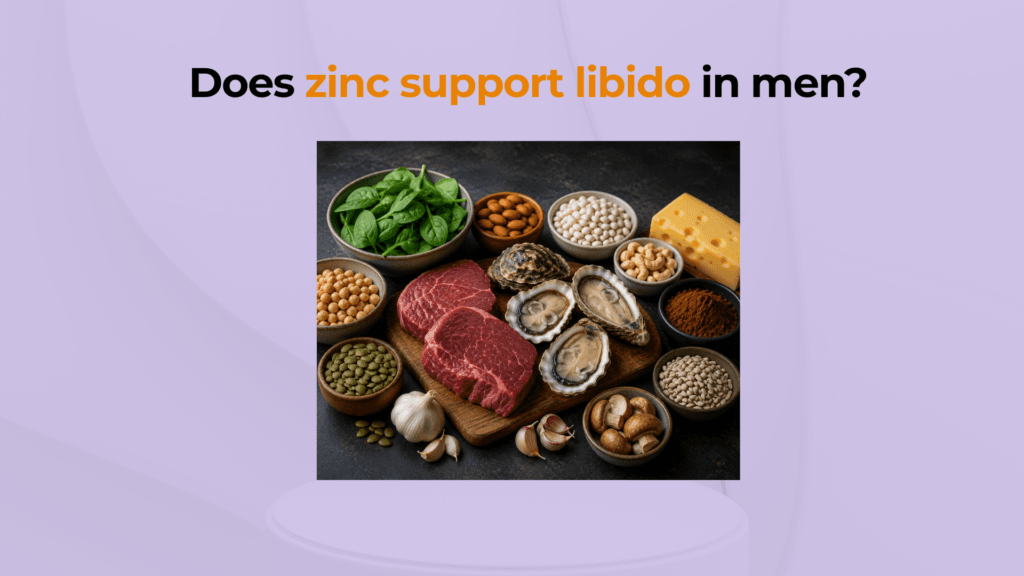
Zinc-rich foods make the most sense before supplements because they improve intake without pushing total zinc toward unsafe dosing. Oysters and other cooked shellfish are especially concentrated sources, while beef, poultry, dairy, eggs, beans, nuts, seeds, and whole grains contribute smaller but useful amounts.
Men who eat little animal protein, follow vegetarian or vegan diets, drink heavily, have inflammatory bowel disease, have had gastrointestinal surgery, or use restrictive dieting may need closer intake review. In these cases, a clinician can decide whether food changes, a multivitamin, or targeted supplementation is appropriate.
For a broader view, libido nutrition for men should include zinc adequacy, but also sleep, protein intake, exercise, body composition, vascular health, and medication review.
FAQs About Zinc and Male Libido
Does zinc increase libido immediately?
Zinc does not increase libido immediately. If zinc helps, the likely pathway is gradual correction of inadequate zinc status and related reproductive physiology, not same-day sexual stimulation.
Should every man with low libido take zinc?
Every man with low libido should not automatically take zinc. Zinc is most relevant when intake is low, deficiency risk is present, or a clinician identifies a reason to supplement.
Is 50 mg zinc safe for libido support?
Fifty milligrams of zinc exceeds the adult tolerable upper intake level of 40 mg/day. Doses above that level should not be used for libido support without medical supervision because excess zinc can interfere with copper absorption and cause adverse effects.
Can zinc replace testosterone testing?
Zinc cannot replace testosterone testing when symptoms suggest low testosterone. Morning testosterone testing, medical history, medication review, and related labs may be needed when low libido is persistent or accompanied by fatigue, erectile dysfunction, infertility concerns, or loss of muscle mass.
Conclusion
Zinc supports libido in men when low zinc intake or deficiency is part of the reason sexual desire has declined. Its role is restorative, not stimulatory. Zinc can help remove a nutritional bottleneck, but it cannot force libido above normal physiology and cannot diagnose the cause of low desire.
A food-first approach is safer for most men. Supplements should be used only when diet, risk factors, symptoms, or medical evaluation justify them, and total intake should respect the 40 mg/day adult upper limit unless a clinician directs otherwise.
Evidence Sources Used
- NIH Office of Dietary Supplements. Zinc — Health Professional Fact Sheet. https://ods.od.nih.gov/factsheets/Zinc-HealthProfessional/
- NIH Office of Dietary Supplements. Copper — Health Professional Fact Sheet. https://ods.od.nih.gov/factsheets/Copper-HealthProfessional/
- Prasad AS, et al. Zinc status and serum testosterone levels of healthy adults. PubMed. https://pubmed.ncbi.nlm.nih.gov/8875519/
- Mayo Clinic Health System. Low libido causes and treatments. https://www.mayoclinichealthsystem.org/hometown-health/speaking-of-health/lets-talk-low-libido
- Mayo Clinic. Loss of sex drive in men. https://www.mayoclinic.org/healthy-lifestyle/sexual-health/expert-answers/loss-of-sex-drive/faq-20058237
- Mayo Clinic. Antidepressants and sexual side effects. https://www.mayoclinic.org/diseases-conditions/depression/expert-answers/antidepressants/faq-20058104