Evidence-aligned libido article
Does quitting smoking improve libido in men?
Quitting smoking may support male sexual function, but the strongest evidence is for better erectile function and vascular recovery, not a guaranteed direct rise in sexual desire.
Direct answer
Yes, quitting smoking can improve sexual function in men, especially when smoking has contributed to poor blood flow, weaker erections, low stamina, or lower sexual confidence. However, libido is not the same as erectile function. Desire can improve after quitting, but it is not guaranteed because male libido also depends on testosterone status, sleep, stress, depression, medications, relationship quality, and general metabolic health.
The safest evidence-based answer is this: quitting smoking is more strongly linked to improved erectile function than to a predictable testosterone-driven libido increase.
Why smoking affects male sexual function
Smoking affects male sexual function mainly through the vascular system. Sexual arousal requires healthy endothelial function, nitric oxide signaling, smooth muscle relaxation, and enough blood flow to the penis. Cigarette smoke can disturb this chain by increasing oxidative stress, impairing the endothelium, and reducing nitric oxide availability.
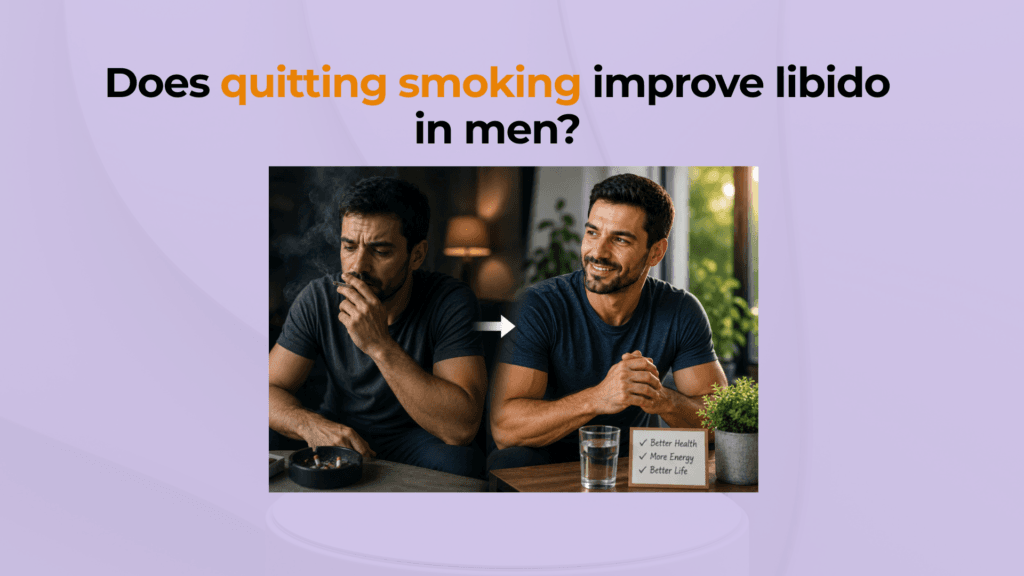
That vascular pathway matters for libido because many men experience desire through a feedback loop: better blood flow supports stronger erectile response, stronger erectile response improves confidence, and improved confidence can make sexual desire feel easier to access. If a man still has desire but avoids sex because erections feel unreliable, quitting smoking may indirectly help libido by improving the body’s response to arousal.
How nicotine, carbon monoxide, and oxidative stress restrict blood flow
Nicotine can acutely narrow blood vessels through sympathetic nervous system activation. Carbon monoxide reduces oxygen delivery by binding to hemoglobin, while other smoke chemicals increase oxidative stress inside vascular tissue. Together, these effects can make the blood-flow side of arousal less efficient.
This is why cardiovascular health is a central part of male libido recovery. The problem is not only “desire in the brain.” In many smokers, the first bottleneck is the blood-vessel system that supports erectile firmness, genital sensation, stamina, and confidence.
Does smoking lower testosterone?
The testosterone layer needs careful wording. Smoking may affect the endocrine system, SHBG, oxidative stress, and testicular biology, but human research does not support a simple claim that cigarette smoking always lowers testosterone or that quitting produces an immediate testosterone spike.
A stronger article should say this instead: smoking-related libido problems are usually better explained through vascular impairment, erectile confidence, mood, sleep, and cardiometabolic health. Testosterone still matters for male desire, but it should not be presented as the main proven mechanism unless the man has confirmed low testosterone on proper blood testing.
When can sexual function improve after quitting?
Recovery does not happen on one exact libido clock. General cardiovascular and respiratory benefits begin soon after quitting, while sexual-function changes depend on baseline erectile function, pack-year exposure, age, diabetes risk, blood pressure, sleep quality, medication use, and whether the man fully stops smoking.
Men should treat the timeline as a recovery window, not a promise. Early improvements may include better exercise tolerance, less breathlessness, and better morning-erection confidence. Longer-term changes may involve lower cardiovascular risk and better erectile reliability.
| Time after quitting | Evidence-aligned change | Possible sexual-health relevance |
|---|---|---|
| 24 hours | Nicotine level in the blood drops to zero. | Less acute nicotine exposure may reduce vasoconstrictive pressure, but libido may not change yet. |
| Several days | Carbon monoxide level falls toward the level of someone who does not smoke. | Better oxygen delivery may support stamina and exercise tolerance over time. |
| 1–12 months | Coughing and shortness of breath decrease. | Improved breathing and fitness can indirectly support sexual confidence and energy. |
| 6–24 months+ | Erectile-function improvement is more likely in men who successfully quit than in men who continue smoking. | Better erections may reduce avoidance, performance worry, and desire suppression. |
What does the evidence show?
The strongest evidence is not “smokers have lower libido scores.” The stronger evidence is that smoking is associated with erectile dysfunction and that quitting can improve erectile-function outcomes in some men. That distinction makes the article medically safer and more credible.
In a reviewed randomized trial, men who quit smoking reported erectile-function improvement more often than men who did not quit. This supports quitting as a practical sexual-health intervention, especially when low libido is tied to unreliable erections or low sexual confidence.
Evidence used for this revision
These sources were used to keep the article medically cautious and to remove over-strong claims.
- CDC smoking cessation benefits: quitting improves health at any age and reduces cardiovascular risk over time; nicotine and carbon monoxide markers improve after quitting. Source
- Sexual Medicine Reviews evidence: smoking-related erectile dysfunction is linked to endothelial impairment, nitric oxide signaling, oxidative stress, and cessation-related erectile-function improvement in some men. Source
- Testosterone caution: evidence on smoking, SHBG, total testosterone, free testosterone, and bioavailable testosterone is mixed, so the article should not claim a universal testosterone drop. Source
- Conflicting hormone findings: studies have reported lower, similar, or higher testosterone measures among smokers, which supports cautious wording. Source
When quitting may not fully fix libido
Quitting smoking is a powerful step, but it may not fully fix libido if another driver is present. Persistent low desire after quitting should prompt a broader review of sleep, depression, anxiety, medication side effects, alcohol use, diabetes risk, obesity, relationship stress, and testosterone status.
If desire is present but sexual situations trigger fear of failure, performance anxiety can keep libido suppressed even after blood flow improves. In that case, the recovery target is not only the blood vessels; it is also the learned fear loop around sex.
Get medical evaluation if symptoms persist
Men should seek professional evaluation if low libido, weak erections, chest symptoms during sex, severe fatigue, depression, or loss of morning erections persists after quitting. Erectile dysfunction can sometimes signal vascular disease, diabetes, medication effects, or low testosterone.
Action steps after quitting smoking
The best recovery plan combines smoking cessation with vascular repair habits. Quitting removes the ongoing smoke injury; exercise, sleep, nutrition, and medical screening help rebuild the system that supports arousal.
Recovery checklist
Use evidence-based quit support. Counseling, nicotine-replacement therapy, prescription options, and quitlines can improve quit success. Ask a clinician which option is safest for you.
Measure vascular risk. Check blood pressure, fasting glucose or HbA1c, lipids, waist circumference, and exercise tolerance if erections or libido remain weak.
Train the blood-flow system. Regular walking, cardio, resistance training, and weight management can support endothelial health and sexual confidence.
Test hormones only when clinically appropriate. If low libido persists with fatigue, low morning erections, low mood, or reduced muscle mass, ask for properly timed morning testosterone testing rather than assuming smoking was the only cause.
Final verdict
Quitting smoking can improve male sexual function, especially when smoking has contributed to vascular impairment or erectile dysfunction. The clearest benefit is better erectile-function potential, not an automatic libido surge. If low libido was caused by fear of weak erections, low stamina, or poor sexual confidence, quitting may help desire return indirectly. If low libido persists after quitting, evaluate other causes instead of assuming the problem is only smoking.