

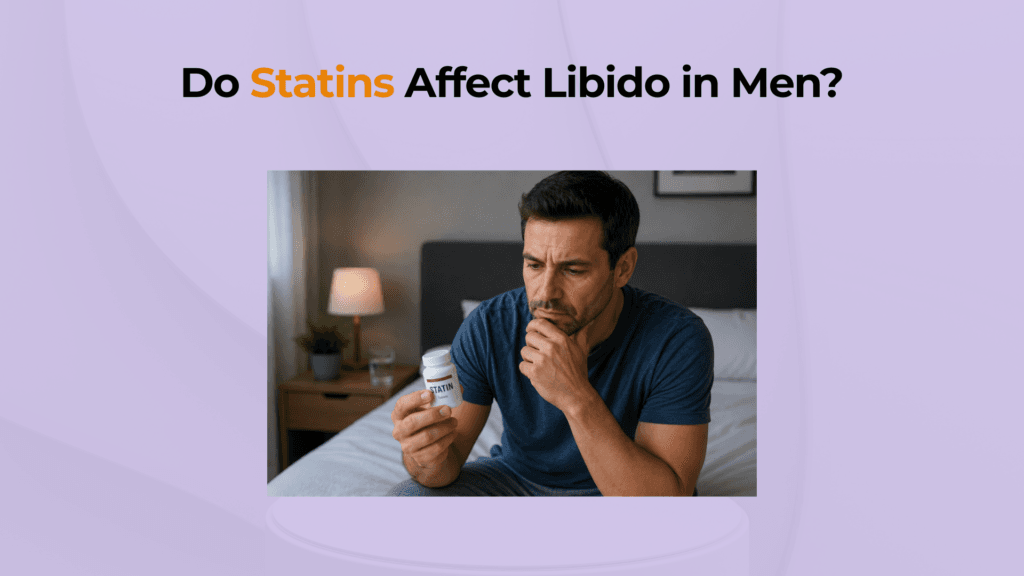
Do Statins Affect Libido in Men?
Statins may affect libido in men by potentially lowering testosterone levels or causing fatigue, though clinical evidence remains mixed and often conflates desire with erectile dysfunction mechanics.
IMPORTANT MEDICAL DISCLAIMER
Do not stop taking prescribed medication without consulting your healthcare provider, as cardiovascular risk often outweighs sexual side effects.
The Connection Between Statins and Sexual Function
The connection between statins and sexual function involves complex biochemical pathways affecting hormone synthesis and blood flow. It is crucial to distinguish between libido (sexual desire) and erectile function (mechanical ability), as statins may impact these differently. While cholesterol is often viewed negatively, it serves as the essential precursor for steroid hormone production, creating a theoretical link between cholesterol-lowering drugs and hormonal balance.
How Statins May Influence Testosterone Levels
Statins may influence testosterone levels because cholesterol serves as the primary building block for testosterone synthesis. The enzyme HMG-CoA reductase is the rate-limiting step in cholesterol production. By inhibiting this enzyme, statins reduce the availability of cholesterol substrate.
In the testes, Leydig cells utilize cholesterol to produce testosterone. Theoretically, if systemic cholesterol is significantly lowered, the substrate availability for these cells could decrease, potentially leading to lower free testosterone levels. However, clinical data shows significant variance; many men on long-term therapy maintain normal hormonal profiles, suggesting compensatory mechanisms or sufficient substrate retention.
Understanding this pathway is critical when checking hormone panels. Distinctions must be made between Total Testosterone and Free Testosterone, as statins may affect sex hormone-binding globulin (SHBG) levels, altering the bioavailable fraction without necessarily crashing total production.
Psychological vs. Physical Side Effects
Psychological vs. physical side effects must be distinguished because fatigue or depression can mimic low libido symptoms. A common confounder is Statin-Associated Muscle Symptoms (SAMS).
Patients often report a general lack of energy or physical exhaustion, which naturally reduces the desire for sexual activity. This is distinct from a primary loss of sexual interest (libido). Furthermore, the Nocebo Effect—where expectation of harm causes symptoms—plays a significant role. Men who read about sexual side effects may psychogenically experience them, even if the drug is not the physiological cause.
For patients reporting symptoms shortly after starting therapy, understanding managing statin fatigue may resolve the perceived sexual dysfunction without altering the medication regimen.
Evidence from Clinical Studies
Evidence from clinical studies regarding statins and libido shows conflicting data with low prevalence rates in controlled trials. Isolating libido from age-related decline and comorbidities like diabetes or hypertension remains a significant challenge in research.
Prevalence Rates and Reporting Bias
Prevalence rates and reporting bias complicate the data because sexual side effects are often underreported in trials. Controlled trial data often shows lower rates of sexual dysfunction compared to post-marketing surveillance reports. This discrepancy arises because strict trial criteria exclude high-risk patients, whereas real-world usage includes a broader, often sicker population.
While some meta-analyses suggest a small but statistically significant risk, anecdotal forum posts should not be cited as evidence because they lack verification and control for confounding variables. Understanding clinical trial limitations helps patients interpret these statistics accurately.
Managing Sexual Side Effects While on Statins
Managing sexual side effects while on statins requires strategic medical intervention rather than abrupt cessation. The priority remains cardiovascular safety, but quality of life improvements are achievable through careful management.
Dosage Adjustment and Statin Switching
Dosage adjustment and statin switching are viable options that may preserve heart protection while reducing side effects. Different statins metabolize differently; specifically, the distinction between lipophilic (fat-soluble) and hydrophilic (water-soluble) statins is critical.
Lipophilic statins (e.g., Atorvastatin) penetrate cell membranes more readily, potentially affecting non-hepatic tissues like muscle and Leydig cells. Hydrophilic statins (e.g., Rosuvastatin) are more liver-selective. Switching to a hydrophilic option may reduce tissue penetration and alleviate symptoms. However, switching medications must be contrasted with the risk of uncontrolled cholesterol; only a prescribing physician can alter medication regimens.
| Statin Type | Solubility | Theoretical Risk Profile |
|---|---|---|
| Atorvastatin | Lipophilic | Higher cellular penetration |
| Rosuvastatin | Hydrophilic | Lower cellular penetration |
Patient Action Checklist
- Document symptoms: Keep a log of when libido changes occurred relative to dosage.
- Request labs: Ask for a testosterone panel during the next visit.
- Consult provider: Discuss hydrophilic vs. lipophilic options.
For those experiencing confirmed side effects, discussing medication changes with your doctor is the safest path forward.
When to Consult a Doctor
When to consult a doctor depends on the severity of symptoms and the underlying cardiovascular risk profile. Reinforcing the hierarchy of health risks is essential: sexual side effects are a quality-of-life issue, but uncontrolled cholesterol is a life-threatening risk.
Red Flags and Cardiovascular Priority
Red flags and cardiovascular priority dictate that chest pain or breathlessness outweighs sexual side effects in urgency. Stopping statins abruptly can lead to increased LDL oxidation and elevated heart attack risk.
While quality of life impacts medication adherence, the risk-benefit ratio heavily favors continued therapy for most patients. If symptoms persist, schedule a cardiology consultation to explore alternatives without compromising heart health.