Can Shame Reduce Male Libido?
Analyzing the Psychological Barrier to Sexual Desire
Yes, shame reduces male libido by activating the sympathetic nervous system, which triggers cortisol release that biologically interferes with testosterone signaling and dopamine pathways essential for sexual drive.
For many men, the disconnect between their internal desire and their physical response feels confusing and isolating. Understanding that this phenomenon is rooted in neuroendocrinology can offer significant relief. It is not merely a matter of willpower; it is a biological defense mechanism triggered by emotional states.
IMPORTANT MEDICAL/SAFETY DISCLAIMER: Persistent changes in libido require professional evaluation to rule out hypogonadism or other underlying medical conditions. This content is for educational purposes and should not replace a consultation with a urologist or therapist.
Understanding Sexual Shame and Its Origins
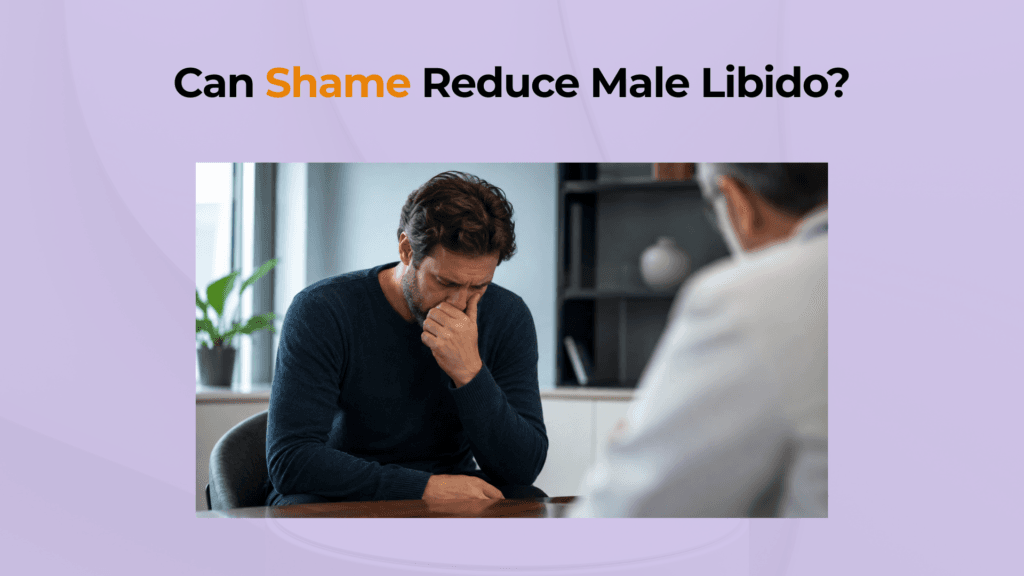
Sexual shame in men originates from societal conditioning, negative past experiences, or perceived failures in performance. Unlike embarrassment, which fades quickly, shame is a deep-seated affective state. It implies that the core of the self is flawed rather than just a specific behavior was mistaken.
The roots of this feeling often lie in cultural narratives surrounding masculinity. Men are frequently conditioned to view sexual performance as a primary metric of manhood. When an erection fails or desire wanes, it can be internalized not as a temporary physiological hiccup, but as a personal failure of character. This internalization creates a feedback loop where the fear of repeating the mistake suppresses the very desire needed to overcome it.
Distinguishing Performance Anxiety from Chronic Shame
Distinguishing performance anxiety from chronic shame requires evaluating whether the distress is situational or identity-level. Performance anxiety is often a transient spike in stress related to a specific encounter, whereas shame persists across contexts and becomes part of the individual’s self-concept.
Diagnostic Self-Check
- History: Did the drop in libido coincide with a specific negative sexual event?
- Onset: Is the issue persistent across different partners or situations, or isolated to a specific environment?
- Emotion: Does the anticipation of failure (“fear of failure”) outweigh the actual enjoyment of intimacy?
The Physiological Impact of Stress on Testosterone and Desire
The physiological impact of chronic stress on testosterone production occurs via cortisol-mediated suppression of the Hypothalamic-Pituitary-Gonadal (HPG) Axis. This is not simply a metaphorical “drop”; it is a documented biochemical pathway where the brain actively inhibits reproductive hormones when it perceives a threat.
Hormones do not lie. When the brain is flooded with cortisol due to sustained emotional distress, it prioritizes survival over reproduction. This is an evolutionary relic designed to conserve energy during danger, but in modern life, it manifests as a biological shutdown of libido.
Cortisol Levels and Sexual Function Disruption
Elevated cortisol levels resulting from sustained emotional distress disrupt sexual function by inhibiting gonadotropin-releasing hormone (GnRH). This chemical cascade effectively turns off the signal that tells the testicles to produce testosterone. Furthermore, chronic exposure to high cortisol downregulates androgen receptors, making the tissues less sensitive to whatever testosterone remains in circulation.
| Stress Factor | Impact on Libido | Duration |
|---|---|---|
| Acute Event (One-off) | Temporary Dip | Recovers within days |
| Chronic Shame (Persistent) | Sustained Reduction | Continues until addressed |
| Identity Threat | Deep Suppression | Requires therapeutic intervention |
Recognizing Psychogenic Libido Loss Signals
Recognizing psychogenic libido loss signals involves identifying patterns where desire is present physically but blocked mentally. This differentiation is crucial because it suggests that the “hardware” is functional, pointing toward a need for psychological support rather than purely hormonal medication.
One of the strongest diagnostic indicators is the maintenance of nocturnal erections or spontaneous arousal during sleep. These phenomena occur independently of conscious thought and will.
If morning erections remain robust despite low daytime interest, it strongly indicates that the vascular supply and nerve function are intact.
Pathways to Recovery and Sexual Confidence Restoration
Pathways to recovery and sexual confidence restoration involve addressing the psychological root through cognitive-behavioral strategies and medical support. Healing begins when the individual stops viewing the symptom as a permanent flaw and starts recognizing it as a manageable response to stress.
Cognitive Behavioral Interventions and Lifestyle Shifts
Cognitive behavioral interventions and lifestyle shifts address shame by restructuring negative thought patterns associated with sexuality. By consciously challenging catastrophic thoughts about performance (“I have to be perfect”), men can lower the baseline cortisol level, allowing the hypothalamus to resume its natural regulatory function.
It is vital to note that medication alone, such as PDE5 inhibitors, often fails to resolve the underlying libido issue if the shame loop remains active. Successful restoration usually requires a combined approach: retraining the brain’s stress response alongside medical management of any concurrent hormonal imbalances.