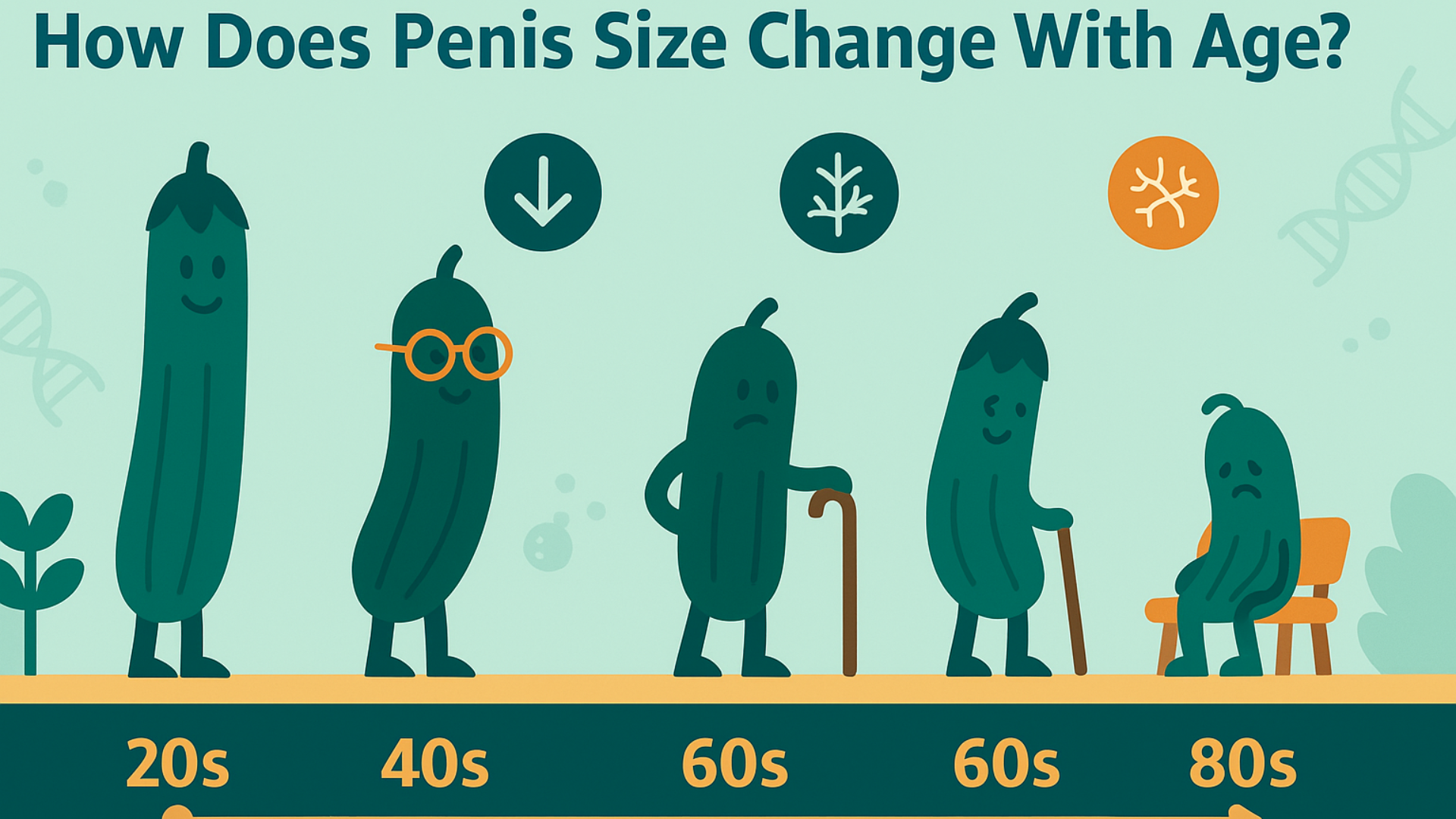
Penis size changes significantly during puberty, remains stable throughout most of adulthood, and can experience minor, subtle changes in later life as men get older. The human body changes continuously, and the penis is no exception.
Understanding these typical penis changes can help separate fact from fiction and provide reassurance about normal development and sexual function. The timeline of “penis size change with age” is a well-documented biological process.
This guide details how penis size changes with age, emphasizing that some changes are normal.
We will cover the significant growth during puberty, the stability in adulthood, and the subtle changes that can occur in later life, including how the penis may change with age.
By examining the clinical evidence from fields like urology and endocrinology, this article provides a factual overview of the normal penis size change with age, helping to set clear, science-backed expectations.
When Does the Most Significant Penis Size Change With Age Occur?
The most rapid penis size increase happens during puberty, driven by surges in testosterone and growth hormones, which are crucial for testicle development.
This developmental phase is when the penis and other secondary sexual characteristics mature, representing the only period of substantial natural growth, before the changes that happen to your penis as you age.
The Pubertal Growth Spurt (Ages 9-16)
The pubertal growth spurt is the period of most noticeable penis size change with age, driven by a significant surge in testosterone and other growth hormones that stimulate the rapid development of sexual characteristics.
This process is orchestrated by the Hypothalamic-Pituitary-Gonadal (HPG) Axis, a complex hormonal feedback loop where the brain signals the testes to dramatically increase the production of Testosterone.
This growth occurs in predictable stages, which physicians classify using the Tanner Stages. According to the National Center for Biotechnology Information, the most significant penis growth in both length and girth typically occurs between ages 11 and 16, corresponding to Tanner Stages 3 through 5.
Reaching Adult Size
For most individuals, all significant penis size change with age is complete by the late teens or early twenties, typically by age 18-21, after which the penis has reached its full, genetically determined adult size and will not naturally grow larger. Once puberty concludes and the body’s skeletal growth plates close, the developmental window for penile growth also ends.
After this point, the role of Testosterone As men age, the focus shifts from stimulating growth to maintaining adult male characteristics, including libido, erection quality, and overall penile health.
According to the American Urological Association (AUA), adult testosterone levels show only a weak correlation with final adult penis size, confirming that growth is a time-sensitive process confined to puberty.
Does Penis Size Change With Age During Adulthood?
No, the actual anatomical “penis size” does not change with age during the majority of adulthood (from the 20s to the 50s); the only changes that occur are apparent, often due to fluctuations in body weight.
The Period of Stability (Ages 20s to 50s)
Once adult size is reached post-puberty, the penis enters a long period of anatomical stasis through the 20s, 30s, 40s, and 50s, where its actual Bone-Pressed Erect Length (BPEL) is an important measurement for assessing penile health. and erect girth do not naturally increase or decrease with age-related penis change.
This is the longest and most stable phase concerning penis size. The underlying tissues, including the erectile bodies (corpora cavernosa), maintain their structure and volume throughout these decades, barring specific medical conditions that can affect penis length and erectile function.
Apparent Changes vs. Actual Changes
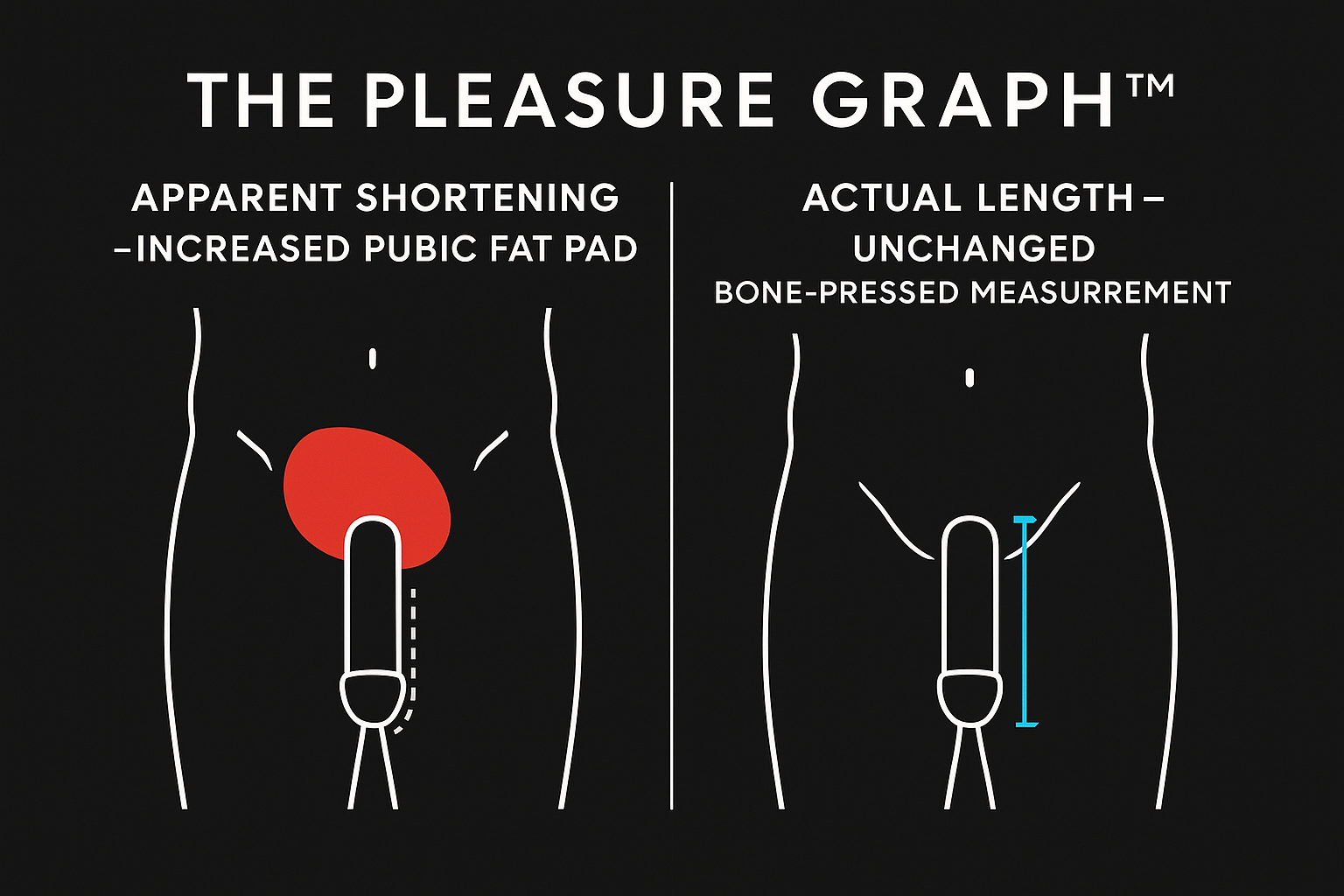
Apparent changes in penis size during adulthood are often related to lifestyle factors like weight gain, where an increase in the penis length may occur due to changes in the scrotum or surrounding areas.
Suprapubic Fat Pad can make the penis appear shorter, even though its actual bone-pressed length remains unchanged. When an individual gains weight, fat can accumulate in the area above the pubic bone, effectively burying a portion of the penile shaft and impacting its size and shape.
This effect is measurable and reversible, demonstrating how penis change with age can be addressed. A 2021 prospective study published in BJU International on cryolipolysis (fat freezing) of the suprapubic area demonstrated a statistically significant (p\<0.001) increase in mean apparent stretched penile length from 12.1 Changes in cm to penis length can occur with age, affecting overall penile health. 12.88 cm after reducing the fat pad, which can influence the visible length of the erect penis length.
This confirms that the change is one of visibility, not of actual anatomical length, emphasizing that penis changes as you age can be influenced by various factors.
This distinction between actual and apparent size often leads to questions about established norms regarding penis length and sexual function. To put your own measurements in a clinical context, it’s helpful to understand the scientific data on what is the average penis size?.
What Penis Size Changes With Age Can Occur in Later Life?
In later life, penis size changes are minimal, usually a slight decrease in firmness and length. These subtle changes, typically occurring after age 60, are a part of the natural aging process, or senescence. Authoritative health institutions provide insights into how penis changes as you age. WebMD and the Mayo Clinic confirm that these age-related changes are common and generally not a cause for alarm.
Several physiological factors contribute to these minor alterations:
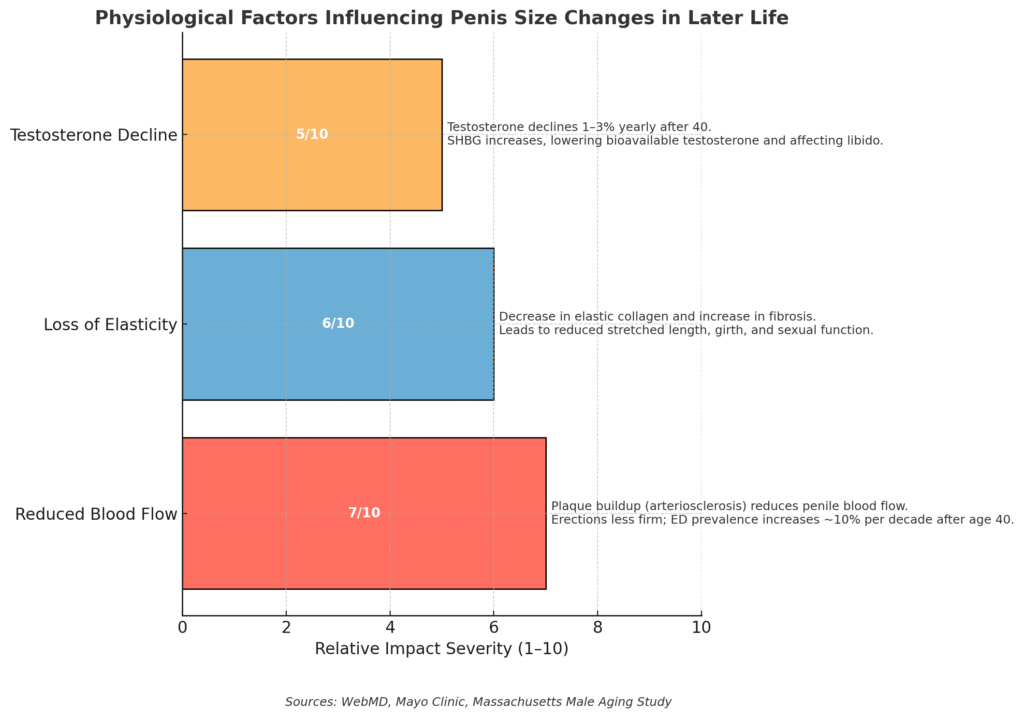
- Reduced Blood Flow can affect sexual function.With age, the buildup of plaque in arteries, a condition known as arteriosclerosis, can negatively affect penile health. Arteriosclerosis can lead to reduced blood flow, impacting overall penile health., can reduce circulation throughout the body, including to the penis. Less efficient blood flow due to conditions like arteriosclerosis can affect penile health. blood flow results in erections that may be less firm or rigid than in younger years. The Massachusetts Male Aging Study highlights that erectile dysfunction prevalence increases by about 10% each decade after age 40, reflecting this vascular change.
- Loss of Elasticity may lead to reduced sexual function as we get older.: The erectile tissues are rich in Collagen levels may decrease as we get older. and elastic fibers, which give the penis its ability to expand and become rigid. As men age, there is a natural decrease in the production of elastic Collagen and a gradual increase in the deposition of less flexible collagen fibers, a process known as Fibrosis is the formation of hard, non-elastic scar tissue within the body’s soft tissues, which can impact penis length and overall sexual function.. This makes the erectile tissue less pliable, which can contribute to a slight reduction in maximum stretched length and girth, potentially affecting sexual function.
- Testosterone Decline: While not as dramatic as the pubertal surge, hormone levels shift in later life, potentially affecting prostate health. Total testosterone levels decline slowly, often by 1-3% per year after age 40, which can influence both penis size and sexual function. More importantly, a protein called sex hormone-binding globulin (SHBG) increases with age, binding to testosterone and reducing the amount of “bioavailable” testosterone the body can use. This can impact libido and erection quality, influencing the ways your penis responds over time.
This age-related change in firmness is a common concern. For those looking to maintain function, it’s important to learn how to improve erection quality through health and lifestyle choices.
How Pathological Conditions Affect Penis Size
Pathological conditions like Peyronie’s disease affect penis size by creating inelastic scar tissue (fibrosis). This process results in significant penile curvature, painful erections, and a measurable loss of length not associated with normal aging.
The Role of Scar Tissue (Peyronie’s Disease)
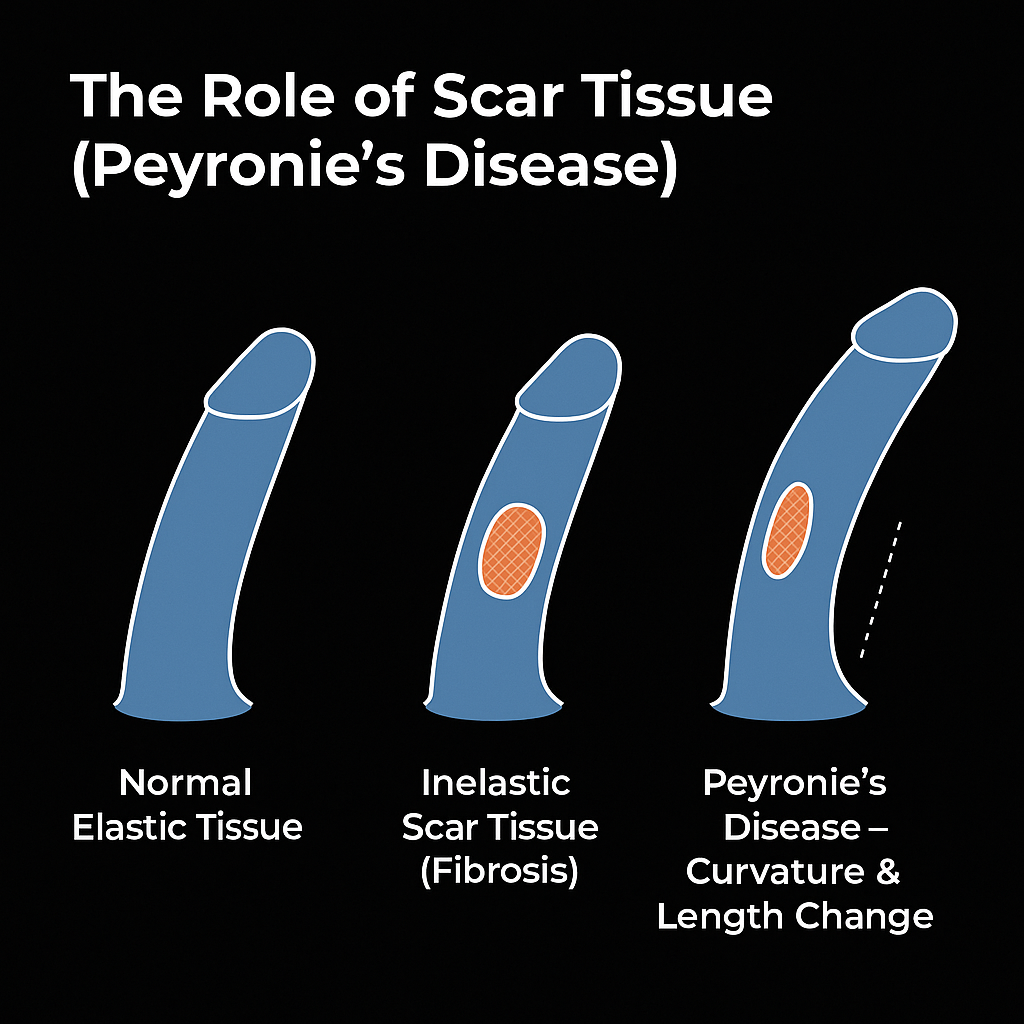
The gradual buildup of small amounts of inelastic scar tissue (Fibrosis) over a lifetime can contribute to a slight reduction in stretched length, while a specific condition known as Peyronie’s disease can also influence the ways your penis changes.
Peyronie’s disease can cause more significant curvature and shortening. Fibrosis is the formation of hard, non-elastic scar tissue within the body’s soft tissues, which can impact penis length and the function of blood vessels.
Peyronie’s disease is a distinct medical condition, not a normal part of aging, in which significant plaques of scar tissue form within the tunica albuginea, the sheath surrounding the erectile bodies, leading to changes in size and shape.
According to the Mayo Clinic, this can cause the penis to bend significantly during an erection, make erections painful, and lead to a noticeable loss of length.
It affects an estimated 6% to 10% of men, most commonly between ages 40 and 70, and can cause a shortening of 0.5 cm to 1.5 cm or more. Any sudden change in penile shape or length should be evaluated by a healthcare professional to understand what happens to your penis. physician or urologist.
What Are the Key Facts to Remember About Penis Size Change With Age?
The key facts to remember about “penis size change with age” are that significant growth ends after puberty, adulthood is a period of stability, apparent size can fluctuate with weight, and any changes in later life are typically very minor for most men.
Key Facts About Penis Size and Aging
- ☐ Growth Ends After Puberty, but subtle penis changes may still occur as men get older.: All significant natural growth is completed by the early 20s.
- ☐ Adulthood is StableFor most of adult life, penis size does not change significantly, although minor penis changes may occur as men get older.
- ☐ Apparent Size Can Change due to various factors, including weight gain and changes in the scrotum.: Factors like weight fluctuation can change how large the penis looks.
- ☐ Later-Life Changes Are Minor: Any decrease in older age is typically very slight and not medically significant for most men.
Conclusion
In conclusion, the journey of “penis size change with age” involves a period of rapid growth during puberty, followed by decades of stability in adulthood, and potentially minor, subtle changes in senior years due to natural aging processes. The most significant changes are confined to the adolescent years, but some penis change can occur as we get older. For the vast majority of a man’s life, his anatomical penis size is a stable attribute.
Understanding this natural timeline helps to create realistic expectations and distinguishes between actual anatomical changes and perceived ones driven by factors like weight.
Any concerns about sudden or significant changes, especially when accompanied by pain or curvature, should always be discussed with a healthcare professional.
At factbasedurology, we are committed to providing clear, scientific information about the normal processes of the human body, including the ways your penis may change as you age. Appreciating this biological timeline is a key part of understanding men’s health across the lifespan.
Frequently Asked Questions (FAQ) About Penis Size and Aging
Does weight loss increase penis size?
Weight loss does not change the actual, anatomical (bone-pressed) length of the penis, but it may affect the appearance of the scrotum. However, by reducing the Suprapubic Fat Pad at the base of the penis, weight loss can increase its visible or apparent length, making more of the shaft visible.
Can anything make your penis smaller in adulthood?
Besides the minor, gradual changes that may occur in later life and the apparent shortening from weight gain, significant penis shrinkage is not a normal part of aging, although penis change can happen. Such changes could be related to conditions like Peyronie’s disease and warrant a visit to a physician.
Do erections get smaller with age?
Due to natural age-related changes in blood flow and tissue elasticity, some men may notice their erections are less firm or full compared to when they were younger. This can result in a slightly smaller erect measurement, but this is typically a gradual and minor change that can occur with age.
Glossary of Clinical Terms
To ensure full clarity, this glossary defines the key clinical and scientific terms used throughout this guide on “penis size change with age.”
| Term | Definition: Penis change refers to the variations in size and function that may occur due to aging, lifestyle factors, or medical conditions. |
| Puberty | The period of human development during which a person becomes sexually mature, marked by a surge in growth hormones and testosterone, is crucial for testicle and penile health. |
| Suprapubic Fat Pad | The layer of adipose tissue located over the pubic bone at the base of the penis, which can obscure its visible length. |
| Collagen | The main structural protein found in skin and other connective tissues, which provides strength and elasticity. |
| Fibrosis | The thickening and scarring of connective tissue, usually as a result of injury or aging. |
| Peyronie’s Disease | A condition in which fibrous scar tissue forms in the deeper tissues of the penis, causing curved, painful erections and potential shortening of penis length, can also affect penis changes as you age. |