
What Is the Opening at the Tip of the Penis Called? A Guide to the Urethral Meatus
The opening at the tip of the penis is the urethral meatus, a critical anatomical structure that serves as the exit point for both the urinary and reproductive tracts, and changes to it can be an important sign of underlying health conditions.
While often overlooked, the urethral meatus is a key site for symptoms of common conditions like urethritis and meatal stenosis.
This guide provides a medically accurate explanation of the ‘urethral meatus,’ its crucial functions, the common health conditions that affect it, their prevalence rates, and proper hygiene. The urethral meatus is a small but vital part of male anatomy.
What Is the Urethral Meatus and Where Is It Located?
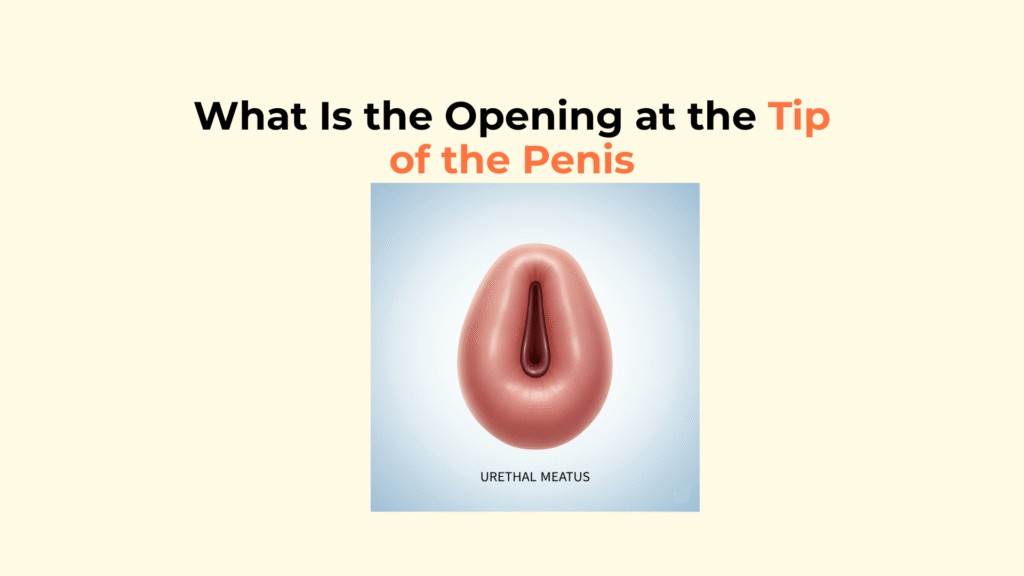
The urethral meatus is the external opening, or orifice, located at the very tip of the glans (head) of the penis, serving as the terminal point of the urethra. This structure is the visible end of the tube that carries urine from the bladder out of the body.
The urethral meatus is located at the tip of the glans penis (head of the penis), where it serves both urinary and reproductive functions.
It is normally a vertical slit-like opening. The exact shape and size of the urethral meatus can vary slightly among individuals while still being considered anatomically normal.
What Are the Primary Functions of the Urethral Meatus?
The primary functions of the urethral meatus are serving as the final exit pathway for both expelling urine from the bladder and expelling semen during ejaculation. These two distinct roles are fundamental to the urinary and reproductive systems.
- Expelling Urine: The urethral meatus is the final point of the urinary tract. It allows for the controlled voiding of urine, enabling the stream to be directed away from the body.
- Expelling Semen: As the terminal point of the reproductive tract, the urethral meatus serves as the exit point for ejaculate (semen) during male orgasm.
What Are Common Conditions That Affect the Urethral Meatus?
Common conditions that specifically affect the urethral meatus include narrowing (Meatal Stenosis), congenital misplacement (Hypospadias), and signs of infection or inflammation (Urethritis), each with distinct causes and presentations.
What Is Meatal Stenosis?
Meatal stenosis is a condition characterized by an abnormal narrowing or constriction of the urethral meatus, which can impede urine flow. It is most commonly observed as an acquired condition in circumcised boys, with prevalence rates reported between 0.65% and 11% (Source: NCBI, Meatal Stenosis). This narrowing is often thought to be related to inflammation or irritation of the meatus after circumcision.
Key symptoms of meatal stenosis directly relate to the obstruction. These include a high-pressure, spraying, or deflected urine stream, painful urination (dysuria), urinary frequency, and sometimes a feeling of incomplete bladder emptying.
Diagnosis is often made by physical examination, but it can be confirmed with diagnostic tools like uroflowmetry, which measures the rate and volume of urine flow. The standard treatments are minor surgical procedures called meatotomy or meatoplasty, which involve making a small incision to widen the urethral meatus and restore normal urine flow.
If the opening becomes abnormally narrow, the condition is known as meatal stenosis (narrowing of the urethral meatus).
What Is Hypospadias?
Hypospadias is a common congenital condition, or birth defect, where the urethral meatus opens on the underside (ventral aspect) of the penis, rather than at the tip of the glans. This condition occurs in approximately 1 in 125 to 1 in 300 male births (Source: CDC, Facts about Hypospadias).
The condition is classified based on the location of the urethral meatus, which can be distal (near the head of the penis), midshaft, or proximal (closer to the scrotum). Surgical repair, typically performed in infancy, is the standard treatment to reposition the meatus to the tip of the glans, correct any associated penile curvature, and ensure normal urinary and future sexual function.
In some individuals, the meatus is located along the underside of the penis, a birth defect called hypospadias (misplaced urethral opening).
What Are Signs of Urethritis (Infection) in the Urethral Meatus?
Urethritis, an inflammation or infection of the urethra often caused by bacteria or STIs, frequently presents with symptoms visible at or emanating from the urethral meatus. Common symptoms include redness, swelling, or itching of the meatus itself.
Two hallmark signs are dysuria (a burning or painful sensation during urination) and an unusual discharge from the urethral meatus, which can be white, yellow, green, or cloudy.
The most common causes of urethritis are sexually transmitted infections (STIs). Specifically, bacteria like Neisseria gonorrhoeae (which causes gonorrhea) and Chlamydia trachomatis (which causes chlamydia) are primary culprits.
Diagnosis is confirmed using highly accurate Nucleic Acid Amplification Tests (NAATs). These tests are typically performed on a urine sample or a urethral swab to detect the genetic material of the infecting organism. Prompt diagnosis and treatment with antibiotics, as recommended by CDC guidelines, are essential to cure the infection and prevent complications (Source: CDC, Urethritis Treatment Guidelines).
Redness, discharge, or burning at the meatus may signal urethritis (urethral infection), which requires medical treatment.
What Are Best Practices for Urethral Meatus Health?
Best practices for urethral meatus health primarily involve maintaining good local hygiene, staying well-hydrated to flush the urethra, and practicing safe sex to prevent STIs.
How Can You Maintain Good Hygiene for the Urethral Meatus?
Maintaining good hygiene for the urethral meatus involves gentle, regular cleaning of the penis tip and ensuring adequate fluid intake to support urinary health.
Actionable steps include gently washing the penis with warm water daily as part of a normal bathing routine. For uncircumcised individuals, this includes carefully retracting the foreskin to clean the glans and the area around the urethral meatus, then returning the foreskin to its normal position.
In uncircumcised individuals, the foreskin (prepuce) protects the glans and the urethral meatus, helping preserve sensitivity.
It is important to avoid harsh soaps or aggressive scrubbing directly on the urethral meatus. These products can disrupt the natural pH balance and protective microbiome of the area, potentially stripping away beneficial bacteria and increasing the risk of irritation or infection.
Hydration is also a key part of hygiene. Staying well-hydrated ensures a steady production of urine, which helps to regularly flush the urethra and clear potential irritants or bacteria before they can cause a problem.
When Should You See a Doctor About Your Urethral Meatus?
You should consult a doctor promptly if you notice specific changes or symptoms related to your urethral meatus, such as unusual discharge, pain, urinary changes, or visible lesions. Early evaluation is key to proper diagnosis and treatment.
Pay attention to these specific signs:
- Any unusual discharge: White, yellow, green, bloody, or cloudy fluid coming from the urethral meatus is a primary sign of infection (like an STI) and requires prompt evaluation.
- Persistent pain, stinging, or burning: This is especially concerning if it occurs during urination (dysuria).
- A noticeably weak, split, spraying, or difficult-to-initiate urine stream: This is a key sign of a potential obstruction, such as meatal stenosis.
- Visible sores, blisters, warts, or other unusual growths: Any new lesions on or directly around the meatus should be examined by a healthcare provider.
- Any bleeding directly from the meatus (that is not related to a known injury).
What Are the Key Facts About the Urethral Meatus?
This table summarizes the key anatomical, functional, and clinical facts about the urethral meatus.
| Feature | Urethral Meatus |
|---|---|
| Location | The external opening at the tip of the glans penis. |
| Primary Functions | Exit point for urine and semen. |
| Common Conditions | Meatal Stenosis (narrowing), Hypospadias (misplacement), Urethritis (infection). |
| Key Health Sign | A strong, straight, unobstructed stream of urine. |
Conclusion: A Vital Opening for Health
In conclusion, the urethral meatus, though small, is a critical anatomical feature essential for both urinary function and reproductive health, and any changes to it warrant medical attention.
It serves the dual purpose of expelling waste from the body and facilitating reproduction. While the urethral meatus generally requires minimal specific care beyond good hygiene, any noticeable changes—especially in discharge, sensation during urination, or the quality of the urine stream—warrant prompt medical evaluation to rule out conditions like urethritis or meatal stenosis.
Paying attention to the health of your urethral meatus is a simple but important part of overall male wellness. At Factbasedurology, we believe that providing clear anatomical information is the first step to empowering individuals to take proactive care of their health.
Glossary of Clinical Terms
To ensure full clarity, this glossary defines the key clinical and scientific terms used throughout this guide on the urethral meatus.
| Term | Definition |
|---|---|
| Urethral Meatus | The external opening at the tip of the penis that serves as the exit for urine and semen. |
| Meatal Stenosis | An abnormal narrowing of the urethral meatus, often causing a spraying or weak urine stream. |
| Hypospadias | A congenital condition (birth defect) where the urethral meatus is located on the underside of the penis, not at the tip. |
| Urethritis | Inflammation or infection of the urethra, often caused by an STI and resulting in discharge or painful urination (dysuria). |
| Uroflowmetry | A diagnostic test that measures the speed and volume of urine flow to assess for obstructions like meatal stenosis. |
| Meatotomy/Meatoplasty | A minor surgical procedure to widen the urethral meatus and correct meatal stenosis. |
| NAAT (Nucleic Acid Amplification Test) | The “gold standard” for STI testing. It is a highly sensitive test that detects the genetic material (DNA or RNA) of an organism. |


5 Responses
Can you be more specific about the content of your article? After reading it, I still have some doubts. Hope you can help me. https://www.binance.info/en-NG/register?ref=YY80CKRN