
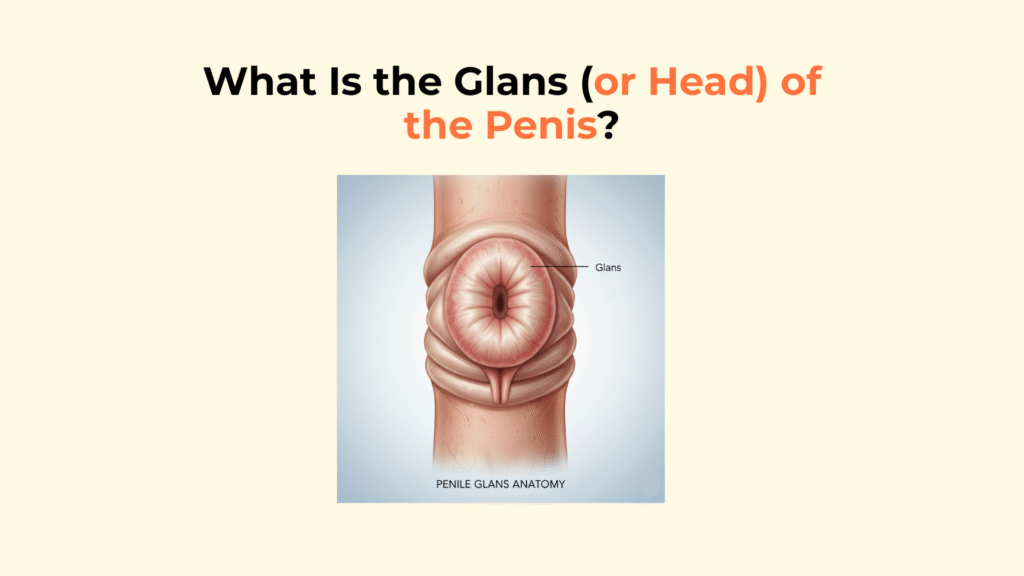
What Is the Glans (or Head) of the Penis?
The glans penis, commonly known as the head of the penis, is the sensitive, rounded anatomical structure located at the distal tip, playing crucial roles in sexual sensation, urination, and ejaculation.
This guide provides a complete, medically accurate explanation of the glans penis anatomy, detailing its specific parts, primary functions, common health conditions, and proper hygiene practices.
This guide offers a focused look at the visible external anatomy of the penis—including the shaft, glans, meatus, and foreskin. For a broader anatomical overview, refer to our complete penile anatomy breakdown.
Understanding the Glans Penis: Foundational Anatomy and Location
The glans penis is the sensitive, conical or bulbous-shaped anatomical structure forming the distal tip of the penis, representing the terminal expansion of the internal corpus spongiosum which surrounds the urethra. It sits at the end of the penile shaft, capping the two larger cylinders of erectile tissue known as the corpora cavernosa.
The glans itself is the bulbous end of the internal corpus spongiosum, which is the same erectile tissue that forms a tube around the urethra along the underside of the shaft.
The glans is the most nerve-dense part of the penis. This high concentration of nerve endings makes it extremely sensitive to tactile stimulation, which is essential for triggering sexual arousal and orgasm.
What Are the Key Anatomical Parts of the Glans Penis?
The key anatomical parts of the glans penis include the urethral meatus, the corona, the frenulum, and its relationship with the foreskin in uncircumcised individuals. Understanding the anatomy of the human glans penis is key to understanding its function and health.
The key parts of the glans include the corona and frenulum, both important for sensation and retraction.
The Corona: The Ridge Separating the Glans from the Shaft
The corona, or corona glandis, is the prominent, rounded ridge of tissue that flares out from the base of the glans, forming a distinct boundary separating it from the penile shaft. This “crown” is often slightly wider than the shaft itself and is a particularly sensitive area.
The Frenulum: The Elastic Tissue Band on the Glans’ Underside
The frenulum is a small, highly sensitive, elastic band of tissue located on the underside (ventral aspect) of the glans penis, connecting it to the inner surface of the foreskin or the shaft. This structure, sometimes called the “banjo string,” is rich in nerve endings and contributes significantly to sexual sensation. It also helps in guiding the foreskin back over the glans after retraction.
A tight Frenulum can cause pain or restrict movement—often requiring evaluation. Learn about this and the anatomical features of the corona and frenulum.
The Urethral Meatus: The Opening of the Glans
The urethral meatus is the vertical slit-like opening located at the very tip of the glans penis, serving as the terminal exit point for both urine and semen. Its position at the apex of the glans allows for the directed expulsion of fluids from the body.
The Meatus is the external opening of the urethra, serving both urinary and reproductive functions. Explore detailed visuals and variations of the urethral meatus and its role.
The Foreskin (Prepuce) and its Relation to the Glans
In uncircumcised males, the glans penis is typically covered to a variable extent by the foreskin (prepuce), a retractable, double-layered sleeve of skin and mucous membrane that provides protection. The primary function of the foreskin is to protect the sensitive glans and the opening of the urethra from irritation, friction, and contaminants. It also contains its own network of nerves and sensitive tissue.
The Foreskin’s dual-layer design contributes to protection and sensitivity. Discover the full anatomy and physiology of the penile foreskin (prepuce).
What Are the Primary Functions of the Glans (Head) of the Penis?
The primary functions of the glans penis are providing the main source of sexual sensation due to its dense innervation and facilitating the directed expulsion of urine and semen via the meatus.
Function 1: Providing Primary Sexual Sensation
The glans penis functions as the primary sensory organ of the penis due to its exceptionally high concentration of specialized nerve endings, known as sensory corpuscles. This dense network contains thousands of nerve endings, far exceeding the density found on the penile shaft. This sensitivity is the main driver for achieving sexual arousal and climax.
The Glans contains thousands of nerve endings, making it the primary site for sexual sensitivity. For a deeper understanding, visit our page on the glans penis structure and sensory function.
Function 2: Facilitating Urination and Ejaculation
The conical or tapered shape of the glans penis, culminating in the opening of the urethra, facilitates the directed stream of both urine during urination and ejaculate during orgasm. This anatomical design allows for precise expulsion of fluids away from the body.
What Common Health Conditions and Variations Affect the Glans Penis?
Common health conditions affecting the glans penis primarily involve inflammation (Balanitis), while normal anatomical variations like Pearly Penile Papules are also frequently observed. Understanding glans penis health is crucial for identifying normal variations versus issues requiring medical attention.
Inflammatory Conditions: Balanitis
Balanitis is the clinical term for inflammation of the glans penis, typically presenting as redness, swelling, soreness, or discharge. Common causes include poor hygiene, which can lead to the buildup of Smegma (a substance composed of dead skin cells and natural oils) under the foreskin. This buildup can create a breeding ground for pathogens like Candida (a yeast) or bacteria. Balanitis is more common in uncircumcised males, with studies suggesting it may affect between 3-11% of all males at some point in their lifetime.
Inflammation of the glans is commonly known as balanitis (glans inflammation), often caused by poor hygiene or infection.
Normal Anatomical Variations: Pearly Penile Papules (PPPs)
Pearly Penile Papules (PPPs) are a common and completely harmless anatomical variation characterized by small, dome-shaped, skin-colored bumps, often appearing in rows around the corona of the glans.
It is critical to understand that PPPs are not a sexually transmitted infection (STI). They are not contagious, not caused by poor hygiene, and require no medical treatment. They are a normal physiological feature for many individuals.
Foreskin-Related Issues Impacting the Glans: Phimosis & Paraphimosis
In uncircumcised males, specific foreskin conditions can directly impact the glans penis, namely Phimosis and the medical emergency known as Paraphimosis.
- Phimosis: This is a condition where the foreskin is too tight to be retracted back over the glans. In children, this can be normal, but in adults, it can cause hygiene issues or pain during erections.
When the foreskin cannot retract over the glans, the condition is called phimosis (tight foreskin).
- Paraphimosis: This is a medical emergency where a retracted foreskin becomes trapped behind the corona of the glans and cannot be returned. This can constrict blood flow to the glans, causing severe swelling and pain. Paraphimosis requires immediate medical attention to prevent serious tissue damage.
When the foreskin is retracted behind the glans and becomes stuck, this is a medical emergency known as paraphimosis.
How to Maintain the Health and Hygiene of the Glans Penis
Maintaining the health and hygiene of the glans penis involves simple, regular cleaning practices tailored to whether an individual is circumcised or uncircumcised. Proper glans hygiene is the most effective way to prevent conditions like Balanitis.
Step-by-Step Hygiene for the Uncircumcised Glans
Proper hygiene for the uncircumcised glans penis requires gentle retraction of the foreskin to clean the underlying area effectively.
- Gently retract the foreskin fully, being careful not to force it, to expose the glans.
- Wash the exposed glans and the inner surface of the foreskin using only warm water. If necessary, a very mild, unscented soap can be used, but water is often sufficient. Avoid harsh soaps or cleansers, as they can irritate the sensitive skin.
- Rinse thoroughly to remove any soap residue or smegma.
- Gently pat the area dry with a soft towel.
- Carefully return the foreskin to its natural position covering the glans. This last step is crucial to prevent Paraphimosis.
Hygiene for the Circumcised Glans
Hygiene for the circumcised glans penis is straightforward, involving routine gentle washing of the exposed area. Daily washing of the glans and shaft with mild soap and warm water during a normal shower or bath is sufficient to maintain cleanliness and health.
Frequently Asked Questions (FAQ) About the Glans Penis
Q: Is it normal for the glans to be a different color than the shaft?
Yes, it is completely normal for the glans penis to be a different color—often a reddish, purplish, or darker pink hue—than the shaft. This color difference is due to the high concentration of blood vessels within the spongy corpus spongiosum tissue that forms the glans and is not a sign of a health problem.
Q: Can the frenulum tear? What happens if it does?
Yes, the frenulum can tear or micro-tear, most commonly during vigorous sexual activity, especially if it is naturally short (a condition called frenulum breve). A minor tear may bleed but typically heals on its own. If the frenulum tears repeatedly, causes significant pain, or restricts foreskin movement, you should consult a healthcare provider. Simple surgical procedures can lengthen the frenulum and resolve the issue.
Q: Does circumcision affect the sensitivity of the glans?
This remains a topic of complex scientific discussion. The glans itself, with its thousands of sensory corpuscles, is the primary center for sensation regardless of circumcision status. The foreskin, which is removed during circumcision, also contains its own network of sensitive nerves. Some studies and individuals report differences in the type or quality of sensation, while many other studies find no significant difference in overall sexual sensitivity, arousal, or function.
Q: What should I do if I see new bumps on my glans?
Do not attempt to self-diagnose. While some bumps, like Pearly Penile Papules (PPPs), are completely harmless, any new or changing bumps, lesions, sores, or spots on the surface of the glans should be evaluated by a qualified healthcare provider. A medical professional can accurately distinguish between a harmless variation, an infection (like an STI), or another skin condition and provide the correct diagnosis and treatment.
Summary Checklist: Key Facts About the Glans (Head) of the Penis
This table provides a quick, scannable summary of the essential facts about the glans penis anatomy and care.
| Aspect | Key Fact |
|---|---|
| Definition | The sensitive, rounded head (tip) of the penis. |
| Key Parts | Meatus (opening), Corona (ridge), Frenulum (band). |
| Primary Function | The main center for sexual sensation. |
| Common Issue | Balanitis (inflammation), often preventable with hygiene. |
| Normal Variation | Pearly Penile Papules (harmless bumps on the corona). |
| Hygiene | Requires daily, gentle washing (& foreskin retraction if uncircumcised). |
For a visual breakdown of structures beneath the glans, see our corpora cavernosa anatomy page, which explains erectile function at a structural level.


7 Responses