
I Can Get Hard Alone. Why Not With Her?
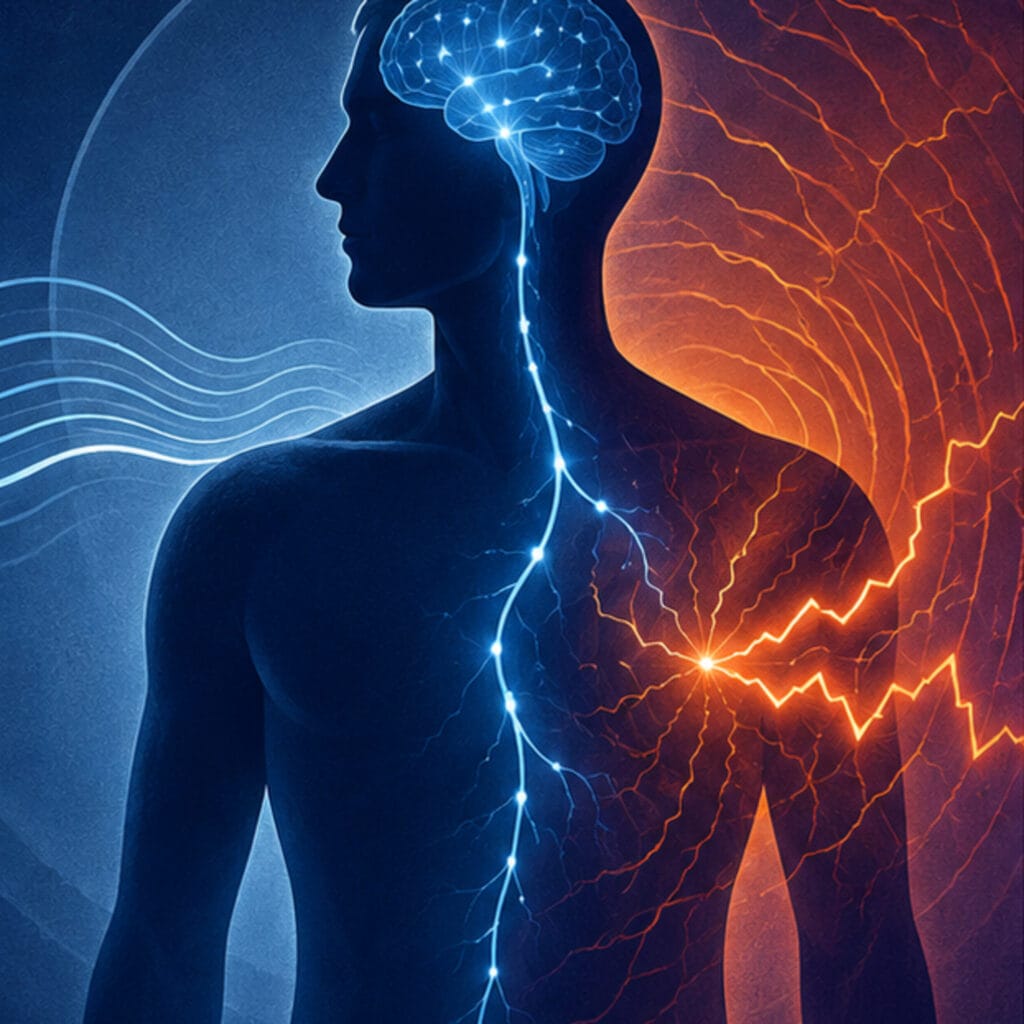
Being able to get an erection during masturbation but struggling with a partner does not prove that the problem is “all in your head,” and it does not rule out a physical contributor. Erections depend on blood flow, nerve signaling, arousal, attention, medication and substance effects, relationship context, and the balance between calm parasympathetic activity and stress-related sympathetic activation. A situational pattern can make performance pressure, distraction, condom use, stimulation differences or relationship factors more likely, but mixed causes are common. This episode explains why morning or solo erections are useful clinical clues rather than definitive tests, how clinicians distinguish an occasional failed erection from persistent erectile dysfunction, and why cardiovascular risk factors, diabetes, sleep, alcohol, medications and hormonal symptoms still deserve attention. It also covers practical next steps: identify the pattern, reduce goal-focused pressure, discuss stimulation and context openly, review medicines and substances, and seek assessment when the difficulty persists or causes distress. Sudden neurological symptoms, severe cardiovascular symptoms, penile pain or new curvature require prompt medical attention; an erection lasting more than four hours is an emergency.
About this episode
Being able to get an erection during masturbation but struggling with a partner does not prove that the problem is “all in your head,” and it does not rule out a physical contributor. Erections depend on blood flow, nerve signaling, arousal, attention, medication and substance effects, relationship context, and the balance between calm parasympathetic activity and stress-related sympathetic activation. A situational pattern can make performance pressure, distraction, condom use, stimulation differences or relationship factors more likely, but mixed causes are common. This episode explains why morning or solo erections are useful clinical clues rather than definitive tests, how clinicians distinguish an occasional failed erection from persistent erectile dysfunction, and why cardiovascular risk factors, diabetes, sleep, alcohol, medications and hormonal symptoms still deserve attention. It also covers practical next steps: identify the pattern, reduce goal-focused pressure, discuss stimulation and context openly, review medicines and substances, and seek assessment when the difficulty persists or causes distress. Sudden neurological symptoms, severe cardiovascular symptoms, penile pain or new curvature require prompt medical attention; an erection lasting more than four hours is an emergency.
Key questions answered
- Why can erections work alone but not during partnered sex?
- Does morning wood prove the cause is psychological?
- When should situational erection difficulty be medically evaluated?
- Which medications, substances and health conditions can contribute?
Main findings
- Situational erectile difficulty is a pattern, not a diagnosis.
- Solo or morning erections suggest preserved capacity but do not exclude physical contributors.
- Performance pressure can interfere with arousal and erection maintenance.
- Persistent symptoms deserve a cardiovascular, medication, sexual and psychological assessment.
Research sources
- American Urological Association: Erectile Dysfunction Guideline — https://www.auanet.org/guidelines-and-quality/guidelines/erectile-dysfunction-(ed)-guideline
- European Association of Urology: Sexual and Reproductive Health Guidelines 2026 — https://uroweb.org/guidelines/sexual-and-reproductive-health
- Burnett AL et al. Erectile Dysfunction: AUA Guideline. Journal of Urology. 2018 — https://doi.org/10.1016/j.juro.2018.05.004
Medical limitations and red flags
- A podcast cannot diagnose the cause of erectile difficulty.
- Morning or masturbation erections cannot reliably separate psychological from physical causes.
- Seek urgent care for an erection lasting more than four hours.
- Prompt assessment is warranted for penile pain, new curvature, neurological symptoms or major cardiovascular symptoms.