Do Omega-3s Support Libido in Men?
Omega-3 fatty acids may support male libido indirectly by improving the body conditions that sexual desire and sexual function depend on, especially vascular health, inflammation control, metabolic balance, and cardiovascular function. They are not a direct libido booster, aphrodisiac, or stand-alone treatment for low desire.
Male libido is not controlled by one nutrient alone. Sexual desire depends on brain signaling, testosterone status, sleep, mood, relationship context, medication effects, blood-flow confidence, and general health. Omega-3s, especially EPA and DHA from oily fish or fish oil, may support some of these background systems. The strongest evidence connects omega-3s to cardiovascular and endothelial support. The evidence is weaker for testosterone, and still limited for direct libido improvement.
Clinical meaning: omega-3s may help create a healthier sexual-health environment, but persistent low libido should still be evaluated directly instead of being treated with fish oil alone.
Do Omega-3s Directly Increase Male Libido?
Omega-3s have not been proven to directly increase male libido. They do not work like a sexual stimulant, and they should not be presented as a guaranteed way to “turn on” desire.
The more accurate explanation is that omega-3s may support the systems around sexual health. For example, better vascular function may support erection quality. Lower metabolic stress may improve energy. Better cardiovascular health may increase confidence during sexual activity. These effects can matter for a man’s sexual life, but they are still indirect.
This distinction is important because libido means sexual desire, while erectile function means the physical ability to achieve and maintain an erection. A man can have desire but struggle with erections. Another man can have normal erections but low desire. Omega-3s are more strongly connected to blood-flow and cardiovascular support than to direct desire signaling in the brain.
How Omega-3s May Support Male Sexual Health
Omega-3s may support male sexual health through three main pathways: vascular function, inflammation control, and metabolic health. These pathways can influence erections, energy, confidence, and overall sexual wellness. They do not prove that omega-3s directly raise sexual desire.
Vascular Function: Better Blood-Flow Conditions May Support Erections
The strongest sexual-health argument for omega-3s is vascular. Erections depend on healthy blood vessels, nitric oxide signaling, smooth muscle relaxation, and enough arterial inflow into erectile tissue. When blood vessels are stiff, inflamed, or damaged by metabolic disease, sexual performance can become less reliable.
Omega-3s have been studied for endothelial function, which refers to how well the inner lining of blood vessels responds and helps regulate blood flow. This is why omega-3s may be relevant for men whose libido concerns overlap with poor circulation, weak erections, obesity, diabetes risk, high triglycerides, or poor cardiovascular health.
Better blood-flow support can improve the conditions around arousal and erections. But it should still be described carefully: stronger vascular health may support sexual function, while direct libido improvement remains less certain.
Inflammation and Metabolic Health: A Supportive Pathway
Inflammation and metabolic stress can affect male sexual health. Men with obesity, insulin resistance, high triglycerides, poor sleep, and cardiovascular risk often have more sexual-health problems than men with stronger metabolic health.
Omega-3s may help some men by supporting healthier triglyceride levels and influencing inflammatory signaling. This may improve the internal environment that sexual function depends on. For example, a man with low energy, poor fitness, weight gain, and weaker erections may benefit from a broader cardiovascular and metabolic plan where omega-3 intake is one part of the strategy.
But inflammation is not always the cause of low libido. A man with low desire may also need evaluation for testosterone deficiency, depression, anxiety, medication side effects, alcohol use, sleep apnea, relationship stress, or erectile dysfunction. Omega-3s can support the foundation, but they should not replace diagnosis.
Testosterone: Omega-3s Are Not a Reliable Testosterone Booster
Omega-3s should not be described as a reliable testosterone booster. Some research connects omega-3 status with reproductive or hormonal markers, but the evidence is not strong enough to say fish oil raises testosterone in men with normal hormone levels.
A safer interpretation is that omega-3s may support a healthier metabolic environment where normal hormone production is less likely to be weakened by obesity, inflammation, or poor cardiovascular health. That is different from saying omega-3s directly increase testosterone.
If a man has symptoms of low testosterone, such as persistent low desire, fatigue, fewer morning erections, reduced muscle mass, depressed mood, or infertility concerns, he should confirm the problem with appropriate blood testing instead of assuming omega-3 supplementation will correct it.
What Does the Evidence Actually Show?
The strongest evidence for omega-3s is not about sexual desire itself. It is about the body systems that can influence male sexual health, especially blood-vessel function, inflammation, triglyceride control, and cardiovascular health.
This means omega-3s may be more useful for men whose sexual concerns are connected to poor circulation, metabolic risk, obesity, high inflammation, or low cardiovascular fitness. In that situation, omega-3s may help improve the background conditions that support erections, energy, and sexual confidence.
But the evidence becomes much weaker when the question is direct libido. Most studies do not test whether men feel more sexual desire after taking omega-3s. They usually measure indirect markers such as endothelial function, sperm quality, triglycerides, or inflammation. These markers matter for sexual health, but they are not the same as libido.
So the correct interpretation is balanced: omega-3s may support male sexual health indirectly, but they should not be presented as a proven treatment for low libido.
| Evidence area | What it usually measures | What it means for men | Libido relevance |
|---|---|---|---|
| Endothelial function | Blood-vessel response and flow-mediated dilation | May support erection-related blood-flow conditions | Indirect but useful |
| Triglycerides and cardiovascular markers | Blood lipids and heart-health risk factors | May help men whose sexual health is linked to metabolic risk | Indirect |
| Semen quality | Sperm count, motility, morphology, and fertility markers | May matter for fertility discussions, not sexual desire itself | Weak for libido |
| Testosterone | Hormone associations or small intervention signals | Not enough to treat omega-3 as a testosterone therapy | Limited |
| Direct libido | Validated sexual desire scores | Direct proof is still limited | Weakest |
How Much Omega-3 Should Men Consider?
There is no established omega-3 dose specifically for increasing male libido. A man’s omega-3 intake should be based on diet quality, cardiovascular risk, triglyceride status, medication use, and clinician guidance, not on libido marketing claims.
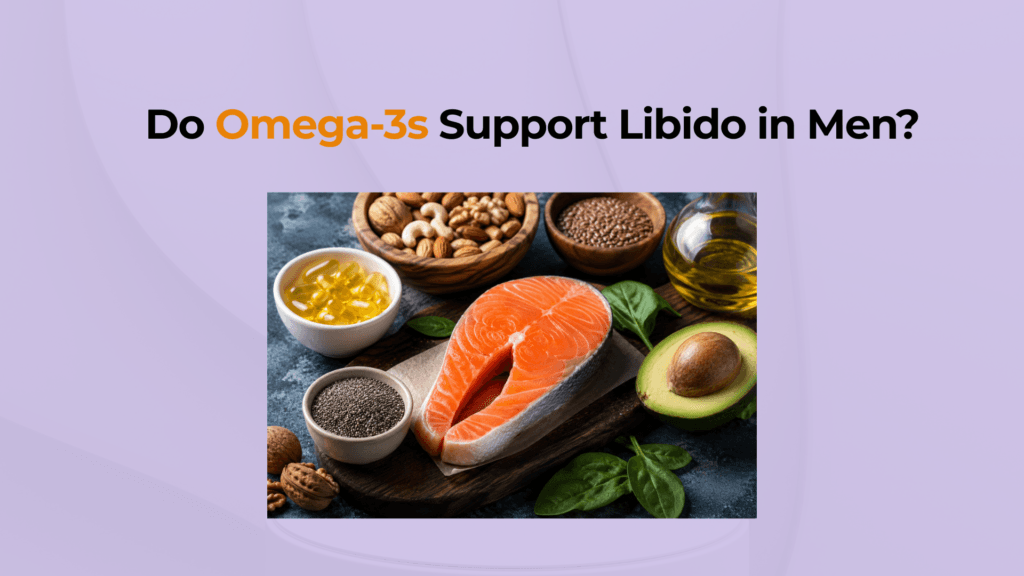
For many men, the first step is food. Oily fish such as salmon, sardines, anchovies, trout, and mackerel provide EPA and DHA along with protein and other nutrients. Men who rarely eat fish may consider a supplement, but the label should clearly list the actual EPA and DHA amount rather than only “total fish oil.”
Practical supplement checklist
- Check EPA + DHA: choose products that clearly state the combined EPA/DHA amount.
- Avoid libido-dose claims: there is no validated fish-oil dose for directly increasing libido.
- Start with food when possible: omega-3-rich fish may be more useful as part of a full dietary pattern.
- Use medical supervision for high doses: high-dose omega-3 therapy is usually used for triglyceride management, not libido treatment.
- Choose quality: look for third-party testing, freshness control, and low contaminant risk.
Men using omega-3 supplements should also pay attention to the form and quality. Products that do not specify EPA and DHA may contain much less active omega-3 than the front label suggests. Rancid or poorly stored fish oil may also cause unpleasant side effects and should be avoided.
Safety, Side Effects, and Interactions
Omega-3 supplements are generally well tolerated, but they can still cause side effects. Common issues include fishy aftertaste, burping, heartburn, nausea, loose stools, and stomach discomfort.
Safety becomes more important at higher doses or when omega-3s are combined with medications that affect bleeding. Men taking anticoagulants, antiplatelet medication, regular aspirin, or nonsteroidal anti-inflammatory drugs should discuss supplement risks with a healthcare provider before using high-dose omega-3s.
Men with an upcoming surgery, dental procedure, bleeding disorder, history of hemorrhagic stroke, or known heart-rhythm concerns should also get personalized guidance. The goal is not to make omega-3s sound dangerous; the goal is to use them responsibly.
Care step: seek medical advice urgently if supplementation is followed by unusual bruising, prolonged bleeding, black stools, vomiting blood, severe dizziness, chest symptoms, or a new irregular heartbeat.
When Should Low Libido Be Evaluated Instead?
Omega-3s should not delay proper evaluation when low libido is persistent, sudden, distressing, or paired with other symptoms. A man should consider a structured libido assessment if low desire lasts for several weeks or appears with erectile dysfunction, low morning erections, fatigue, depressed mood, anxiety, sleep problems, infertility concerns, medication changes, pelvic pain, or relationship distress.
A useful evaluation may include sleep history, stress review, medication review, alcohol and substance screening, cardiovascular risk assessment, testosterone testing when symptoms fit, and screening for depression or anxiety. This protects the reader from treating a complex symptom as a simple nutrient deficiency.
If libido changed after starting a medication, gaining weight, developing erection problems, sleeping poorly, or experiencing long-term stress, those causes should be investigated directly. In that situation, omega-3s may still support general health, but the main problem may require a more targeted solution.
Final Verdict: Are Omega-3s Worth It for Male Libido?
Omega-3s may be worth considering for men who want better cardiovascular, metabolic, and inflammation support, especially if their diet is low in oily fish. They may indirectly support sexual function by improving the body conditions that erections, energy, and sexual confidence depend on.
But omega-3s should not be called a direct male libido booster. The strongest evidence supports vascular and cardiovascular pathways. The direct evidence for increased sexual desire remains limited. If low desire is persistent, omega-3s can be part of a broader health plan, but they should not replace medical assessment, testosterone evaluation when appropriate, mental-health review, sleep correction, exercise, and treatment of underlying erectile or cardiovascular problems.
Bottom line: omega-3s support the foundation around male sexual health; they do not directly “switch on” libido. Use them as nutritional support, not as a stand-alone treatment for low desire.
References
- NIH Office of Dietary Supplements. Omega-3 Fatty Acids: Health Professional Fact Sheet.
- Arabi SM, et al. Omega-3 fatty acids and endothelial function: A GRADE-assessed systematic review and meta-analysis. European Journal of Clinical Investigation. 2024.
- Wang Q, et al. Effect of omega-3 fatty acids supplementation on endothelial function: a meta-analysis of randomized controlled trials. Atherosclerosis. 2012.
- Falsig AML, et al. The influence of omega-3 fatty acids on semen quality markers: a systematic PRISMA review. Andrology. 2019.
- Javaid M, et al. Bleeding Risk in Patients Receiving Omega-3 Polyunsaturated Fatty Acids: A Systematic Review and Meta-Analysis. Journal of the American Heart Association. 2024.