FactBasedUrology • Hormonal Health
Can Low Thyroid Lower Libido in Men?
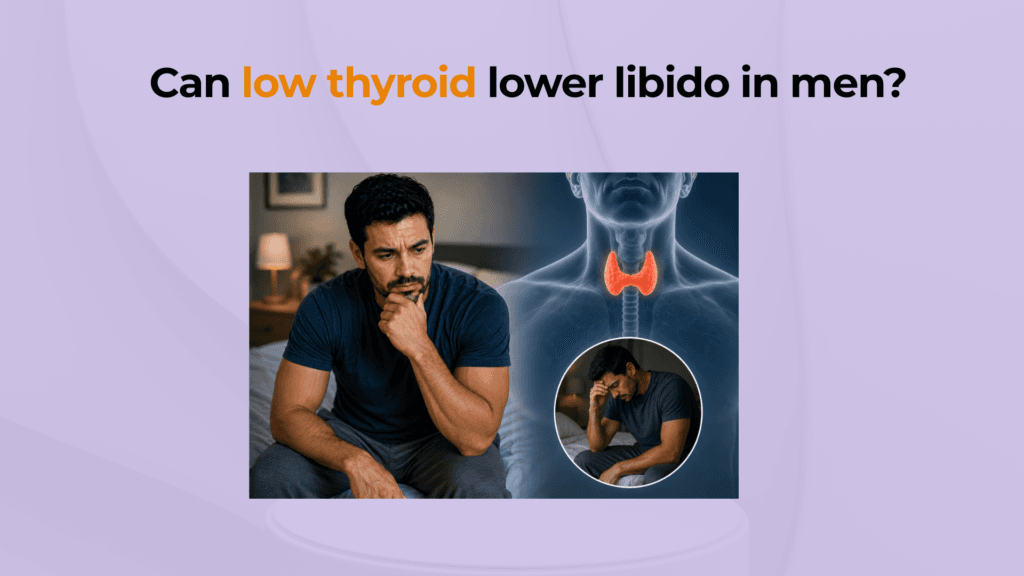
Yes. Low thyroid can lower libido in men by slowing energy metabolism, worsening fatigue and mood, overlapping with erectile dysfunction, and disrupting endocrine signals that influence testosterone interpretation and sexual desire.
The thyroid-libido link is strongest when low desire appears with systemic hypothyroid symptoms such as persistent tiredness, cold intolerance, constipation, weight gain, dry skin, hair thinning, low mood, brain fog, or unexplained erectile changes rather than isolated erection difficulty. Low thyroid should be tested, not guessed.
Medical boundary: Low libido in men can also come from low testosterone, depression, sleep apnea, diabetes, vascular disease, medication effects, alcohol use, relationship distress, or chronic pain. Thyroid symptoms do not rule out these causes, and thyroid medication should not be started or adjusted without clinician-directed testing.
How Low Thyroid Can Affect Male Libido
Low thyroid can affect male libido through whole-body slowing rather than through one isolated sex-hormone switch. Thyroid hormones regulate how the body uses energy, so hypothyroidism can reduce stamina, mood, cognition, exercise tolerance, and sexual interest at the same time.
The corrected hormone mechanism
The corrected mechanism is not simply “low thyroid raises SHBG and lowers free testosterone.” Hyperthyroidism is more classically associated with increased SHBG. In hypothyroidism, male sexual symptoms can instead involve low-energy physiology, altered hypothalamic-pituitary signaling, possible prolactin elevation, lower total testosterone in some men, mood changes, and erectile dysfunction overlap.
This matters because a man can have low libido from hypothyroidism even when the main felt symptom is not “low testosterone.” He may feel tired, cold, heavy, depressed, constipated, slower mentally, and less sexually interested. When symptoms suggest both thyroid disease and androgen issues, testosterone testing for libido should be interpreted alongside TSH and Free T4 rather than in isolation.
How Thyroid-Linked Libido Loss Differs From Primary Erectile Dysfunction
Thyroid-linked libido loss usually appears as a systemic symptom cluster, while primary erectile dysfunction may appear as a more localized erection-performance problem. This distinction helps decide which tests to prioritize, but it does not prove the cause by itself.
A man with hypothyroidism may say, “I have no energy and no interest.” A man with primarily vascular or neurologic ED may say, “I want sex, but I cannot maintain the erection.” Many men have both, which is why ED and low libido in men should be separated during history taking.
| Feature | More thyroid-suggestive pattern | More localized ED-suggestive pattern | Boundary |
|---|---|---|---|
| Energy | Constant fatigue, sluggishness, brain fog. | Normal energy with erection-specific difficulty. | Depression, sleep apnea, and anemia can mimic fatigue. |
| Temperature | Cold intolerance or cold hands and feet. | No temperature pattern. | Cold extremities can also be vascular or neurologic. |
| Body changes | Weight gain, constipation, dry skin, hair thinning. | Often absent. | Symptoms are supportive clues, not diagnosis. |
| Sexual pattern | Low desire plus low energy and low mood. | Desire preserved but erection reliability reduced. | Mixed thyroid, testosterone, vascular, and mood causes are common. |
Medical Evaluation and Diagnostic Standards
Medical evaluation for suspected low-thyroid libido loss should start with clinician-interpreted thyroid testing, usually TSH with Free T4. A high TSH with low Free T4 supports primary hypothyroidism, while borderline or unusual patterns need clinical context and sometimes repeat testing or antibody testing.
Low libido with thyroid symptoms should also prompt review of testosterone, prolactin, diabetes risk, cardiovascular risk, sleep apnea, depression, and medication effects when clinically appropriate. This prevents thyroid disease from becoming a “single-cause explanation” for a multi-cause sexual-health problem.
Overt versus subclinical hypothyroidism
Overt hypothyroidism is the clearer libido-risk state because thyroid hormone deficiency is established by lab pattern and symptoms. Subclinical hypothyroidism usually means TSH is elevated while Free T4 remains within range, so sexual symptoms require more careful interpretation rather than automatic thyroid-dose escalation.
A clinician may consider repeat testing, thyroid peroxidase antibodies, medication timing, age, cardiovascular risk, fertility goals, and symptom burden before deciding whether subclinical hypothyroidism is clinically important for libido. Prolactin testing can also be useful when low desire appears with endocrine symptoms, because prolactin can suppress sexual function and overlap with pituitary-thyroid signaling.
Clinician-guided testing checklist
Thyroid labs: TSH and Free T4 first; Free T3 and thyroid antibodies only when clinically useful.
Sex hormones: Morning testosterone and related labs when symptoms suggest low testosterone and libido.
Mood and sleep: Screen for depression, sleep apnea, chronic stress, and insomnia.
Medication review: Antidepressants, opioids, blood-pressure drugs, and other medications can affect libido or erections.
| Step | Purpose | Why it matters for libido |
|---|---|---|
| TSH + Free T4 | Confirm or exclude overt thyroid hormone deficiency. | Hypothyroidism can reduce energy, mood, erections, and desire. |
| Morning testosterone | Assess androgen status when symptoms fit. | Low testosterone and hypothyroidism can overlap. |
| Thyroid antibodies when indicated | Clarify autoimmune thyroiditis risk, especially when TSH is borderline or fluctuating. | Autoimmune thyroid disease can explain persistent or recurring thyroid-related symptoms. |
| Prolactin when indicated | Check one endocrine pathway that can suppress sexual function. | Prolactin-related libido loss should not be missed. |
| Metabolic and vascular review | Screen diabetes, lipids, blood pressure, weight, and smoking. | ED may be vascular even when thyroid disease is present. |
Treatment Strategy and Recovery Timeline
Treatment strategy for hypothyroid-linked low libido centers on restoring stable thyroid hormone status and then reassessing sexual symptoms over time. Levothyroxine can normalize thyroid labs before libido, mood, energy, and erection confidence fully recover.
Medication timing and supplement spacing
Levothyroxine timing matters because food, calcium, iron, antacids, and other products can reduce absorption. Many patients are instructed to take levothyroxine with water on an empty stomach and separate it from iron or calcium-containing products by several hours, according to their clinician or pharmacist.
Adjunctive nutrients such as selenium or zinc for libido in men should not replace thyroid treatment and should not be stacked near levothyroxine without timing guidance. High-iodine or “thyroid support” supplements can be risky, especially when autoimmune thyroiditis is possible.
Do not self-adjust thyroid medication for libido. Too little treatment can leave hypothyroid symptoms active, while too much thyroid hormone can create palpitations, anxiety, insomnia, bone loss risk, or heart rhythm problems in vulnerable patients.
What If Libido Does Not Recover After Thyroid Treatment?
Libido that does not recover after thyroid treatment should trigger a broader evaluation, not automatic dose escalation. Stable thyroid labs reduce one barrier, but low desire can persist if depression, low testosterone, sleep disruption, vascular ED, relationship distress, or medication effects remain active.
Men should track energy, mood, morning erections, erection firmness, sleep quality, alcohol use, exercise tolerance, and medication changes during recovery. Depression and libido in men deserve special attention because low mood can overlap with both hypothyroidism and sexual dysfunction.
Supportive habits matter, but they do not replace treatment. Regular sleep, resistance training, adequate protein, cardiometabolic risk control, and sleep restoration for libido can support recovery after thyroid status is medically addressed.
FAQs About Low Thyroid and Male Libido
Can hypothyroidism cause erectile dysfunction too?
Yes, hypothyroidism can be associated with erectile dysfunction, but ED can also be vascular, neurologic, medication-related, psychological, or hormonal. Thyroid testing is useful when ED appears with systemic hypothyroid symptoms, but ED evaluation should not stop there.
Does normal TSH mean libido should be normal?
Normal TSH does not guarantee normal libido. Thyroid normalization can remove one cause, but sexual desire also depends on testosterone status, mood, sleep, medication effects, relationship context, metabolic health, and vascular function.
Can thyroid supplements replace levothyroxine?
Thyroid supplements should not replace prescribed levothyroxine. High-iodine products, glandular extracts, and unregulated “thyroid support” formulas can interfere with testing, dosing, autoimmune thyroid disease, or medication safety.
How long does libido recovery take after thyroid treatment?
Libido recovery after thyroid treatment is gradual and varies by cause, dose stability, symptom duration, and coexisting conditions. Lab improvement can occur before energy, mood, erections, and sexual interest fully respond.
Conclusion
Low thyroid can lower libido in men, especially when low desire appears with fatigue, cold intolerance, weight gain, constipation, dry skin, low mood, brain fog, hair thinning, or erectile changes. The mechanism is multi-system: thyroid hormone affects energy use, mood, pituitary signaling, prolactin context, testosterone interpretation, and sexual performance confidence.
The safest path is testing, treatment, and reassessment. Thyroid disease should be corrected when present, but persistent low libido still requires evaluation for testosterone, vascular health, mood, sleep, medications, and relationship factors.
Evidence Sources Used
- NIDDK. Hypothyroidism. https://www.niddk.nih.gov/health-information/endocrine-diseases/hypothyroidism
- Mayo Clinic. Hypothyroidism — symptoms and causes. https://www.mayoclinic.org/diseases-conditions/hypothyroidism/symptoms-causes/syc-20350284
- Mayo Clinic. Hypothyroidism — diagnosis and treatment. https://www.mayoclinic.org/diseases-conditions/hypothyroidism/diagnosis-treatment/drc-20350289
- NCBI Bookshelf. Levothyroxine. https://www.ncbi.nlm.nih.gov/books/NBK539808/
- Chen D, et al. The association between subclinical hypothyroidism and erectile dysfunction. https://pmc.ncbi.nlm.nih.gov/articles/PMC6041544/
- Salari N, et al. The global prevalence of sexual dysfunction in men with thyroid disorders. https://pmc.ncbi.nlm.nih.gov/articles/PMC11196554/