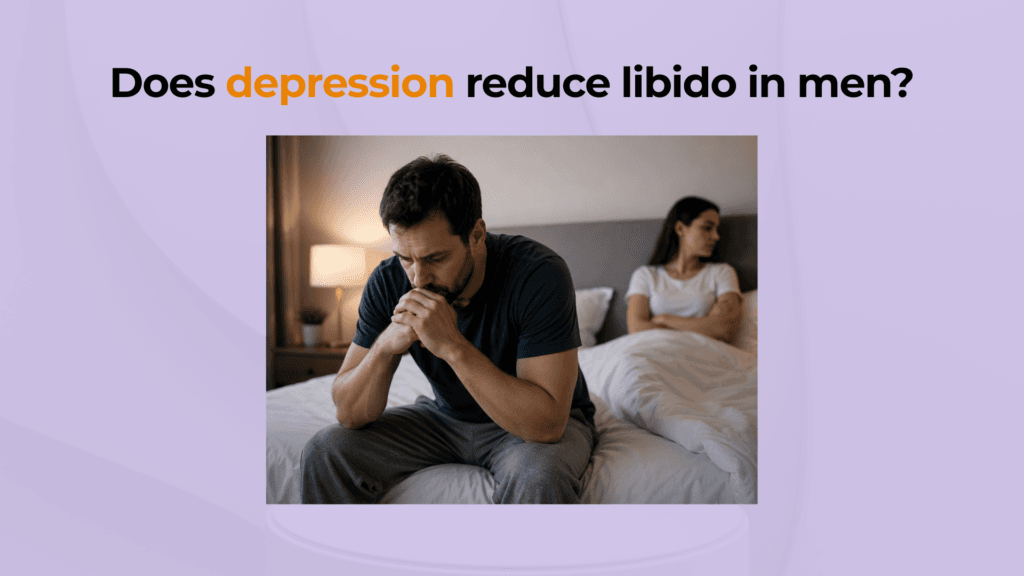
Does Depression Reduce Libido in Men? Yes—Depression Can Lower Male Libido
Yes. Depression can reduce libido in men by lowering pleasure, motivation, energy, self-confidence, arousal readiness, and relationship engagement. Antidepressant medications can also contribute to sexual side effects in some men.
Direct answer: Depression can lower male sexual desire because sex depends on reward, motivation, energy, emotional connection, and physical arousal. Depression can interfere with all of these. Depression and the medications used to treat it can affect sexual desire, sexual response, satisfaction, erection quality, ejaculation, and orgasm in some people.[1]
This is not a character flaw or a sign that a man does not care about his partner. It is often a treatable interaction between mood, brain chemistry, medication effects, sleep, stress, relationship context, and medical health.
Medical disclaimer: This article is educational and does not replace care from a licensed clinician. Do not stop, reduce, or skip antidepressant medication without speaking with the prescribing clinician. Seek urgent help for suicidal thoughts, self-harm thoughts, severe agitation, mania symptoms, or sudden unsafe behavior.
What does this mean for you?
If libido dropped during depression, the first question is whether the main driver is the depression itself, medication side effects, or another sexual-health problem. These causes can overlap, and they should not be treated the same way.
The most common patterns
- Depression-driven low libido: desire drops with low mood, low pleasure, fatigue, hopelessness, low confidence, or social withdrawal.
- Medication-related sexual side effects: desire, erection, ejaculation, or orgasm changes begin after starting or increasing an antidepressant.
- Mixed pattern: depression improves but libido, erection quality, or orgasm difficulty remains a problem.
- Separate medical pattern: low libido appears with loss of morning erections, erectile dysfunction, diabetes risk, low testosterone symptoms, heavy alcohol use, or sleep apnea symptoms.
How depression reduces male libido
Depression reduces libido by lowering the brain’s ability to anticipate pleasure and respond to sexual cues. Many men describe this as “I want to want sex, but the drive is not there.” This often reflects anhedonia, fatigue, emotional withdrawal, guilt, low self-worth, poor concentration, and loss of motivation rather than lack of attraction.
Depression can also change how the body responds to sexual situations. Cleveland Clinic describes depression-related sexual changes involving interest in sex, the body’s response to sexual touch, satisfaction, erection problems, delayed ejaculation, and orgasm difficulty.[1]
When depression is likely the main cause
- Low libido began with low mood, loss of pleasure, fatigue, or emotional numbness.
- Sexual interest fluctuates with mood and energy.
- Desire improves during better mood periods.
- There is no clear medication change, erectile dysfunction pattern, or testosterone-related symptom cluster explaining the change.
If the central problem feels like low pleasure, low motivation, or emotional numbness, the next useful bridge is dopamine and libido in men, because dopamine is closely tied to reward, motivation, and sexual pursuit.
Can antidepressants lower sex drive?
Yes. Some antidepressants can lower libido or make erection, ejaculation, or orgasm more difficult. SSRIs are commonly used for depression and work by inhibiting serotonin reuptake, increasing serotonin activity in the synaptic cleft.[2] Sexual side effects from antidepressants can include reduced sex drive, erectile difficulty, problems with satisfaction, and difficulty reaching orgasm.[3]
This does not mean antidepressants are bad or should be stopped. Treating severe or persistent depression remains the priority. The goal is to treat depression while also managing sexual side effects safely with the prescriber.
| Pattern | What it may suggest | Safer next step |
|---|---|---|
| Low libido began before medication. | Depression itself may be the larger driver. | Treat mood symptoms and reassess libido as depression improves. |
| Low libido, delayed orgasm, or erection difficulty began after an SSRI dose change. | Medication-related sexual side effects may be involved. | Discuss dose timing, dose adjustment, switching, or add-on options with the prescriber. |
| Mood improved but sexual function stayed worse. | Residual medication side effects or a separate sexual-health issue may be present. | Ask about medication options and evaluate erectile function, hormones, sleep, alcohol, and metabolic risk. |
| Low libido appears with loss of morning erections or persistent erectile dysfunction. | A hormonal, vascular, sleep, or metabolic contributor may be involved. | Consider a broader sexual-health evaluation instead of assuming depression is the only cause. |
What if the medication is the problem?
If libido changed after starting or increasing an antidepressant, tell the prescribing clinician directly. Sexual side effects are common enough that clinicians can discuss options such as waiting, dose adjustment, timing changes, switching medications, adding a treatment for erectile dysfunction when appropriate, or choosing an antidepressant with a lower sexual-side-effect risk.
Bupropion is one medication often discussed in this context. NCBI Bookshelf summarizes systematic-review evidence supporting that sexual dysfunction risk may be lower with bupropion than with several SSRIs, including escitalopram, paroxetine, sertraline, and fluoxetine.[4] This does not mean bupropion is right for every man. The choice depends on depression type, anxiety symptoms, seizure risk, other medications, blood pressure, and clinician judgment.
If the issue appears specifically after an SSRI, the next useful bridge is SSRIs and libido in men. If the discussion turns toward alternatives, bupropion and libido in men is the more specific next task.
Do not stop antidepressants suddenly
The FDA medication guide language for antidepressants warns not to stop an antidepressant without first talking to a healthcare provider, because sudden stopping can cause other symptoms.[5] If sexual side effects are distressing, the safest action is to ask for a supervised plan.
What should you do if depression is lowering libido?
Start by treating depression safely while tracking when the libido change began. The timing often reveals whether the main driver is mood, medication, or another health issue.
1. Track the timeline
Write down when low libido started, when depressive symptoms started, and whether the change followed a new medication, dose increase, relationship stressor, sleep disruption, alcohol increase, or major life event.
2. Tell the clinician exactly which sexual function changed
“Low libido” is not specific enough. Tell the clinician whether the issue is low desire, fewer sexual thoughts, erection difficulty, delayed ejaculation, inability to orgasm, emotional numbness, performance anxiety, or reduced satisfaction.
3. Treat depression, but do not ignore sexual side effects
NIMH explains that antidepressants are commonly used to treat depression and often take several weeks to work.[6] If treatment helps mood but worsens sex drive, the answer is not to quit abruptly. The answer is a safer medication-side-effect conversation.
4. Evaluate other libido factors if symptoms persist
If low libido persists after mood improves, evaluate other causes. If morning erections are weaker or erectile dysfunction is present, the next task may be erectile dysfunction and libido. If low energy, reduced morning erections, loss of muscle, or low motivation persist, the next task may be testosterone and libido in men.
What not to do
- Do not stop antidepressants suddenly. Sudden stopping can cause symptoms and may increase relapse risk; speak with the prescriber first.[5]
- Do not assume your partner is the cause. Depression can reduce pleasure, motivation, and arousal even when attraction remains.
- Do not assume it is only “low T.” Depression, sleep loss, alcohol, medication effects, and erectile dysfunction can all reduce libido.
- Do not self-medicate with testosterone, supplements, or online sexual enhancers. These can delay proper care and may be unsafe.
- Do not hide sexual side effects from the clinician. Clear reporting makes safer treatment changes possible.
When should you seek medical help?
Seek medical help when low libido is persistent, distressing, linked with erectile dysfunction, or occurring during significant depression. Depression-related libido loss is common enough to discuss openly, and it is often treatable.
- Low libido lasts several weeks and causes distress or relationship strain.
- Erectile dysfunction, loss of morning erections, delayed ejaculation, or inability to orgasm appears.
- Sexual side effects began after starting or changing an antidepressant.
- Depression symptoms include hopelessness, severe insomnia, appetite change, work impairment, or social withdrawal.
- There are thoughts of self-harm, suicide, mania, dangerous impulses, or sudden unsafe behavior.
FAQs about depression and male libido
Does depression reduce libido in men?
Yes. Depression can reduce libido in men by lowering pleasure, motivation, energy, self-confidence, sexual reward, and arousal readiness.
Can antidepressants lower male libido?
Yes. Some antidepressants, especially SSRIs, can cause sexual side effects such as reduced desire, erection difficulty, delayed orgasm, or difficulty reaching orgasm in some men.[3]
Is low libido from depression permanent?
Usually it does not have to be permanent. Libido may improve when depression improves, medication side effects are managed, sleep and energy recover, and other sexual-health causes are evaluated.
Should I stop my antidepressant if my libido drops?
No. Do not stop, skip, or reduce antidepressants without the prescribing clinician. Ask for a supervised plan to manage sexual side effects safely.
Evidence sources
- Cleveland Clinic. Depression and Sex. Medically reviewed, updated 2025. View source
- Chu A, Wadhwa R. Selective Serotonin Reuptake Inhibitors. StatPearls. NCBI Bookshelf. Updated 2023. View source
- Mayo Clinic. Antidepressants: Which cause the fewest sexual side effects? View source
- CADTH/NCBI Bookshelf. Bupropion for Major Depressive Disorder or Persistent Depressive Disorder. 2021. View source
- U.S. FDA. Medication Guide: Antidepressant Medicines, Depression and Other Serious Mental Illnesses, and Suicidal Thoughts or Actions. View source
- National Institute of Mental Health. Depression. View source