
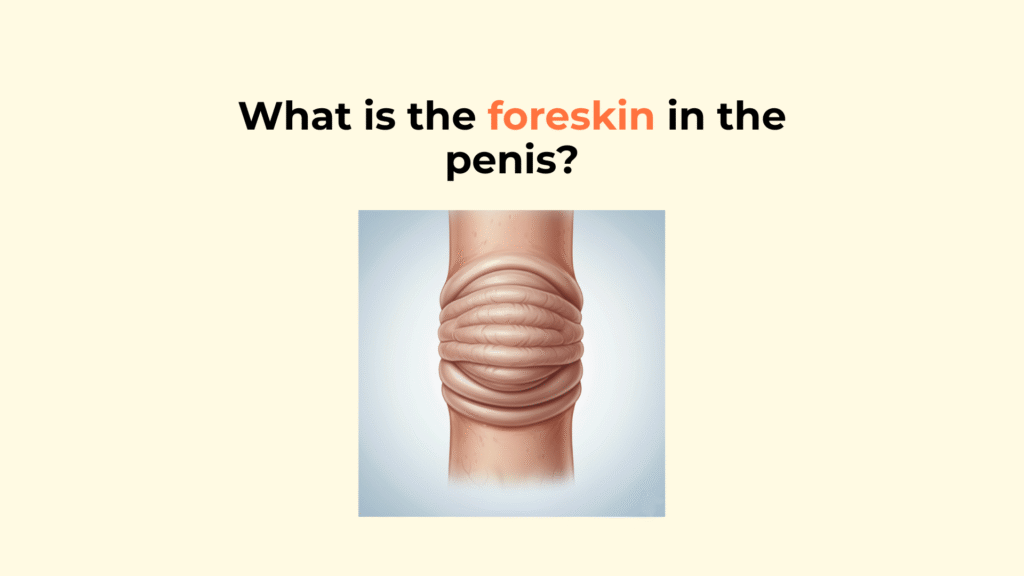
What Is the Foreskin in the Penis? A Guide to the Prepuce
The penile foreskin, known medically as the prepuce, is a highly functional and neurologically dense, double-layered fold of skin and mucous membrane that covers and protects the glans penis in uncircumcised males.
A comprehensive understanding of the foreskin’s anatomy and function is essential for practicing correct hygiene, identifying potential medical issues like phimosis, and appreciating its role in sexual health.
This guide provides a detailed, medically accurate explanation of the ‘penile foreskin.’ We will explore its structure, its physiological functions, common clinical conditions, and the correct, evidence-based hygiene protocols.
Key Takeaways on the Foreskin (Prepuce)
- What it is: The foreskin is a double-layered, retractable fold of skin and mucous membrane that covers and protects the glans penis.
- Normal Development: It is normal for the foreskin to be non-retractable in infants and young children (physiologic phimosis). It typically separates naturally over time.
- Core Functions: The foreskin provides protection for the glans, is a primary site of sexual sensation, and helps with natural lubrication.
- Common Conditions: Problems include pathologic phimosis (acquired tightness), paraphimosis (a medical emergency), and balanoposthitis (inflammation).
- Care: Requires gentle, daily retraction (once naturally possible) and cleaning with warm water to prevent smegma buildup and infection.
What Is the Penile Foreskin and Where Is It Located?
The penile foreskin, or prepuce, is the retractable, double-layered fold of skin and mucous membrane that covers and protects the glans (head) of the penis.
The Structure of the Foreskin
The foreskin is a complex structure composed of an outer layer of normal skin and an inner mucosal layer, which is rich in sensory nerves and specialized cells. This structure is a continuation of the skin on the shaft of the penis, folding over on itself at the tip to create an inner lining that rests against the glans.
Near the tip of the foreskin is a highly elastic and neurologically dense area known as the “ridged band.” This area contains a high concentration of Meissner’s corpuscles, which are specialized fine-touch receptors. This dense innervation makes the foreskin a primary site for sexual sensation. (Source: NIH)
The Natural Development of Retractability (Physiologic Phimosis)
A non-retractable foreskin (physiologic phimosis) is completely normal in infants and young children, as the foreskin is naturally fused to the glans at birth and separates gradually over time.
This separation process occurs at different rates for every child. Forcing the foreskin to retract in an infant or young child can cause pain, tearing, and the formation of scar tissue, which can lead to an acquired, permanent tightness known as pathologic phimosis.
At birth, non-retractability is the norm. By age 3, approximately 90% of foreskins are retractable. By the time a male reaches ages 16-17, only about 1% have a persistent phimosis. (Source: AAP)
What Are the Primary Physiological Functions of the Foreskin?
The primary physiological “functions of the foreskin” are to provide physical protection for the glans, contribute directly to sexual sensation, and maintain a moist, lubricated mucosal environment.
- Glans Protection: The foreskin’s most basic function is to cover the sensitive glans. This protects its delicate mucosal surface from constant friction against clothing, desiccation (drying out), and contamination from environmental factors.
- Sexual Sensation: The foreskin is a primary erogenous zone, not just excess skin. As mentioned, it is densely populated with specialized nerve endings (Meissner’s corpuscles) that are highly sensitive to fine touch, making it integral to sexual feeling and response.
- Natural Lubrication: The inner mucosal surface of the foreskin, along with the natural secretions it helps trap, keeps the glans naturally moist and lubricated. This can facilitate more comfortable sexual activity.
What Are Common Clinical Conditions That Affect the Foreskin?
Common clinical conditions affecting the foreskin often relate to its retractability (Phimosis, Paraphimosis) or hygiene, which can lead to inflammation of the glans and foreskin (Balanoposthitis).
What Is Phimosis (Tight Foreskin)?
Phimosis is a condition where the foreskin is too tight to be fully and comfortably retracted over the glans penis. This tight, inelastic foreskin prevents full retraction, which can cause pain during erections, create hygiene difficulties, and contribute to recurrent infections.
If the foreskin becomes difficult or impossible to retract over the glans, the condition is known as phimosis (tight foreskin), which can lead to hygiene and health complications if untreated.
It is important to distinguish between normal physiological phimosis in children and pathologic phimosis. Pathologic phimosis is an acquired tightness in adults, often resulting from scarring due to recurrent balanitis (inflammation) or chronic skin conditions like Lichen Sclerosus. Pathologic phimosis affects approximately 1-2% of uncircumcised adult males. (Source: AUA)
Chronic white patches and scarring of the foreskin or glans may indicate Lichen Sclerosus (BXO), a progressive condition requiring medical evaluation.
What Is Paraphimosis (A Urological Emergency)?
Paraphimosis is a urological emergency that occurs when a retracted foreskin becomes trapped behind the glans penis and cannot be returned to its normal position.
The retracted foreskin effectively becomes trapped behind the glans’ corona, acting as a tourniquet. This obstructs blood flow, leading to severe swelling, significant pain, and potential tissue necrosis (tissue death) if not treated promptly.
This is a MEDICAL EMERGENCY that requires immediate evaluation in an emergency department. Medical professionals can often manually reduce the swelling, but delaying treatment can lead to permanent damage. (Source: Mayo Clinic)
In cases where the foreskin retracts and cannot return to its normal position, it may result in paraphimosis (a urological emergency), requiring immediate medical intervention.
What Is Balanitis and Balanoposthitis?
Balanitis is inflammation of the glans penis, and when the foreskin is also involved, it is called balanoposthitis, a condition often resulting from poor hygiene and subsequent infection.
Inadequate hygiene under the foreskin allows for the accumulation of smegma (a natural buildup of dead skin cells and natural oils), bacteria, or yeast. This buildup leads to irritation and inflammation of the glans and/or foreskin. Balanitis is a common condition, affecting an estimated 3-11% of males during their lifetime. (Source: NHS)
Inflammation affecting both the glans and foreskin is referred to as balanoposthitis, a condition often linked to infection or poor hygiene.
What Are Best Practices for Foreskin Health and Hygiene?
Best practices for foreskin health are centered on a consistent, gentle daily hygiene routine and understanding normal physiological characteristics like smegma.
How Should You Clean Under the Foreskin? (The Evidence-Based Method)
The evidence-based method for cleaning under the foreskin involves gentle retraction, washing with warm water, thorough drying, and returning the foreskin to its natural position. Once the foreskin is naturally retractable, it should be cleaned daily.
- Gently retract the foreskin as far as it comfortably goes. Never force it.
- Wash the glans and inner foreskin with warm water only. It is best to avoid harsh or antibacterial soaps, as they can strip natural oils, disrupt the healthy microbiome, and cause chemical irritation.
- Rinse thoroughly to remove any soap residue or smegma.
- Pat the area dry gently with a soft towel. It is important to dry the area before returning the foreskin, as a moist, warm environment is conducive to the growth of Candida albicans (yeast).
- Return: Always return the foreskin to its natural, forward position over the glans to prevent paraphimosis.
What Is Smegma and Is It Harmless?
Smegma is a natural, harmless substance composed of shed skin cells and oily secretions (sebum) that can accumulate under the foreskin. It is normal and not a sign of infection. However, its accumulation should be managed with the daily hygiene routine described above to prevent odor and reduce the risk of irritation or balanitis.
Daily Foreskin Hygiene Checklist
Following this simple checklist daily ensures proper foreskin hygiene and health.
How Does an Uncircumcised Penis Compare Anatomically to a Circumcised Penis?
The primary anatomical difference between an uncircumcised and a circumcised penis is the presence or absence of the foreskin, which results in distinct differences in glans appearance, hygiene requirements, and sensory tissues.
| Feature | Uncircumcised Penis | Circumcised Penis |
|---|---|---|
| Glans Appearance | Covered by the foreskin (prepuce), maintaining a moist mucosal surface. | Permanently exposed, leading to a drier surface via keratinization. |
| Primary Hygiene Need | Regular retraction and cleaning under the foreskin to remove smegma. | Simple washing of the exposed glans and shaft. |
| Key Sensation Tissues | Glans, frenulum, and the highly innervated inner foreskin itself. | Glans, shaft, and circumcision scar line. |
| Common Associated Condition | Phimosis (tight foreskin), Paraphimosis (trapped foreskin). | Meatal Stenosis (narrowing of the opening, prevalence 0.65%-11%). (Source: NCBI) |
A narrowing of the urethral opening is medically termed meatal stenosis, which can interfere with normal urination and often presents after circumcision.
Conclusion: A Functional and Sensitive Part of Normal Anatomy
In conclusion, the foreskin (prepuce) is a functional and highly sensitive component of the normal uncircumcised penis, integral to both its protection and sexual function.
It serves to protect the delicate glans and is a primary site of sexual sensation. With proper, gentle daily hygiene, the foreskin is a perfectly healthy anatomical structure.
Understanding conditions like phimosis and paraphimosis is key to knowing when to seek medical care. Familiarity with your own anatomy and proper hygiene are the most effective tools for maintaining foreskin health. At Factbasedurology, we believe that providing clear, factual, and non-judgmental information is the best way to support men’s health and body confidence.
Glossary of Clinical Terms
To ensure full clarity, this glossary defines the key clinical and scientific terms used throughout this guide on the penile foreskin.
| Term | Definition |
|---|---|
| Prepuce | The medical term for the foreskin, the double-layered fold of skin and mucous membrane that covers the glans penis. |
| Phimosis | A condition where the foreskin is too tight to be fully and comfortably retracted over the glans. |
| Paraphimosis | A urological emergency where the retracted foreskin becomes trapped behind the glans, cutting off blood flow. |
| Balanoposthitis | Inflammation of both the glans (head of the penis) and the foreskin. |
| Smegma | A natural, harmless substance made of shed skin cells and oils that can build up under the foreskin. |
| Lichen Sclerosus (BXO) | A chronic, inflammatory skin condition that can cause scarring and is a common cause of pathologic phimosis. |



5 Responses