Eat the Rainbow: The Ultimate Guide to Nutrient Diversity
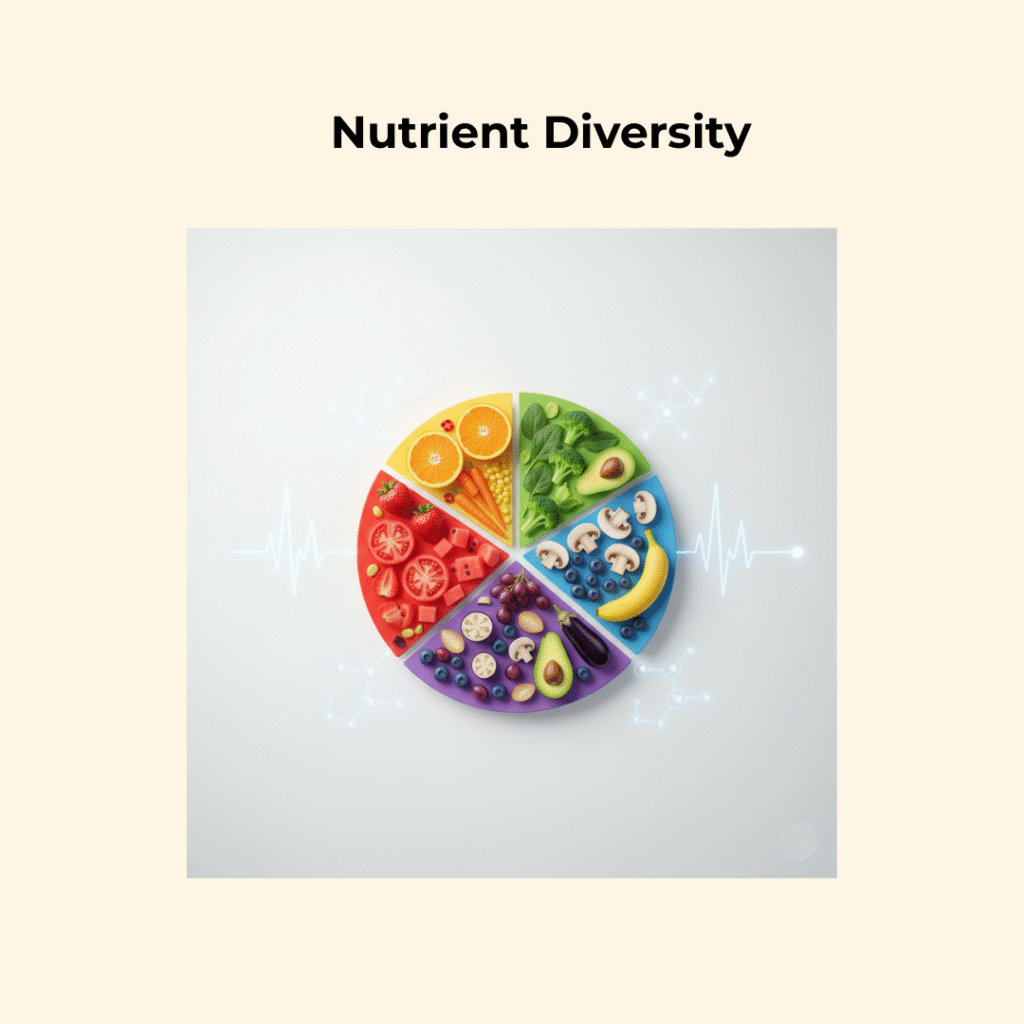
The “Eat the Rainbow” strategy is the ultimate guide to achieving nutrient diversity, a practice of consuming a wide variety of colorful plant foods to ensure a broad intake of the vitamins, minerals, and phytonutrients essential for optimal health.
Are you eating in color, or are you stuck in a beige-food rut? Many of us eat the same handful of foods every week, missing out on thousands of beneficial compounds that protect our bodies. This guide provides a complete guide on what “nutrient diversity” is, what each color group offers, and a practical tool to track your progress, turning knowledge into a consistent habit.
Your Weekly Diversity Score
Use the interactive tracker below to see your score update in real-time. The goal is gradual improvement, not immediate perfection!
The Problem of “Hidden Hunger”: Are You Getting Enough?
Even with a full stomach, many modern diets lack essential vitamins and minerals, a condition known as “hidden hunger” or micronutrient malnutrition. A monotonous diet is often the primary cause.
Data from the National Health and Nutrition Examination Surveys (NHANES) reveals that significant portions of the population fall short on key nutrients. Eating a wider variety of colorful foods is the most effective strategy to close these gaps.
Percentage of the population with intakes below the estimated average requirement. Source: NHANES.
Why is Nutrient Diversity a Critical Factor for Your Health?
Nutrient diversity is a critical factor for your health because a monotonous diet can lead to micronutrient gaps and a limited intake of thousands of beneficial plant compounds called phytonutrients.
The Gut Microbiome Connection
Limited “Beige” Diet
↓
Diverse “Rainbow” Diet
↓
A diverse intake of plant fibers and polyphenols from colorful foods directly feeds and promotes a diverse, healthy gut microbiome, which is linked to improved immune function and reduced inflammation.
The Science of Phytonutrients: Beyond Vitamins
While vitamins and minerals are essential, phytonutrients offer a unique layer of protection by reducing oxidative stress and inflammation. Different colors provide different types of protection, and their true power is unlocked when they work together.
Antioxidant Power by Color
The Power of Synergy
+
↓
Nutrients from different colored foods often work synergistically. For example, healthy fats from nuts (Brown) can dramatically increase the bioavailability and absorption of fat-soluble compounds like lycopene (Red) from tomatoes.
The 5 Color Groups of Nutrient Diversity Explained
The five color groups of nutrient diversity function as a simple guide to the unique health benefits offered by different plants, with each color indicating the presence of distinct phytonutrients.
Estimated number of unique phytonutrients by color group, illustrating the need for variety.
| Color Group | Key Phytonutrients & Benefits | Examples of Foods |
|---|---|---|
| Red | Lycopene, Anthocyanins: Supports heart health, reduces inflammation, and protects against cellular damage. | Tomatoes, strawberries, red bell peppers, watermelon, cherries. |
| Orange / Yellow | Carotenoids (Beta-Carotene): Supports vision, immune function, and promotes healthy, youthful skin. | Carrots, sweet potatoes, lemons, oranges, corn, mangoes. |
| Green | Chlorophyll, Lutein, Isothiocyanates: Supports detoxification, eye health, and helps balance hormones. | Spinach, kale, broccoli, avocado, kiwis, green tea, edamame. |
| Blue / Purple | Anthocyanins, Resveratrol: Supports brain health, enhances memory, and promotes healthy aging. | Blueberries, blackberries, eggplant, purple cabbage, grapes. |
| White / Brown | Allicin, Quercetin: Supports robust immune function and possesses powerful anti-inflammatory properties. | Garlic, onions, mushrooms, cauliflower, bananas, chickpeas. |
How to Track Your Nutrient Diversity: The Interactive Weekly Rainbow Tracker
You can easily track your nutrient diversity using this interactive tracker. At the end of each day, check off the color groups you’ve consumed. Watch your diversity score update on the dashboard above!
The simple act of tracking is a powerful intervention. One large study found that participants who consistently kept a food diary lost twice as much weight as those who did not, highlighting the power of mindful tracking.
| Color Group | Mon | Tue | Wed | Thu | Fri | Sat | Sun |
|---|
How to Maximize Your Results with a Weekly Nutrient Diversity Review
You can maximize your results by performing a “Weekly Diversity Review,” a simple 3-step reflection process that uses your tracker data to identify your strongest color, spot your “color gap,” and set one small, achievable goal for the upcoming week.
- Identify Your Strongest Color: Look at your tracker. Which color did you eat most consistently? This reveals your dietary baseline.
- Spot Your “Color Gap”: Which color did you eat least often? This is your “color gap” and represents the biggest opportunity for improving your nutrient diversity.
- Set One Small Goal: Create a simple, non-intimidating goal for the next week. For example, “I will add a blue/purple food at least 3 times.” This approach is grounded in the behavioral science principle of micro-habits, where small, concrete goals are more effective at building momentum than large resolutions.
A Checklist for Starting Your Nutrient Diversity Journey This Week
This checklist provides five simple, actionable steps to start your nutrient diversity journey this week.