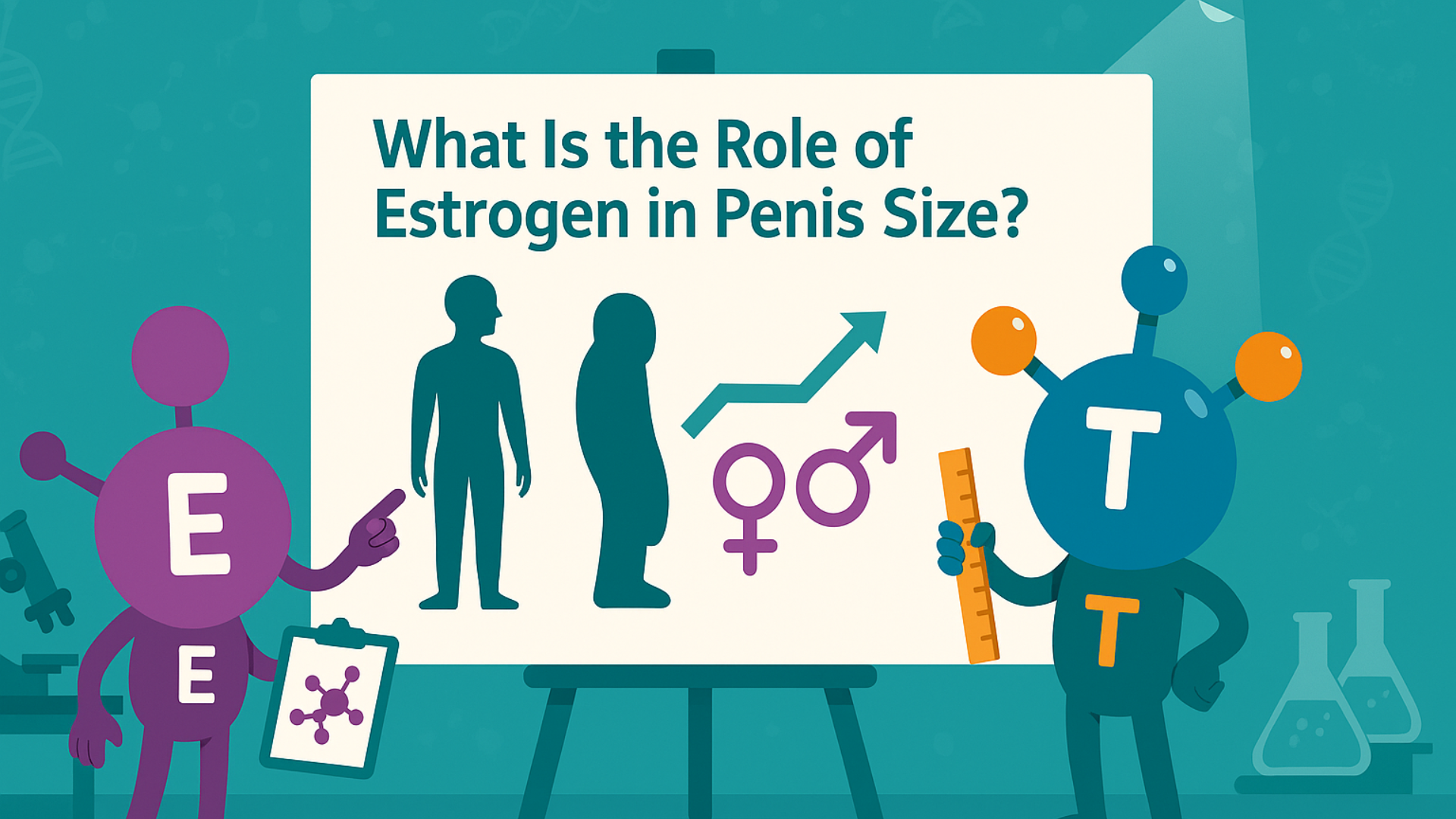
What Is the Role of Estrogen in Penis Size?
The role of estrogen in penis size is not to drive growth but to act as a critical regulator that ensures proper structural formation, fine-tunes the effects of male hormones, and maintains overall hormonal balance during critical developmental phases.
While common understanding credits only male hormones, or androgens, for penis development, scientific evidence reveals a more complex picture. Estrogen, often considered a female hormone, plays a surprising and essential regulatory role in the morphology of the penis.
This guide explains the scientific understanding of the “role of estrogen in penis development.” We will cover how it’s produced in males, its function in ensuring proper structural formation, and why hormonal balance is key for normal male development. Understanding the “role of estrogen in penis development” moves beyond simplistic myths and provides a more accurate view of human biology, especially regarding estrogen receptor beta.
Why Estrogen Balance is Necessary for Normal Penis Development
Estrogen balance is necessary for normal penis development because it acts as a crucial structural regulator, primarily by ensuring the correct formation of the urethra through a sophisticated system of local hormone production. This process does not rely on systemic estrogen but on highly localized action within the developing genital tissues.
The Concept of Aromatase: A Local Estrogen Factory
The key to understanding estrogen’s role in male development lies in the enzyme aromatase, which acts as a local estrogen factory within the penis itself, converting testosterone directly into estradiol at the site of action. Aromatase Aromatase is the enzyme responsible for the synthesis of estrogens from androgens, a process called aromatization, highlighting the androgen and estrogen balance in sexual differentiation in the male.
This local production creates a high-concentration “micro-environment” of estrogen precisely where it is needed for specific structural tasks, mediated by estrogen receptor-α. This mechanism is highly efficient, allowing for targeted estrogenic effects without causing broader, systemic feminizing effects throughout the male body, emphasizing the importance of estrogen receptor alpha. For more information on this enzyme, see the research available at ScienceDirect on Aromatase.
Estrogen’s Role in Urethral Formation
The primary structural task governed by this localized estrogen signaling is the proper formation and fusion of the urethral tube along the underside of the penis during fetal development.
This process follows a clear biological sequence: proper estrogen signaling through its receptor supports the correct closure of the urethral tube, which results in a normal penis structure.
Research proves this link between androgen and estrogen receptors in male sexual development. Animal models, such as the male rat that have been genetically engineered to lack the primary estrogen receptor alpha, show the importance of estrogen in male sexual development.
ER, or estrogen receptor, plays a significant role in mediating the effects of estrogen on male sexual development, particularly through estrogen receptor α.αMale mice consistently develop traits influenced by both androgens and estrogens during critical growth phases, showcasing the effects of endogenous estrogen on male sexual differentiation in the male.
hypospadiasHypospadias, a condition where the opening of the urethra is on the underside of the penis instead of at the tip, can impact normal penile development and is influenced by estrogen signaling in penile development.
This evidence demonstrates a direct causal relationship between local estrogen action and correct penile formation, as detailed in a study in the context of estrogen exposure underlies a spectrum of effects in men. Proceedings of the National Academy of Sciences highlight the importance of estrogen exposure underlies a spectrum of male development. (PNAS and other journals document the interactions of hormones in the development of the male.).
Estrogen’s Role in Urethral Formation
Normal localized signaling vs. disrupted signaling → developmental outcomes (fetal male)
Normal Localized Estrogen Signaling
Hover over any step for more details. Blue = normal pathway.
Disrupted Signaling → Hypospadias
Hover over any step for more details. Red = disrupted pathway.
Key Concepts & Evidence
The Central Task: The primary role of localized estrogen signaling in this context is the proper formation and fusion of the urethral tube along the underside of the penis during fetal development. This process ensures the urethra closes correctly.
The Key Receptor (ERα): Estrogen Receptor Alpha (ERα) is the critical mediator for this process. When estrogen binds to ERα in the developing urethral tissue, it triggers the necessary genetic programs for fusion. This highlights a crucial interaction between hormones and their specific receptors in development.
Evidence from Animal Models: Research provides a direct causal link. Male mice that are genetically engineered to lack the ERα receptor consistently fail to properly form a urethral tube and develop hypospadias, even with normal androgen levels. This demonstrates that estrogen’s action via ERα is an essential, independent step.
The Result of Disruption (Hypospadias): When this signaling is disrupted—either by genetic defects in the receptor or by environmental endocrine disruptors—the urethral folds fail to fuse. This results in Hypospadias, a condition where the urethral opening is on the underside of the penis instead of at the tip.
How an Imbalance of Estrogen Affects Penis Size and Development
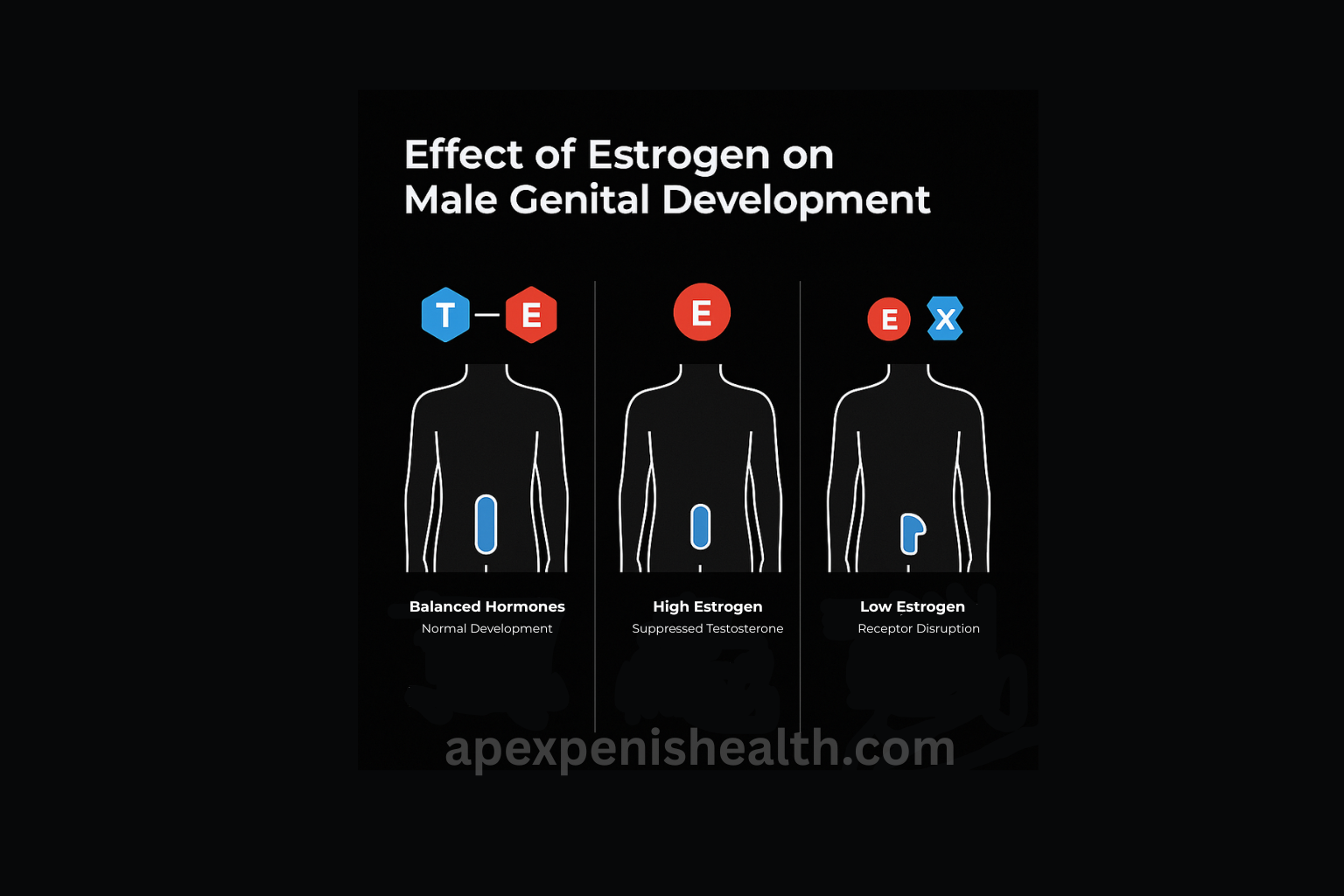
An imbalance of estrogen affects penis size and development in two distinct ways: high estrogen levels suppress testosterone and can lead to abnormal morphology of the penis. micropenisLow estrogen levels can cause structural defects like the disruption of the estrogen receptor. hypospadias.
The Impact of High Estrogen Levels on Penis Development
High estrogen levels, often caused by obesity or exposure to endocrine-disrupting chemicals (EDCs), impair penis development by suppressing the Hypothalamic-Pituitary-Gonadal (HPG) axis, which reduces testosterone production and can lead to micropenis.
Sources of excess estrogen in males include increased body fat, as fat cells contain aromatase and convert testosterone to estrogen. Exposure to certain EDCs found in plastics and personal care products, like BPA and phthalates, can also mimic estrogen in the body, leading to altered levels of estrogen.
This excess estrogen provides powerful negative feedback to the brain (hypothalamus and pituitary gland), highlighting the importance of estrogen receptor-α in this process.
This feedback effectively shuts down the hormonal signals that instruct the testes to produce messenger ribonucleic acid and protein.
testosteroneEstrogen is the primary driver of penile growth, which is crucial for the development of male sexual characteristics. The result is an unfavorable androgen-to-estrogen ratio that can compromise penile development and disrupt normal development of male.
The Impact of Low Estrogen (Estrogen Deficiency) on Penis Development
A complete deficiency of estrogen, caused by rare genetic mutations in the aromatase enzyme or other factors, can severely impact normal male sexual development.
estrogen receptors, primarily leads to structural abnormalities like hypospadias rather than directly causing a reduction in size, highlighting the role of estrogen in normal male urogenital mating protuberance development.
This type of deficiency is extremely rare and genetic in origin, often linked to the targeted disruption of the estrogen receptor. In such cases, the androgen signal for growth from testosterone remains intact, but the essential signal for urethral tube fusion is absent.
Human males with these genetic conditions are often born with normal-sized genitalia but develop other significant health issues later in life.
These can include unusually tall stature (because estrogen is needed to fuse bone growth plates) and osteoporosis, which highlights the wide-ranging and critical roles of estrogen in the male body beyond genital development.
More on this can be found in resources from the study of male mice and their hormonal responses, particularly concerning the effects of exogenous estrogen. National Center for Biotechnology Information (NCBI) provides resources for understanding the effects of neonatal hormonal imbalances, particularly in relation to estrogen and androgen receptors..
The Primary Driver: Why Testosterone is the Key Hormone for Penis Growth
Testosterone and its more potent derivative DHT are the key hormones for penis growth, acting as the primary androgenic engine that drives increases in both length and girth during critical developmental periods. While estrogen regulates structure, androgens fuel the raw growth.
Testosterone and DHT (Dihydrotestosterone)
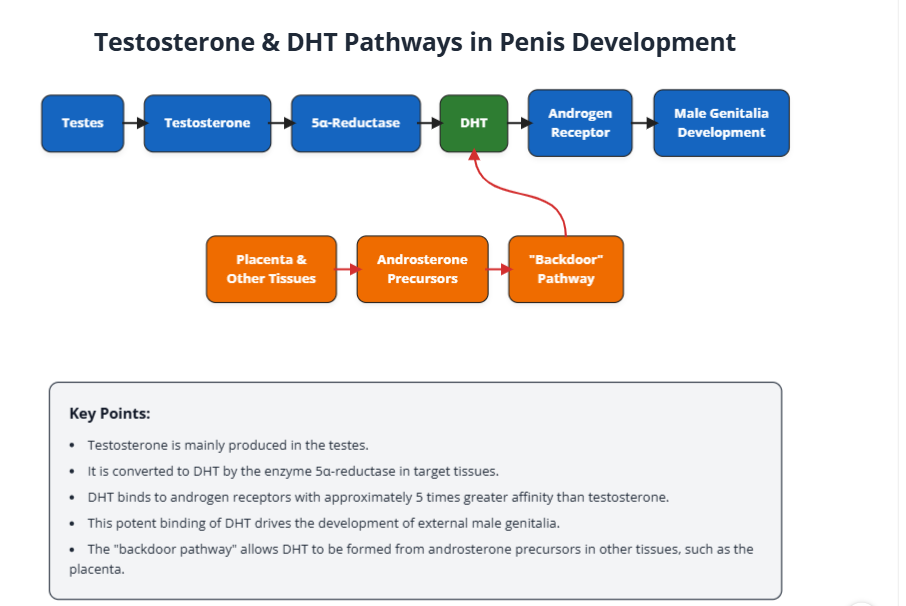
The growth of the penis is an androgen-driven process, powered by testosterone and its more potent derivative, dihydrotestosterone (DHT).
Testosterone, produced mainly in the testes, circulates through the body and plays a crucial role in male sexual behavior. In target tissues like the developing penis, it is converted by the enzyme, which is influenced by exposure to estrogen. 5-alpha reductase into DHT.
DHT is approximately five times more potent than testosterone at binding to the androgen receptor, which can influence the effects of estrogen on male sexual characteristics. androgen receptors in cells, making it the principal hormone responsible for the development of external male genitalia and the expression of estrogen receptors.
A unique fact from recent research is the discovery of a “backdoor” pathway for DHT synthesis, which may influence the effect of estrogen on development.
This pathway shows that DHT can be produced from precursors like androsterone that originate in other tissues, such as the placenta, affecting the detection of estrogen. This finding challenges the traditional model that all genital DHT originates directly from testosterone produced in the fetal testes.
Fetal Development vs. Puberty
Penile growth is not continuous but occurs in two distinct and critical windows driven by androgen surges: the fetal growth window and the pubertal growth surge, both influenced by the role of estrogen in normal growth patterns.
The fetal growth window happens mostly during the second and third trimesters of pregnancy, starting around week 12. It is during this time that insufficient androgen action, whether from low production or receptor issues, can result in the clinical condition of micropenis, highlighting the functional role of estrogen.
The pubertal growth surge occurs later, typically between the ages of 9 and 15, which can be influenced by the effects of neonatal estrogen treatment. During puberty, a surge in testosterone from the HPG axis reactivates growth. This period sees an average growth rate of less than half an inch per year and is largely complete by the late teens, emphasizing the importance of androgen and estrogen receptors.
Clarification: Post-Pubertal Finality
Once puberty is complete, typically by ages 18 to 21, the penis loses its ability to grow further in anatomical size due to an androgen-dependent decline in the number and sensitivity of androgen receptors. The tissue of the penis becomes refractory, or unresponsive, to the growth-promoting signals of testosterone and DHT, which can affect estrogen in the penis. A clear clinical implication is that adult testosterone replacement therapy (TRT), while effective for treating low libido or erectile dysfunction in men with diagnosed hypogonadism, cannot increase the anatomical length or girth of a fully developed penis.
Comparing the Roles of Estrogen and Testosterone in Penis Development
A direct comparison of the “roles of estrogen and testosterone in penis development” reveals that testosterone is the primary engine for growth, while estrogen is the essential architect for correct structural formation.
| Feature related to the disruption of the estrogen receptor. | Role of Testosterone/DHT and estrogen receptors in the development of the male. | Role of Estrogen |
| Primary Function: Understanding the gene in male development is essential for grasping hormonal interactions, especially concerning estrogen receptor α and its role in this process. | Drives growth and elongation. | Supports structural formation (e.g., urethra) through the regulation of messenger ribonucleic acid and protein synthesis, influenced by estrogen and androgen signaling. |
| Impact on Size | Directly increases length and girth. | Indirect; an imbalance of androgen and estrogen can suppress growth and affect overall development, particularly through the presence of estrogen. |
| Key Development Stage: the potential role of estrogen in male sexual development is crucial during this phase, particularly through estrogen signaling in normal development of the male. | Fetal development and puberty are critical periods for the regulation of androgen and estrogen signaling. | Primarily fetal development. |
| Effect of Deficiency of estrogen in men can lead to various developmental issues. | Micropenis; incomplete masculinization, often associated with androgen receptor disruption and estrogen exposure. | Structural abnormalities (e.g., hypospadias). |
Final Checklist: Understanding Hormones and Penis Size
This final checklist summarizes the key principles regarding the “role of hormones in penis size” and the development of male sexual characteristics.
- [✓] Testosterone is the primary hormone for penis growth.
- [✓] Estrogen is necessary for proper penis formation and structure.
- [✓] Hormonal balance is more important than the absolute level of any single hormone.
- Too much estrogen can interfere with testosterone and impair growth, providing evidence for a potential role in developmental disorders linked to estrogen signaling through ERα.
- [✓] After puberty, hormones cannot change the size of the penis.
- [✓] Concerns about penis size or development should always be discussed with a medical professional, especially regarding the impact of estrogen on male sexual health.
Conclusion
In conclusion, the “role of estrogen in penis development” is not to drive growth, but to act as an essential regulator that ensures proper structural formation and hormonal balance, demonstrating that healthy male development is a result of a complex interplay between multiple hormones. The established science shows that testosterone is the engine for growth, while estrogen plays a crucial role as the architect for normal male structure and sexual behavior in male. This highlights how normal male development relies on a finely tuned hormonal team, including the functional role of estrogen, not a single star player. The intricate and often counterintuitive nature of human biology underscores the importance of evidence-based science, particularly in understanding androgen and estrogen signaling.
Frequently Asked Questions About Hormones and Male Development
To provide additional clarity, this section answers frequently asked questions about “hormones and male development,” particularly the effect of estrogen.
Do phytoestrogens (like soy) affect penis size or male hormones, and what is their potential role of estrogen in this context?
No. Extensive research, including multiple meta-analyses of clinical studies, shows that typical dietary intake of soy or other phytoestrogens does not have any adverse effect on testosterone, DHT, or other male reproductive hormones. See a meta-analysis at PubMed regarding the detection of estrogen receptor-alpha.
How does obesity affect penis development and puberty?
Obesity increases aromatase activity in fat tissue, which converts more testosterone to estrogen. The resulting higher estrogen level can suppress the HPG axis, potentially delaying puberty and impacting male and female development. It can also contribute to a “buried penis” appearance due to excess suprapubic fat, which may be influenced by the levels of estrogen.
What is the clinical difference between micropenis and hypospadias in the context of sexual behavior of male rats?
Micropenis is a condition of size, defined as a structurally normal penis that is significantly smaller than average for age, typically caused by androgen insufficiency. Hypospadias is a structural defect where the urethral opening is malformed, an issue related to failed tissue fusion, a process requiring proper estrogen signaling and the expression of estrogen receptors.
When should a person see a doctor about penis size concerns?
Concerns should be addressed in infancy or childhood if micropenis is suspected, as early testosterone therapy can be effective in cases where disruption and estrogen exposure underlies the condition. In adulthood, a doctor should be consulted for related functional issues like erectile dysfunction or low libido, not for seeking an increase in anatomical size, especially if the patient is insensitive to estrogen.