What Muscles Are at the Base of the Penis and What Is Their Anatomical Position?
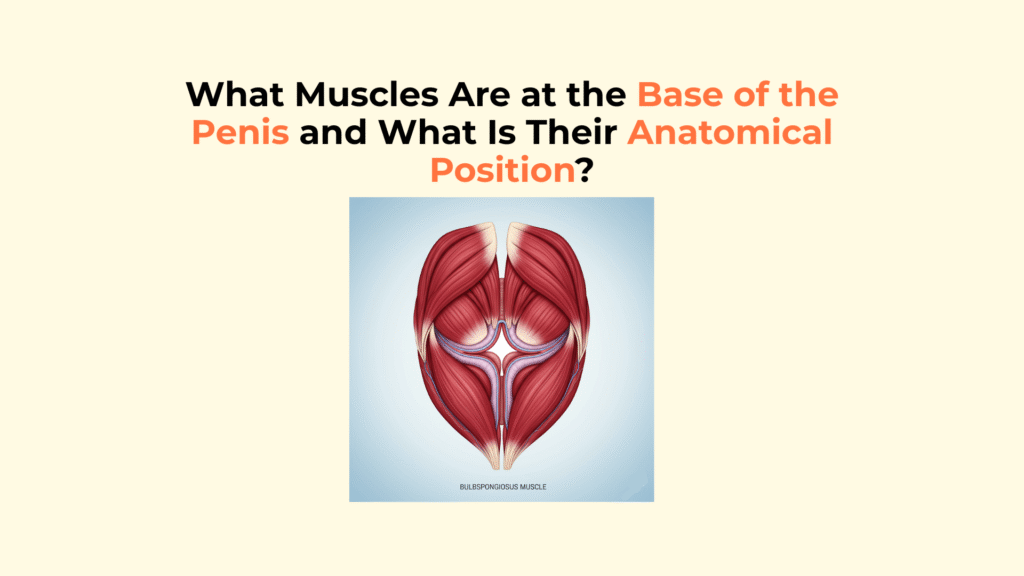
The primary muscles located at the base of the penis within the perineum are the Bulbospongiosus, the paired Ischiocavernosus, and the Superficial Transverse Perineal muscles, all playing essential roles in sexual function and pelvic floor stability.
These muscles at the base of the penis, though often overlooked, are not passive structures.
They are active participants located in the perineum that are critical for achieving rigid erections and ejaculation.
These structures form part of the root of the penis, the internal anchoring system connecting the shaft to the pelvic framework .
This guide provides a detailed, medically accurate explanation of the “muscles at the base of the penis,” their specific anatomy, their precise location, and their crucial function in sexual health.
Key Takeaways on the Muscles at the Base of the Penis
- What They Are: The three main muscles at the base of the penis are the Bulbospongiosus, the paired Ischiocavernosus, and the Superficial Transverse Perineal muscles.
- Location: They are located in the perineum (the area between the scrotum and anus), where they form the root of the penis by covering the bulb and crura.
- Primary Function (Erection): The Ischiocavernosus muscles contract to compress the crura, creating the super-rigid erection needed for penetration.
- Primary Function (Ejaculation): The Bulbospongiosus muscle contracts rhythmically to forcefully expel semen from the urethra during orgasm.
What Are the Main Muscles at the Base of the Penis?
The main muscles situated at the base of the penis are the centrally located Bulbospongiosus muscle, the paired Ischiocavernosus muscles laterally, and the supporting Superficial Transverse Perineal muscles posteriorly.
What Is the Bulbospongiosus Muscle?
The Bulbospongiosus muscle is a superficial perineal muscle that originates from the central tendon of the perineum and midline raphe, covering the bulb of the penis. In males, the two sides of this muscle fuse in the center, forming a muscular sleeve that encases the bulb of the penis and the proximal part of the corpus spongiosum. (Source: StatPearls)
What Is the Ischiocavernosus Muscle?
The Ischiocavernosus muscle is a paired superficial perineal muscle originating from the ischial tuberosity and ramus, covering the crus penis on each side. As a paired muscle, one Ischiocavernosus covers each of the two crura (the internal erectile structures) that anchor the penis to the pelvic bone. (Source: Kenhub)
The ischiocavernosus muscles surround the crura, which are extensions of the corpora cavernosa — the main erectile bodies responsible for rigidity .
What Is the Superficial Transverse Perineal Muscle?
The Superficial Transverse Perineal muscle is a narrow, paired muscle that runs horizontally across the anterior part of the perineum. While not directly involved in erection or ejaculation, its primary role is to help stabilize the central tendon of the perineum (perineal body). This structure serves as a key anchoring point for all other pelvic floor muscles, including the Bulbospongiosus. (Source: StatPearls)
Where Are the Bulbospongiosus and Ischiocavernosus Muscles Located Anatomically?
Anatomically, the Bulbospongiosus and Ischiocavernosus muscles are located within the superficial perineal pouch, directly overlying the erectile tissues that form the root of the penis, the internal anchor point connecting the shaft to the pelvic floor.
What Is the Superficial Perineal Pouch?
The superficial perineal pouch is an anatomical compartment in the perineum, bounded inferiorly by the perineal fascia (Colles’ fascia) and superiorly by the perineal membrane. This specific compartment contains the root of the penis (the crura and bulb) and its associated muscles at the base of the penis. This entire anatomical region is located externally, between the scrotum and the anus. (Source: StatPearls)
Located in the superficial perineal pouch, these muscles also lie near important structural components like the perineal membrane and fascia. If you’re unfamiliar with this layer of anatomy, our penile fascial layers overview explains how connective tissues support these muscles .
How Do These Muscles Relate to the Root of the Penis?
These muscles have a direct anatomical relationship with the root of the penis: the Bulbospongiosus muscle ensheathes the bulb, and the two Ischiocavernosus muscles ensheathe the two crura. Together, they form a complete muscular sleeve around the internal root of the penis. The crura and bulb connect with pelvic muscles such as the bulbospongiosus and ischiocavernosus at the base.
How Do the Bulbospongiosus and Ischiocavernosus Muscles Function?
Functionally, the Bulbospongiosus and Ischiocavernosus muscles are crucial for male sexual function, playing active roles in achieving maximum erection rigidity and facilitating the forceful expulsion of semen during ejaculation.
What Is Their Combined Role in an Erection?
During an erection, the coordinated contraction of the Ischiocavernosus and Bulbospongiosus muscles significantly increases intracavernosal pressure, transforming a full erection into a super-rigid state.
The primary action comes from the Ischiocavernosus muscles, which compress the crura they cover. This compression blocks venous outflow and dramatically increases the internal pressure. While passive blood flow creates a pressure of around 100 mmHg, the active contraction of the Ischiocavernosus muscles can briefly raise this pressure to several hundred mmHg, which is necessary for a fully rigid erection for penetration. (Source: Journal of Anatomy). The Bulbospongiosus muscle contributes by compressing the bulb and the deep dorsal vein, further aiding in restricting venous outflow and supporting this super-rigid state.
A firm anchor point is essential for pressure transmission in the shaft—read more in our guide to erectile blood flow dynamics.
What Is Their Combined Role in Ejaculation?
In ejaculation, the primary role is played by the Bulbospongiosus muscle, which undergoes rapid, rhythmic contractions to propel semen through the urethra. This phase involves a series of 3-7 rapid, rhythmic contractions of the Bulbospongiosus muscle. These contractions forcefully compress both the bulb of the penis and the penile urethra contained within it. This results in the characteristic forceful, pulsatile expulsion of semen from the urethral meatus.
Innervation is provided by the pudendal nerve, crucial for erection and ejaculation reflexes.
Comparison Matrix: The Muscles at theBase of the Penis
This table provides a direct comparison summarizing the location, coverage, and primary functions of the main muscles at the base of the penis.
| Muscle | Location/Attachment | Covers Which Structure? | Primary Function |
|---|---|---|---|
| Bulbospongiosus (Single) | Central, in the midline | Bulb of the penis | Ejaculation (expels semen); Aids erection. |
| Ischiocavernosus (Paired) | Sides of the pubic arch | Crura of the penis | Creates maximum erection rigidity. |
| Superficial Transverse Perineal (Paired) | Runs horizontally across perineum | N/A | Stabilizes perineal body. |
Conclusion: The Active Muscular Base of the Penis
In conclusion, the muscles at the base of the penis, primarily the Bulbospongiosus and Ischiocavernosus, are not passive structures but are functionally critical components located in the perineum covering the root of the penis.
These muscles, covering the internal root structures (bulb and crura), play an essential, active role through coordinated contractions in both achieving and maintaining erection rigidity and in the forceful mechanics of ejaculation. These muscles are a critical part of the sophisticated engineering required for full penile function. At [Our Brand], we believe that understanding the complete anatomy—both seen and unseen—is the key to appreciating the body’s complex design.
For a complete anatomical context of these foundational structures, see our full guide to penile anatomy and function .
References
Glossary of Clinical Terms
To ensure full clarity, this glossary defines the key anatomical terms used throughout this guide on the muscles at the base of the penis.
| Term | Definition |
|---|---|
| Bulbospongiosus Muscle | The muscle that covers the bulb of the penis and contracts to aid in erection and expel semen during ejaculation. |
| Ischiocavernosus Muscle | The paired muscle that covers each crus of the penis and contracts to increase erectile rigidity. |
| Root of the Penis | The internal, attached portion of the penis located in the perineum, which anchors the organ to the pelvic bones. |
| Crura (singular: Crus) | The two paired, tapered columns of erectile tissue in the root that are the internal continuations of the Corpora Cavernosum. |
| Bulb of the Penis | The single, enlarged erectile structure in the root that is the internal continuation of the Corpus Spongiosum and surrounds the urethra. |
| Perineum | The diamond-shaped area between the pubic symphysis (pubic bone) and the coccyx (tailbone), located between the legs. |
| Intracavernosal Pressure | The hydraulic pressure inside the corpora cavernosa. Contraction of the ischiocavernosus muscle raises this to several hundred mmHg. |