
BPH and Enlarged Prostate: Growth, Obstruction, Symptoms, Diagnosis and Treatment
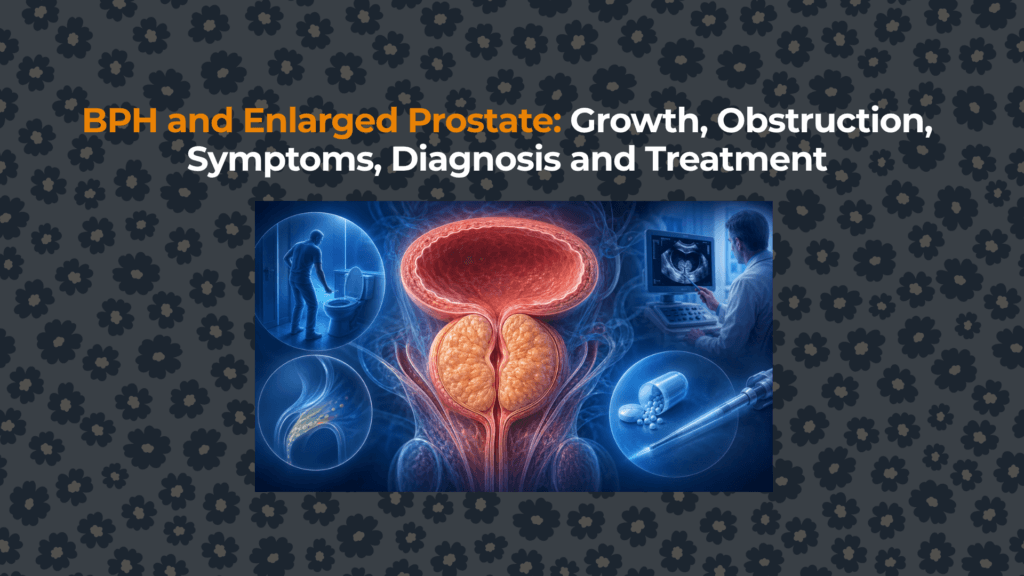
Benign prostatic hyperplasia (BPH) is noncancerous prostate-cell proliferation that can enlarge the gland and contribute to urinary obstruction or symptoms; evaluation distinguishes tissue growth, gland size, outlet function and symptom burden. Direct answer: BPH is non-cancerous proliferation of prostate stromal and epithelial cells, usually in the transition zone. It may enlarge the gland, alter the […]
What Is Benign Prostatic Hyperplasia (BPH)? Prostate Growth, Enlargement and Obstruction

Benign prostatic hyperplasia (BPH) is a noncancerous increase in prostate stromal and epithelial cell number, usually in the transition and periurethral regions; enlargement, obstruction and urinary symptoms are possible outcomes rather than required features. Direct answer: Benign prostatic hyperplasia is a non-cancerous increase in the number of stromal and glandular epithelial cells, forming nodules mainly […]
BPH vs Enlarged Prostate: Histologic Growth, Enlargement and Obstruction Explained
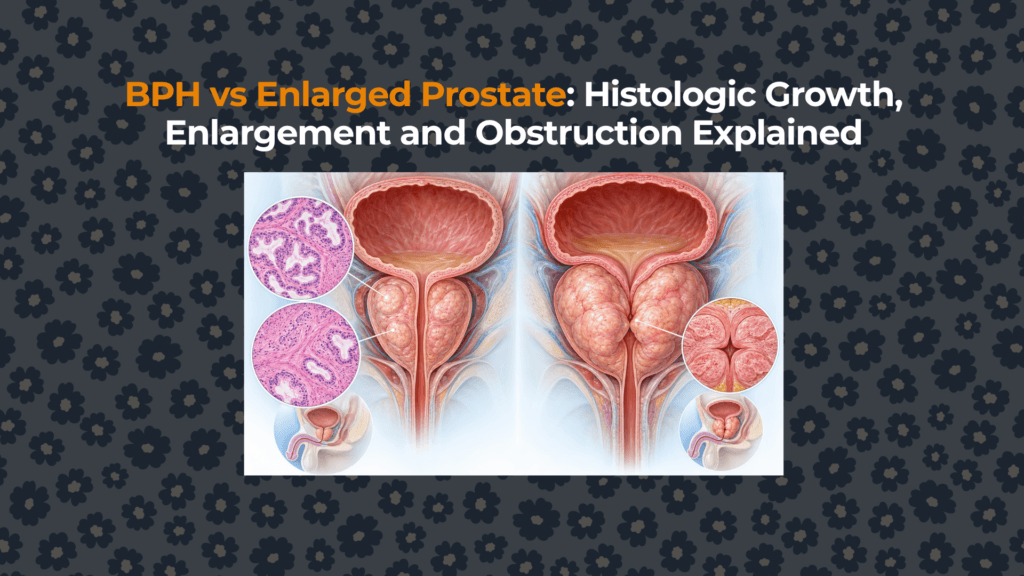
BPH is benign prostate-cell proliferation, whereas an enlarged prostate is increased gland size; neither finding alone proves urinary obstruction or identifies the cause of urinary symptoms. Direct answer: Benign prostatic hyperplasia (BPH) is a histologic pattern—an increased number of benign stromal and glandular cells, usually in the transition zone. An enlarged prostate, more precisely benign […]
How Is BPH Diagnosed? Symptoms, Prostate Exam, PSA, Flow and Residual Urine
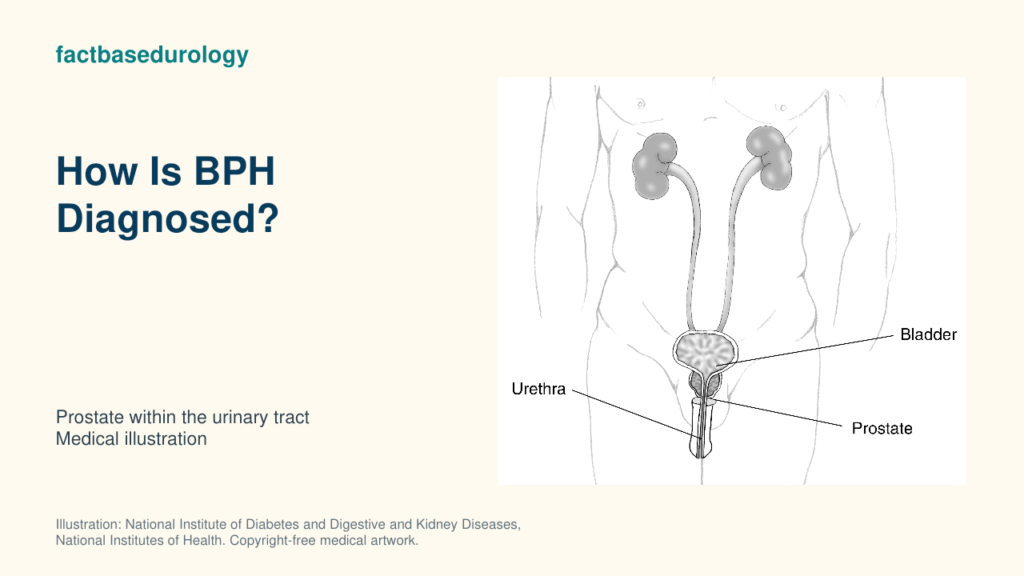
BPH DIAGNOSIS Doctors evaluate suspected benign prostatic hyperplasia (BPH) with symptom assessment, medical history, examination, urinalysis and selected urinary tests; no single clinical test proves that BPH causes urinary symptoms. Direct answer: Doctors evaluate suspected BPH by reviewing urinary symptoms and medicines, performing a physical examination that may include a digital rectal examination, and checking […]
BPH Treatment: How Symptoms, Prostate Size and Obstruction Guide Management
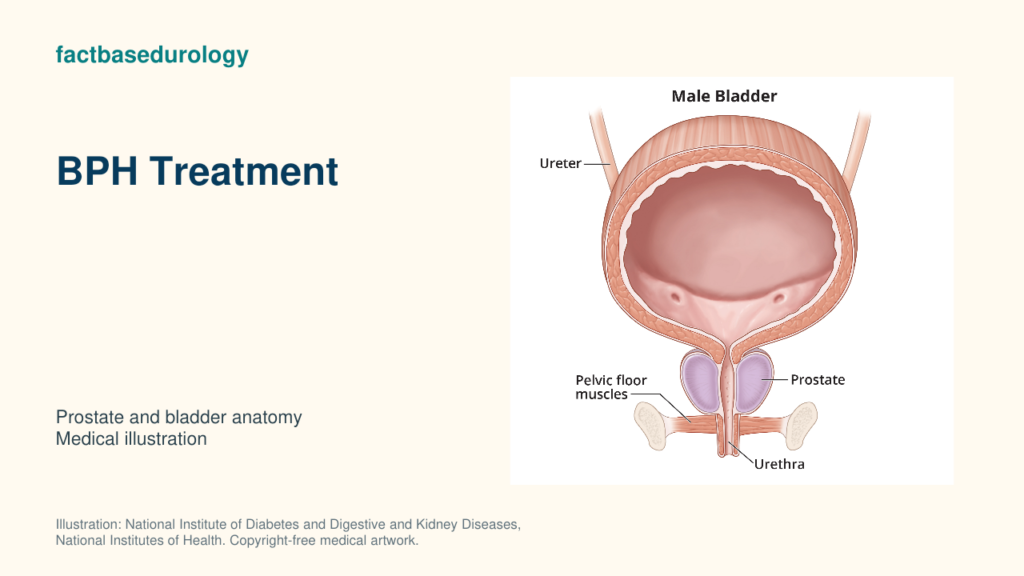
BPH treatment uses observation, medicines or procedures according to symptom burden, prostate anatomy, bladder function, complications and patient goals; gland size or symptom score alone does not determine the treatment. Direct answer Management ranges from observation and self-care to medication, minimally invasive treatment and surgery. Watchful waiting suits many men with mild or minimally bothersome […]
BPH Medications: Alpha Blockers, 5-ARIs, PDE5 Inhibitors and Combination Therapy
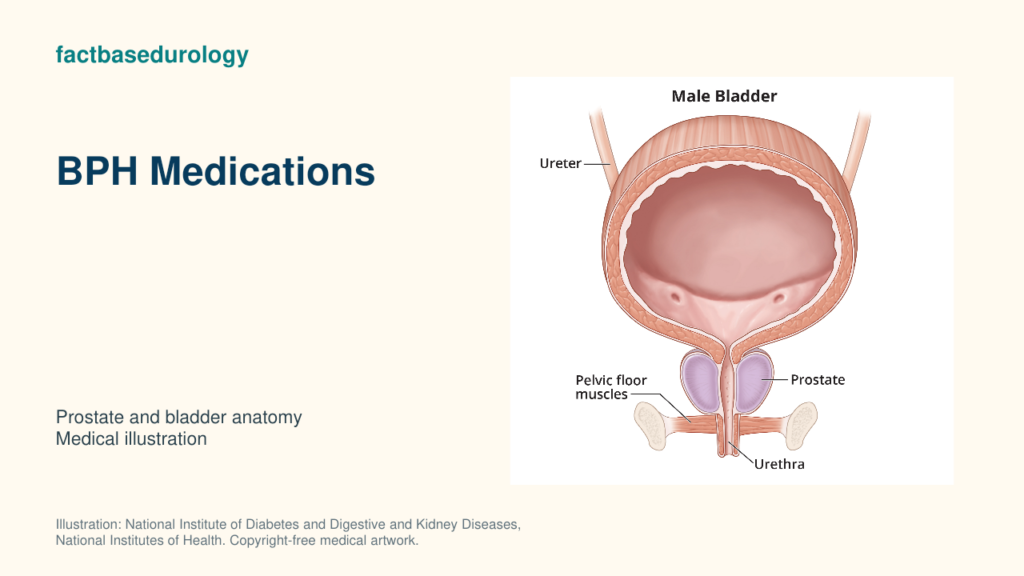
BPH medicines target outlet muscle tone, prostate growth or bladder storage symptoms; drug choice depends on the intended benefit, progression risk, adverse effects and contraindications. Direct answer Medication selection should match the clinical phenotype. Alpha blockers offer relatively fast symptom relief but do not prevent long-term retention. Finasteride or dutasteride act slowly and reduce progression […]
Alpha Blockers for BPH: How They Improve Urine Flow and LUTS
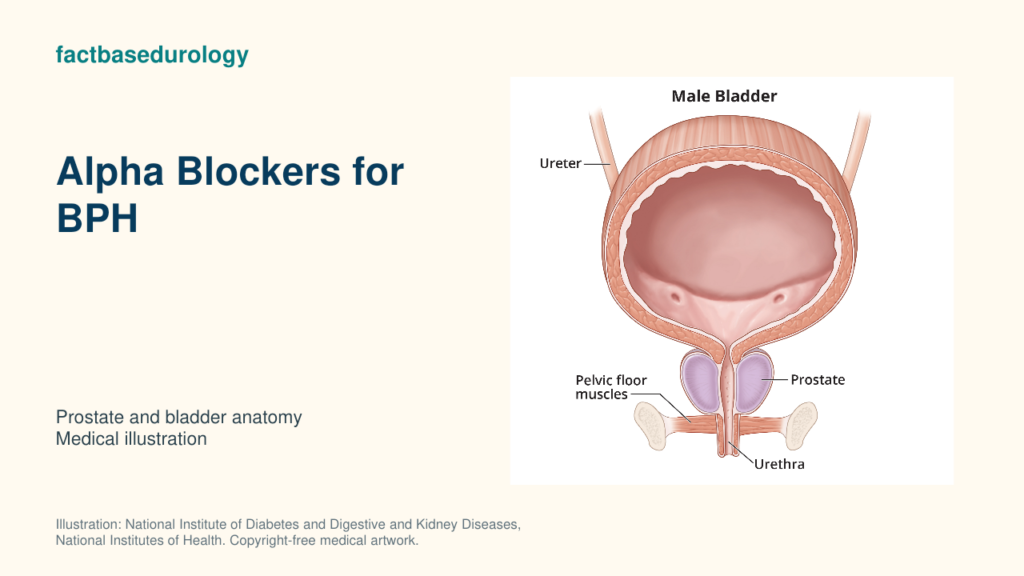
Alpha blockers reduce smooth-muscle tone at the prostate and bladder neck and can improve BPH-associated urinary symptoms within days to weeks; they do not shrink prostate tissue. Direct answer Alpha blockers can improve urine flow and male LUTS within days to weeks by reducing alpha-1-mediated smooth-muscle tone at the bladder outlet. Tamsulosin, alfuzosin, silodosin, doxazosin […]
BPH Surgery and Minimally Invasive Procedures: TURP, HoLEP, UroLift, Rezūm, Aquablation and PAE
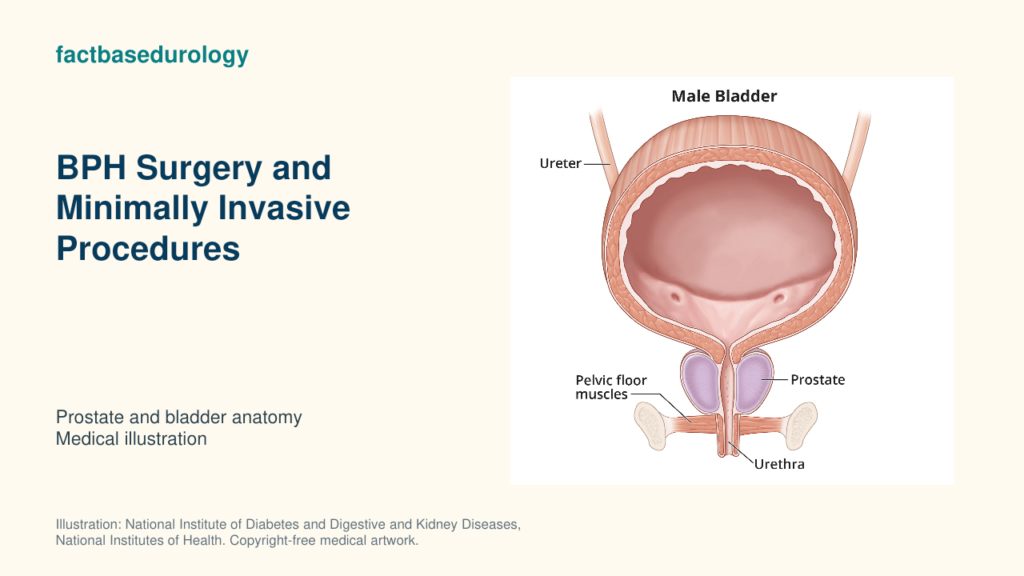
BPH procedures relieve clinically important outlet resistance by removing, retracting or shrinking prostate tissue or reducing its blood supply; anatomy, complications and patient priorities determine procedure selection. Direct answer There is no single best BPH procedure for every man. TURP removes obstructing tissue through the urethra. HoLEP uses a laser to separate and remove the […]
Tadalafil for BPH: Urinary Symptom Relief, Erectile Function and Use
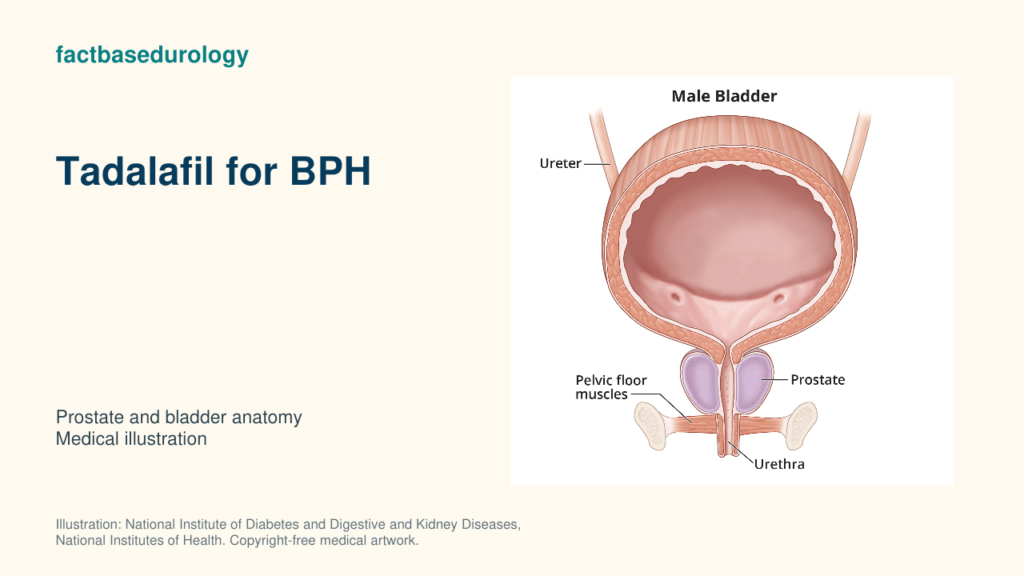
Tadalafil can improve BPH-associated urinary symptoms and erectile function without shrinking the prostate; nitrate medicines and riociguat must not be combined with tadalafil. Direct answer Tadalafil 5 mg once daily can improve both voiding and storage urinary symptoms in men with BPH, whether or not erectile dysfunction is also present. Benefit may begin within one […]
Finasteride vs Dutasteride for BPH: DHT Suppression, Prostate Size and Outcomes
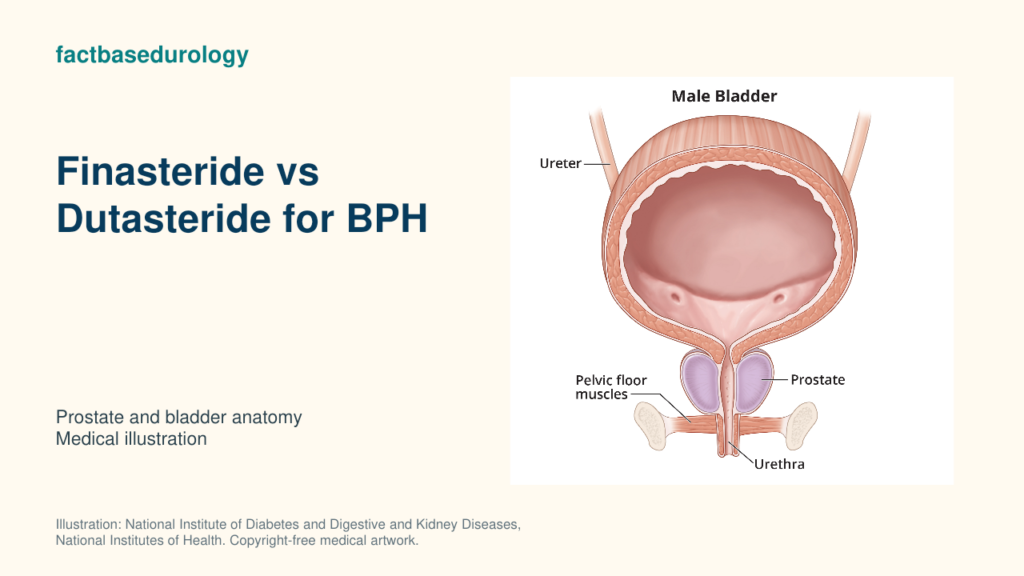
BPH MEDICATION COMPARISON Finasteride and dutasteride are prescription 5-alpha-reductase inhibitors used for benign prostatic hyperplasia (BPH) in men with an enlarged prostate. Both reduce the formation of dihydrotestosterone (DHT), which can gradually reduce prostate volume and lower the risk of BPH progression. Direct answer: The main difference is enzyme selectivity. Finasteride primarily inhibits type 2 […]