Erectile dysfunction after prostate cancer treatment can result from nerve injury, vascular injury, fibrosis, testosterone suppression—or a combination of these mechanisms. Radical prostatectomy most often causes an abrupt erectile decline because the neurovascular bundles run directly along the prostate. Radiation tends to produce a more gradual decline through vascular and tissue injury, and androgen deprivation suppresses both sexual desire and erectile physiology. Recovery depends on baseline erections, age, cardiovascular health, whether nerves can be preserved safely, radiation exposure, hormone therapy and time.
Erectile dysfunction is one of the most important functional outcomes after prostate cancer treatment, but the cause and recovery pattern depend on the treatment. After nerve-sparing prostatectomy, erectile nerves may remain anatomically intact yet temporarily stop functioning; recovery can continue for many months and sometimes years. Radiation-related erectile dysfunction often develops later. Androgen deprivation can make erections harder to achieve while also sharply reducing libido. Early erectile treatment can help patients resume sexual activity, but current evidence does not prove that one specific penile-rehabilitation schedule reliably restores spontaneous, medication-free erections after prostatectomy. This page covers that prostate-cancer-specific relationship and then hands off to the broader Erectile Dysfunction root for full diagnostic and treatment context.
01Why Does Prostate Cancer Treatment Cause Erectile Dysfunction?
Normal erections require nerves, blood flow, penile tissue and sexual drive
An erection is not generated by one organ.
It depends on:
- intact parasympathetic nerve signaling;
- healthy penile arteries and endothelial function;
- relaxation of smooth muscle inside the corpora cavernosa;
- adequate venous trapping;
- and sufficient sexual stimulation and desire.
Prostate cancer treatment can interfere with one or several of these steps.
Why is the prostate so closely linked to erections?
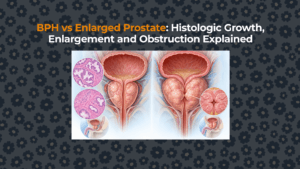
The neurovascular bundles that carry erectile nerve fibers run immediately beside the posterolateral prostate.
That creates a fundamental cancer-treatment trade-off:
the closer tumor is to a neurovascular bundle, the harder it may be to preserve that bundle without compromising the cancer operation.
How does prostatectomy cause erectile dysfunction?
Radical prostatectomy can affect erections through:
- intentional removal of one or both neurovascular bundles when cancer control requires it;
- temporary nerve dysfunction after nerve-sparing surgery;
- traction or thermal injury;
- local inflammation;
- vascular changes;
- and structural changes during healing.
Even a technically successful nerve-sparing operation does not mean erections will return immediately.
How does radiation cause erectile dysfunction?
External-beam radiation and brachytherapy usually leave the erectile nerves anatomically in place.
The decline is more often related to delayed effects on:
- small blood vessels;
- neurovascular tissues;
- the penile bulb and surrounding structures;
- and progressive fibrosis.
This is why potency can be relatively preserved soon after radiation but decline over subsequent years.
How does androgen deprivation cause sexual dysfunction?
Androgen deprivation lowers testosterone.
That affects both:
- sexual desire;
- and erectile physiology.
NCI notes that erectile-dysfunction medication may be less effective during androgen deprivation because medication that improves penile blood flow does not correct the loss of libido caused by profound androgen suppression.
Can emotional factors worsen treatment-related erectile dysfunction?
Yes.
Cancer diagnosis and treatment can add:
- performance anxiety;
- fear of recurrence;
- body-image concerns;
- relationship strain;
- depression;
- and avoidance after repeated unsuccessful sexual attempts.
These factors can coexist with a clear biological treatment injury rather than replace it.
Erectile dysfunction after prostate cancer treatment should not be assumed to have one cause. Nerve injury, vascular disease, radiation fibrosis, testosterone suppression and psychological factors can overlap—and the dominant mechanism determines which recovery strategy is realistic.
02What Determines Erectile Recovery After Radical Prostatectomy?
Baseline erectile function is one of the strongest predictors
A patient who already needs erectile medication before surgery is starting from a different physiological baseline than a younger patient with consistently firm unassisted erections.
Important recovery predictors include:
- age;
- erectile function before treatment;
- diabetes and vascular disease;
- smoking;
- obesity and metabolic health;
- tumor location and stage;
- unilateral versus bilateral nerve sparing;
- quality of nerve preservation;
- and surgical experience.
How common is erectile dysfunction after prostatectomy?
The reported rate varies widely because studies use different:
- definitions of potency;
- patient ages;
- baseline erectile-function requirements;
- nerve-sparing criteria;
- medication allowances;
- and follow-up periods.
The 2026 EAU Sexual and Reproductive Health guideline summarizes post-radical-prostatectomy erectile dysfunction rates of approximately 25–75% across studies.
It also notes that unassisted postoperative erectile-function recovery is only about 20–25% in many published series.
Does robotic surgery guarantee better erections?
No.
EAU prostate-cancer evidence cites a prospective multicentre study in which erectile dysfunction at 12 months occurred in:
- 70.4% after robot-assisted radical prostatectomy;
- 74.7% after open radical prostatectomy.
Longer follow-up showed broadly similar functional outcomes between approaches.
The key determinants are therefore not simply whether a robot was used, but:
- which patients were selected;
- whether the neurovascular bundles could be preserved;
- how well they were preserved;
- and the patient’s baseline recovery potential.
What does “bilateral nerve sparing” actually mean?
Both neurovascular bundles are intentionally preserved.
Unilateral nerve sparing preserves one side.
Non-nerve-sparing surgery removes or widely resects the bundles because tumor location or extension makes close preservation unsafe.
Nerve sparing is therefore a side-specific decision.
Can a nerve-sparing decision change during surgery?
Yes.
Preoperative MRI, biopsy information and clinical staging guide the plan, but intraoperative anatomy and concern for cancer extension can alter the dissection.
How long can recovery take?
Recovery after nerve-sparing surgery is usually measured in months, not days.
A common pattern is:
- little or no spontaneous erectile function immediately after surgery;
- gradual return of partial response over months;
- increasing medication responsiveness as nerve signaling improves;
- and possible continued improvement through the second postoperative year or beyond.
The recovery window is highly individual.
Does lack of erection at three months mean permanent erectile dysfunction?
No.
Three months is early in nerve recovery after prostatectomy.
However, the probability of meaningful spontaneous recovery is lower when:
- baseline erectile function was poor;
- both nerve bundles were removed;
- the patient is older;
- or severe vascular disease is present.
Does preserving the nerves guarantee spontaneous recovery?
No.
Anatomical preservation is necessary for the best chance of spontaneous erectile recovery, but it is not sufficient.
EAU emphasizes age, baseline function and nerve-sparing quality as major determinants of postoperative erectile outcome.
A “nerve-sparing operation” describes the surgical intent, not the final erectile outcome. Recovery should be discussed as a probability influenced by baseline physiology, cancer anatomy and time—not as a promise attached to the surgical label.
03How Do Radiation and Androgen Deprivation Affect Erectile Function?
Radiation-related erectile dysfunction is often delayed
After radiation, many patients retain erectile function in the early period.
NCI notes that potency is often preserved in the short term but tends to diminish over time.
Potential mechanisms include:
- vascular injury;
- endothelial dysfunction;
- fibrosis;
- neural injury;
- dose to penile and neurovascular structures;
- normal aging;
- and concurrent androgen deprivation.
What do long-term comparative data show?
The EAU Sexual and Reproductive Health guideline summarizes the ProtecT trial, in which erections firm enough for intercourse were reported at six years by:
- 17% after radical prostatectomy;
- 27% after radiotherapy;
- 30% with active monitoring.
At baseline, 67% of the trial population reported erections firm enough for intercourse.
These figures illustrate the different trajectories rather than proving that one treatment will preserve sexual function for a particular patient.
Can erectile medication work after prostate radiation?
Yes, in some patients.
NCI summarizes a randomized placebo-controlled crossover study of men whose erectile dysfunction began after localized prostate radiation:
- 55% reported successful intercourse with sildenafil;
- versus 18% with placebo.
That supports treating radiation-related erectile dysfunction rather than assuming it is untreatable.
Does taking tadalafil during radiation prevent later erectile dysfunction?
Evidence has not established a reliable preventive effect.
Preventive PDE5-inhibitor strategies during radiation have not consistently shown durable preservation of spontaneous erectile function.
Treatment should therefore focus on the patient’s actual post-treatment erectile function rather than assuming prophylactic medication guarantees preservation.
How does androgen deprivation change the sexual picture?
Androgen deprivation can produce:
- loss of sexual desire;
- fewer spontaneous erections;
- reduced erectile responsiveness;
- fatigue;
- body-composition changes;
- and altered sexual confidence.
EAU reports cessation of sexual activity in up to 93% of men receiving androgen deprivation in some studies.
Does sexual function recover after temporary androgen deprivation stops?
It can, but recovery depends on whether testosterone returns.
Testosterone recovery is slower and less complete after:
- longer androgen-deprivation courses;
- older age;
- and lower baseline testosterone.
This is why a patient can remain sexually affected after the final injection has technically “ended.”
The timing distinguishes mechanisms. Abrupt erectile loss after prostatectomy is primarily a postoperative neurovascular problem; gradual decline after radiation is more often vascular/fibrotic; loss of desire during androgen deprivation is hormonal. The same ED medication can therefore perform differently in each setting.
04What Is Penile Rehabilitation After Prostate Cancer Treatment?
Penile rehabilitation is an early recovery strategy, not a guaranteed nerve-regeneration treatment
After prostatectomy, the term penile rehabilitation usually describes early use of treatments that:
- facilitate erections;
- maintain sexual activity;
- increase penile oxygenation or blood flow;
- reduce prolonged erectile inactivity;
- and help the patient and partner adapt while neurological recovery evolves.
What treatments can be used during prostate-specific rehabilitation?
Common options include:
- PDE5 inhibitors;
- vacuum erection devices;
- intracavernosal injection therapy;
- and combinations of these approaches.
The complete evidence, contraindications and sequencing for these treatments belong to the broader Erectile Dysfunction treatment framework.
When should erectile treatment start after prostatectomy?
EAU recommends that clinicians actively address erectile and sexual dysfunction after radical prostatectomy rather than wait for the patient to raise the subject.
Early erectile treatment can help resume sexual activity and may shorten the period of functional inactivity.
However, exact timing should account for:
- surgical recovery;
- catheter removal;
- cardiovascular status;
- medication contraindications;
- and the patient’s goals.
Are PDE5 inhibitors first-line after nerve-sparing prostatectomy?
Yes, they are commonly used first when there is no contraindication.
EAU considers PDE5 inhibitors first-line therapy after nerve-sparing prostatectomy.
Response is more likely when:
- the patient was potent before surgery;
- is younger;
- has better vascular health;
- and high-quality nerve sparing was possible.
Is nightly sildenafil proven better than on-demand sildenafil for rehabilitation?
No.
EAU cites a randomized trial showing no clear benefit of nightly sildenafil over on-demand use after nerve-sparing surgery.
What did the tadalafil rehabilitation trial show?
A multicentre double-blind trial of 423 men younger than 68 years with normal preoperative erectile function compared:
- tadalafil 5 mg once daily;
- tadalafil 20 mg on demand;
- and placebo after nerve-sparing prostatectomy.
Daily tadalafil improved sexual-domain scores during treatment compared with on-demand treatment or placebo.
But the difference disappeared after the treatment period ended.
That distinction matters:
a treatment can improve assisted erections while it is being used without proving that it restored spontaneous, drug-free erectile function.
Does penile rehabilitation increase the chance of spontaneous unassisted erections?
Current EAU guidance says there is no clear evidence that penile rehabilitation itself increases the probability of spontaneous erectile-function recovery after nerve-sparing prostatectomy.
The evidence instead supports:
- active treatment of erectile dysfunction;
- earlier return to sexual activity;
- and individualized escalation when first-line treatment is inadequate.
Why use a vacuum erection device?
A vacuum device mechanically draws blood into the penis.
In the prostatectomy setting it can:
- create an erection without requiring intact nerve signaling;
- support sexual activity;
- and provide a non-drug option during neural recovery.
Some rehabilitation programs combine vacuum therapy with PDE5 inhibitors, although protocols vary and no single regimen has proven universally superior.
When are penile injections considered?
Intracavernosal injections can create erections directly through local vasoactive medication when oral drugs are inadequate.
They are particularly useful when early postoperative nerve signaling is too weak for PDE5 inhibitors to produce a functional erection.
Injection training, dose titration and priapism precautions belong to the full ED-management pathway rather than this prostate-cancer bridge page.
The practical goal of early rehabilitation is not to promise spontaneous recovery. It is to prevent untreated sexual dysfunction from becoming the default while nerves, vascular function and testosterone status evolve.
05When Should Treatment Escalate, and When Should Care Move to the Broader Erectile Dysfunction Pathway?
Persistent erectile dysfunction should be actively reassessed
A patient does not need to wait indefinitely for spontaneous recovery before discussing stronger treatment.
Reassessment should clarify:
- whether one or both neurovascular bundles were preserved;
- pre-treatment erectile function;
- current libido;
- testosterone status if androgen deprivation was used;
- medication adherence and timing;
- cardiovascular fitness for sexual activity;
- relationship and psychological factors;
- and whether current ED treatment produces any usable response.
When should oral therapy be escalated?
If a PDE5 inhibitor does not produce a functional erection after appropriate trials, the next step is not necessarily to repeat the same strategy forever.
Options can include:
- vacuum erection therapy;
- intracavernosal injections;
- combination therapy;
- or eventual penile prosthesis for persistent treatment-refractory erectile dysfunction.
Those decisions should follow the full Erectile Dysfunction evaluation and treatment pathway, because contraindications, cardiovascular assessment, medication interactions and general ED causes extend beyond prostate cancer.
When can a penile prosthesis be considered after prostate cancer treatment?
A penile prosthesis is a definitive mechanical treatment for erectile dysfunction that does not respond adequately to or is not compatible with less invasive treatments.
It is not a “last chance for nerve recovery.”
It is a separate choice that creates reliable mechanical rigidity when spontaneous or medication-assisted erections are no longer adequate for the patient’s goals.
What if libido—not erection firmness—is the main problem?
That distinction is essential.
A patient on androgen deprivation may report “erectile dysfunction” when the dominant limitation is actually profound loss of sexual desire.
In that setting:
- increasing an erection medication may not address the main symptom;
- testosterone recovery after temporary therapy should be considered;
- and the ongoing oncological need for androgen deprivation must remain the priority.
What if erections are adequate but orgasm or ejaculation is the problem?
Then the problem is not primarily erectile dysfunction.
After radical prostatectomy:
- ejaculation is permanently absent;
- orgasm can remain possible;
- orgasm intensity can change;
- and some patients experience climacturia or painful orgasm.
These symptoms require specific sexual rehabilitation rather than simply escalating erectile medication.
When does this page hand off to the broader FBU erectile dysfunction root?
This bridge page has answered:
- why prostate cancer treatment causes erectile dysfunction;
- how surgery, radiation and androgen deprivation differ;
- what predicts recovery after prostatectomy;
- what penile rehabilitation can and cannot claim;
- and when escalation becomes appropriate.
For the complete ED work-up—including vascular, hormonal, medication, neurological and psychological causes; cardiovascular risk assessment; PDE5-inhibitor safety; injection treatment; vacuum devices and prosthesis selection—continue to the main Erectile Dysfunction guide.
What is the next prostate-cancer survivorship issue?
The next contextual page covers Urinary Incontinence After Prostate Cancer Treatment, the other major functional outcome after local therapy.
Bridge rule: prostate-cancer treatment explains why the ED developed; the broader erectile-dysfunction root determines the complete general work-up and long-term treatment pathway. Keeping those jobs separate prevents duplicate intent and keeps this page inside its semantic role.
→Prostate-Cancer Erectile Dysfunction by Treatment
| Treatment | Main ED mechanism | Typical timing | Recovery implication |
|---|---|---|---|
| Radical prostatectomy | Neurovascular-bundle injury/removal, neuropraxia, vascular and structural change. | Immediate. | Recovery can continue for months to years if nerve pathways remain viable. |
| Nerve-sparing prostatectomy | Nerves preserved anatomically but temporarily dysfunctional. | Immediate loss; gradual return possible. | Best chance with younger age, good baseline function and high-quality bilateral preservation. |
| External-beam radiation | Vascular, neural and fibrotic tissue injury. | Usually gradual over months/years. | Medication response can remain useful; decline may continue with time. |
| Brachytherapy | Local radiation exposure to erectile and vascular structures. | Often gradual. | Trajectory resembles radiation more than immediate postoperative ED. |
| Androgen deprivation | Low testosterone reduces libido and erectile responsiveness. | Begins during hormonal suppression. | Improvement depends partly on testosterone recovery when treatment is temporary. |
| Combined radiation + ADT | Radiation injury plus testosterone suppression. | Early libido loss + possible later vascular decline. | Sexual recovery may lag behind completion of both treatment components. |
Key Points
- Erectile dysfunction after prostate cancer treatment is caused by different mechanisms after surgery, radiation and androgen deprivation.
- The erectile neurovascular bundles run directly alongside the prostate.
- Nerve-sparing surgery can only be performed when cancer location makes preservation oncologically safe.
- Nerve sparing does not guarantee erectile recovery.
- Age, baseline erectile function, cardiovascular health and quality of nerve preservation strongly influence recovery after prostatectomy.
- EAU summarizes post-prostatectomy ED rates of approximately 25–75% across studies, reflecting major differences in patient selection and outcome definitions.
- Unassisted erectile recovery is only about 20–25% in many published post-prostatectomy series.
- Robotic surgery does not guarantee better erectile recovery than open surgery.
- Erectile recovery after nerve-sparing prostatectomy can continue for many months and sometimes beyond two years.
- Radiation-related ED is typically more gradual than post-prostatectomy ED.
- In ProtecT, intercourse-sufficient erections at six years were reported by 17% after prostatectomy and 27% after radiotherapy.
- NCI summarizes a radiation-related ED trial in which successful intercourse occurred in 55% with sildenafil versus 18% with placebo.
- Androgen deprivation reduces sexual desire as well as erectile responsiveness.
- PDE5 inhibitors cannot fully correct the libido loss caused by profound testosterone suppression.
- PDE5 inhibitors are commonly used first after nerve-sparing prostatectomy when medically appropriate.
- Nightly PDE5-inhibitor dosing has not been proven universally superior to on-demand treatment for spontaneous recovery.
- Daily tadalafil can improve assisted sexual function during treatment, but the benefit may disappear after medication is stopped.
- Current EAU evidence does not prove that penile rehabilitation itself increases spontaneous, drug-free erectile recovery after nerve-sparing prostatectomy.
- Vacuum devices and penile injections can support erectile activity even before nerve-mediated erections recover.
- Persistent ED should be actively escalated rather than indefinitely observed when it is limiting quality of life.
- The broader Erectile Dysfunction root owns full ED diagnosis, cardiovascular assessment and general treatment sequencing.
Clinical bottom line: erectile dysfunction after prostate cancer treatment is not one condition with one recovery curve. Radical prostatectomy can interrupt the erectile nerves immediately, even when nerve-sparing surgery is attempted; radiation usually causes a slower vascular and fibrotic decline; androgen deprivation suppresses both desire and erectile physiology. The best recovery prospects after prostatectomy occur in patients with strong baseline erections, favorable age and vascular health, and oncologically safe high-quality nerve preservation. Early erectile treatment is reasonable because it allows sexual activity while recovery evolves, but “penile rehabilitation” should not be presented as a proven way to regenerate nerves or guarantee spontaneous erections. When oral treatment is insufficient, vacuum devices, injections and later prosthesis treatment can be considered through the broader ED pathway. The goal is not simply to wait for an erection to return—it is to preserve sexual function and quality of life while respecting the realities of cancer treatment.
Medical disclaimer: This article provides general medical education about erectile dysfunction specifically after prostate cancer treatment. Recovery depends on cancer anatomy, nerve-sparing status, baseline erectile function, age, cardiovascular and metabolic health, radiation exposure, androgen-deprivation duration, medications and individual rehabilitation goals. Erectile medications and devices have contraindications and risks. Treatment decisions should be made with the treating urology, radiation oncology and/or sexual-medicine team.
For the broader prostate-cancer survivorship context, return to the Prostate Cancer hub or review Prostate Cancer Treatment Side Effects. The next contextual guide covers Urinary Incontinence After Prostate Cancer Treatment. For the complete diagnostic and treatment framework beyond the prostate-cancer relationship, continue to the main Erectile Dysfunction guide.
Evidence Sources
- European Association of Urology — Sexual and Reproductive Health: prostate-cancer treatment as a cause of erectile dysfunction, post-prostatectomy recovery rates, prognostic factors, PDE5 inhibitors, penile rehabilitation evidence and treatment escalation.
- European Association of Urology — Prostate Cancer Quality of Life Outcomes: erectile-function outcomes after robotic/open prostatectomy, long-term sexual outcomes after surgery and radiation, and rehabilitation evidence.
- European Association of Urology — Prostate Cancer Treatment: side-specific nerve-sparing selection, cancer-control considerations and predictors of postoperative function.
- EAU Patient Information, updated February 2026 — nerve-sparing radical prostatectomy and the need to prioritize complete cancer treatment when tumor is close to erectile nerves.
- National Cancer Institute — Prostate Cancer Treatment PDQ, Health Professional Version: erectile dysfunction after surgery/radiation and sildenafil evidence after prostate radiotherapy.
- National Cancer Institute — Sexual Health Issues in Men and Cancer Treatment: mechanisms of erectile dysfunction after pelvic surgery, radiotherapy and hormone therapy.
- National Cancer Institute — Hormone Therapy for Prostate Cancer: libido loss, erectile dysfunction and limits of erection medication during profound androgen deprivation.
- REACTT randomized trial — daily versus on-demand tadalafil and placebo after bilateral nerve-sparing radical prostatectomy, illustrating the distinction between assisted erectile function and spontaneous recovery after washout.