Radical prostatectomy is a curative-intent operation that removes the entire prostate, its capsule and usually the seminal vesicles, after which the bladder is reconnected to the urethra. Pelvic lymph nodes may also be removed when nodal staging is indicated. The operation is considered mainly for selected patients with clinically significant localized or locally advanced prostate cancer who are healthy enough to benefit from local treatment. Its major trade-offs are urinary incontinence, erectile dysfunction, loss of ejaculation and fertility, surgical complications and the possibility that additional radiation or systemic treatment may still be required if adverse pathology or PSA recurrence is found.
Radical prostatectomy physically removes the prostate cancer together with the prostate gland and provides the most complete pathological assessment of the removed organ. It is not automatically preferred over radiation, and it is usually unnecessary for favorable low-risk disease that can be monitored safely. The best surgical candidates are selected according to cancer risk, stage, life expectancy, comorbidity, urinary and sexual function, anatomy and personal treatment priorities. Open, laparoscopic and robot-assisted operations are different surgical approaches to the same radical prostatectomy.
01What Happens During a Radical Prostatectomy?
The entire prostate is removed rather than cored out
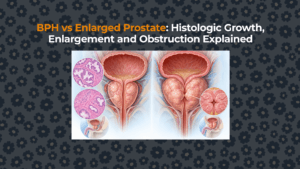
A radical prostatectomy is different from operations used to relieve benign prostate enlargement.
The cancer operation removes the prostate gland as an intact oncological specimen together with the seminal vesicles in the standard procedure.
The urethra passes through the prostate. Once the gland has been removed, the urinary tract must therefore be reconstructed.
What happens to the bladder and urethra?
After removal of the prostate, the bladder neck is joined directly to the remaining membranous urethra.
This surgical connection is called the vesicourethral anastomosis.
The surgeon aims to create a connection that is:
- watertight;
- well aligned;
- free of excessive tension;
- and compatible with preservation of the urinary sphincter mechanism.
Why is a urinary catheter needed?
A catheter passes through the reconstructed urinary channel into the bladder while the anastomosis heals.
The exact duration varies with surgical technique and whether there is evidence of urinary leakage. EAU patient information has historically described removal at about one week in uncomplicated recovery, while individual centres can use different protocols.
Are the seminal vesicles removed?
Usually, yes.
The seminal vesicles sit behind the prostate and can be involved by prostate cancer. Current EAU surgical guidance treats complete seminal-vesicle removal as the default oncological approach, although highly selected low-risk cases can involve technical modifications.
Are lymph nodes always removed?
No.
Pelvic lymph-node dissection is based on the predicted risk that cancer has reached regional nodes.
When lymph-node dissection is indicated, current EAU guidance recommends an extended pelvic lymph-node dissection rather than a more limited sampling.
Radical prostatectomy is not the same as TURP or simple prostatectomy for BPH. Those procedures remove or reshape obstructing benign tissue while leaving much of the prostate behind. Radical prostatectomy is an oncological operation designed to remove the prostate gland as a cancer specimen.
02Who Is Considered for Radical Prostatectomy?
Surgery is most useful when local cancer control can produce meaningful long-term benefit
Radical prostatectomy is considered for selected patients with localized and some locally advanced prostate cancers.
The operation is not chosen from stage alone.
Important selection variables include:
- clinical stage;
- Grade Group and biopsy pathology;
- PSA and risk classification;
- MRI and other staging information;
- estimated lymph-node risk;
- life expectancy;
- frailty and major comorbid disease;
- baseline urinary and erectile function;
- previous prostate procedures;
- and the patient’s preference after comparing surgery with radiation and surveillance.
How much life expectancy is usually needed to benefit from surgery?
Current EAU guidance emphasizes that the benefit from local treatment in localized prostate cancer generally requires more than about ten years of life expectancy.
This should not be interpreted as a rigid age cutoff.
Health status and comorbidity can matter as much as chronological age.
Is prostatectomy appropriate for low-risk prostate cancer?
It can control low-risk cancer, but treatment ability is not the same as treatment necessity.
For suitable men with low-risk disease and meaningful life expectancy, contemporary guidelines generally favor active surveillance because immediate whole-gland treatment is likely to represent overtreatment for many patients.
Where does surgery fit in intermediate-risk disease?
Radical prostatectomy is a standard curative-intent option for selected patients with intermediate-risk localized prostate cancer when active surveillance is not appropriate or not preferred.
The trade-off is between:
- immediate removal and definitive pathology;
- versus the urinary and sexual consequences of surgery;
- and alternative curative treatment with radiation.
Can high-risk or locally advanced prostate cancer be treated with surgery?
Yes, in selected patients.
But surgery should often be understood as one component of a multimodal pathway, not a guarantee that no further treatment will be needed.
Adverse pathology, lymph-node involvement, persistent PSA or later PSA recurrence can lead to postoperative radiation, androgen-deprivation therapy or other treatment.
Is surgery used for metastatic prostate cancer?
Radical prostatectomy is not a routine standard treatment for established distant metastatic prostate cancer outside selected research or highly specialized contexts.
Metastatic disease is primarily managed systemically. Review Prostate Cancer Treatment for the stage-based treatment framework.
What can make surgery a poor fit even if the cancer is operable?
Examples include:
- short life expectancy from competing illness;
- frailty or high anesthetic/surgical risk;
- medical conditions that make recovery disproportionately hazardous;
- a cancer state better treated by another modality;
- or patient priorities that strongly favor avoiding surgical urinary or sexual risks.
“Can this cancer be removed?” and “Will this patient benefit from removal?” are different questions. Surgical candidacy combines oncological resectability with life expectancy, health, expected functional cost and the availability of equally valid non-surgical options.
03How Are Open, Laparoscopic, Robotic and Nerve-Sparing Prostatectomy Different?
The cancer operation is the same; the access route differs
Radical prostatectomy can be performed through:
- an open retropubic approach;
- conventional laparoscopy;
- or robot-assisted laparoscopy.
All three aim to remove the same prostate-cancer specimen and reconstruct the same bladder-to-urethra connection.
The dedicated comparison of the robotic approach is covered in the next guide: Robotic Prostatectomy for Prostate Cancer.
Does robotic prostatectomy remove the cancer more completely?
Not automatically.
Robot assistance changes visualization, instrument articulation and the minimally invasive access route. It does not change the oncological definition of radical prostatectomy.
EAU evidence reviews report some advantages for robot-assisted surgery in blood loss, hospitalization and early recovery measures in selected studies, while long-term continence, potency and oncological outcomes can be comparable across approaches.
Surgeon experience, case selection and surgical quality remain important.
What is nerve-sparing prostatectomy?
The neurovascular bundles that contribute to erections run very close to the prostate capsule.
During nerve-sparing surgery, the surgeon attempts to preserve one or both neurovascular bundles rather than remove them with surrounding tissue.
Is nerve sparing always possible?
No.
Nerve preservation must be balanced against the need to remove cancer completely.
If imaging, biopsy location, examination or other features suggest a high risk that tumor extends through the prostate capsule on one side, wider excision may be safer oncologically.
Current EAU guidance recommends nerve sparing on sides where the risk of extracapsular disease is low.
Does nerve sparing guarantee erections after surgery?
No.
Postoperative erectile function also depends on:
- age;
- erectile function before surgery;
- vascular health and diabetes;
- whether one or both bundles can be preserved;
- how completely they can be preserved;
- and postoperative recovery and rehabilitation.
What is pelvic lymph-node dissection?
Pelvic lymph-node dissection removes lymphatic tissue from defined nodal regions so pathology can determine whether regional nodes contain prostate cancer.
It provides staging information and can change the postoperative treatment plan.
It also adds operative time and can create complications such as lymphocele, bleeding, vascular injury or thromboembolic risk.
“Nerve-sparing” is not a quality label for the whole operation. A surgeon may preserve both bundles, one bundle or neither depending on side-specific cancer risk. Wider removal can be the oncologically safer choice when tumor extension is suspected near a bundle.
04What Is Recovery Like After Radical Prostatectomy?
Recovery has several different clocks
The incision can heal faster than urinary or sexual function.
A useful way to understand recovery is to separate:
- surgical recovery;
- catheter and anastomosis healing;
- return of urinary continence;
- return or rehabilitation of erectile function;
- and cancer follow-up through PSA.
What happens immediately after surgery?
Early care can include:
- pain control;
- early mobilization to reduce thromboembolic risk;
- monitoring for bleeding, infection or urinary leakage;
- care of the urinary catheter;
- and gradual return to eating and normal activity.
Length of hospital stay and activity restrictions vary according to surgical approach, complications, health status and local practice.
What is urinary incontinence after prostatectomy?
After the prostate and part of the urethral support system are removed, urinary control depends on the remaining sphincter mechanism and pelvic-floor recovery.
Leakage is common early after catheter removal and typically improves over time.
Possible patterns include:
- leakage with coughing, lifting or movement;
- continuous early postoperative leakage;
- urgency-associated leakage;
- or persistent stress incontinence in a smaller group of patients.
How long does continence recovery take?
There is no single recovery date.
Recovery is influenced by:
- age;
- baseline urinary function;
- urethral length and sphincter preservation;
- surgical technique;
- previous prostate surgery;
- body weight and general health;
- and how continence is defined in the study reporting the result.
EAU evidence shows that meaningful urinary leakage can remain at 12 months in a minority of men, and published percentages vary widely because definitions range from “no pads” to “zero or one safety pad.”
Can pelvic-floor exercises help?
Pelvic-floor muscle training is commonly incorporated into continence rehabilitation.
Patients should receive instructions appropriate to their surgical team because technique, timing and intensity matter more than simply performing repeated contractions.
Why does erectile dysfunction happen after surgery?
Erections depend on autonomic nerves and blood vessels that run extremely close to the prostate.
Even when the neurovascular bundles are anatomically preserved, temporary nerve dysfunction can occur from dissection, traction, heat, inflammation and altered blood flow.
Erectile recovery can therefore take substantially longer than wound healing.
What predicts erectile recovery?
Major predictors include:
- age;
- erectile function before surgery;
- cardiovascular and metabolic health;
- bilateral versus unilateral nerve preservation;
- extent and quality of nerve sparing;
- and time since surgery.
Will ejaculation return?
No.
Radical prostatectomy removes the prostate and seminal vesicles and disconnects the ejaculatory pathway.
Orgasm can still occur, but it is a dry orgasm without semen.
Natural fertility is therefore lost after radical prostatectomy. Men who may want biological children in the future should discuss sperm banking before surgery.
Are orgasms always unchanged?
No.
Some men report changes in orgasmic intensity, discomfort with orgasm, urine leakage during sexual activity or changes in penile length or sensation.
What other surgical complications can occur?
Potential complications include:
- bleeding or transfusion;
- infection;
- blood clots;
- anastomotic urinary leak;
- bladder-neck contracture or anastomotic stricture;
- lymphocele after pelvic lymph-node dissection;
- injury to adjacent structures;
- inguinal hernia;
- and complications related to anesthesia or positioning.
| Recovery domain | What changes | Typical pattern | What can modify the outcome |
|---|---|---|---|
| Incision / general recovery | Pain, fatigue, mobility and wound healing. | Improves over days to weeks; exact pace depends on approach and health. | Open vs minimally invasive access, age, complications, baseline fitness. |
| Catheter / anastomosis | Bladder is reconnected to urethra. | Temporary catheter remains until healing is adequate. | Anastomotic leak, bladder-neck reconstruction, prior TURP, local protocol. |
| Continence | Urinary sphincter/support system adapts after prostate removal. | Leakage is common early and often improves progressively. | Age, urethral length, sphincter preservation, technique, baseline function. |
| Erections | Neurovascular function can be disturbed even when nerves are preserved. | Recovery can take many months and may remain incomplete. | Age, baseline erections, vascular health, unilateral/bilateral nerve sparing. |
| Ejaculation / fertility | Seminal pathway is removed. | Permanent dry orgasm and loss of natural fertility. | Not restored by nerve sparing. |
Urgent postoperative symptoms require clinical contact rather than routine recovery advice. Fever, increasing wound redness, inability of the catheter to drain, severe or worsening pain, heavy bleeding, chest pain, shortness of breath, marked leg swelling or other acute deterioration should be assessed promptly according to the surgical team’s instructions.
05What Do Pathology and PSA Show After Radical Prostatectomy?
Surgery produces a final pathological stage
The removed specimen allows the pathologist to examine the whole prostate rather than small biopsy samples.
The surgical report can define:
- final Grade Group;
- pathological T stage;
- extraprostatic extension;
- seminal-vesicle invasion;
- surgical margin status;
- lymph-node status when nodes were removed;
- and other adverse histological features.
What is a positive surgical margin?
A positive margin means cancer cells reach the inked edge of the removed surgical specimen.
It suggests that microscopic cancer may remain locally, but it does not prove that recurrence will occur.
Margin length, location, Grade Group, pathological stage and postoperative PSA all influence what the finding means clinically.
What should PSA do after prostatectomy?
Because the prostate has been removed, PSA should fall to an undetectable level.
Current EAU follow-up guidance states that PSA is expected to be undetectable by about two months after radical prostatectomy.
What is persistent PSA?
Persistent PSA means PSA remains detectably elevated soon after surgery rather than reaching the expected nadir.
EAU guidance discusses PSA persistence commonly using a level of at least 0.1 ng/mL within roughly four to eight weeks, while also emphasizing that testing too early can over-classify patients because PSA may continue to fall.
Persistent PSA can reflect:
- residual local cancer;
- previously unrecognized metastatic disease;
- or, less commonly, residual benign prostate tissue.
What is biochemical recurrence after surgery?
Biochemical recurrence is a rising PSA after the initial postoperative nadir.
A PSA recurrence is not automatically the same as visible metastatic cancer.
The risk associated with recurrence depends on:
- how soon PSA returns;
- PSA doubling time;
- pathological stage;
- Grade Group;
- margin status;
- PSMA PET findings when imaging is appropriate;
- and whether salvage treatment is feasible.
Can radiation still be given after surgery?
Yes.
Postoperative radiation can be used in selected patients with adverse pathology, persistent PSA or biochemical recurrence.
Modern management increasingly distinguishes patients who need immediate adjuvant treatment from those who can be monitored and receive early salvage radiation only if PSA begins to rise.
Does needing radiation after prostatectomy mean surgery failed?
Not necessarily.
High-risk and locally advanced prostate cancer can require more than one treatment modality.
For some patients, the intended strategy from the beginning is:
surgery first, then use final pathology and postoperative PSA to determine whether additional therapy is needed.
What do randomized outcomes tell us about surgery?
The value of surgery depends strongly on who is being treated.
Older randomized trials demonstrated long-term reductions in progression and prostate-cancer mortality in selected clinically detected disease, while modern PSA-screened populations contain more favorable cancers for which absolute mortality differences between surgery, radiation and monitoring can be small over 10–15 years.
In the ProtecT randomized trial, prostate-cancer-specific mortality at 15 years was low across active monitoring, prostatectomy and radiotherapy, while metastases and clinical progression occurred more often in the monitoring group.
This is one reason treatment selection must be risk-adapted rather than assuming every newly diagnosed cancer benefits equally from immediate prostate removal.
A positive margin does not automatically equal recurrence, and a detectable PSA does not automatically equal visible metastasis. Postoperative management is based on the combined pathological and biochemical risk picture rather than one isolated result.
→Radical Prostatectomy: Major Decisions Before and After Surgery
| Decision point | Question | Why it matters | Common alternative / next step |
|---|---|---|---|
| Whether to operate | Is the cancer clinically significant enough—and the patient healthy enough—to benefit from surgery? | Low-risk disease can be overtreated; severe comorbidity can reduce the value of local therapy. | Active surveillance, radiation or watchful waiting according to risk and health. |
| Surgical approach | Open, laparoscopic or robot-assisted? | Changes access, perioperative profile and recovery logistics more than the definition of the cancer operation. | Choose based on surgeon expertise, anatomy and institutional outcomes. |
| Nerve sparing | Can one or both neurovascular bundles be preserved safely? | Affects erectile recovery and possibly early continence, but cancer clearance takes priority. | Wider side-specific excision when extracapsular disease is suspected. |
| Lymph-node dissection | Is predicted nodal involvement high enough to justify staging surgery? | Provides pathological nodal staging but adds morbidity. | No dissection when predicted risk is sufficiently low. |
| Final pathology | What are the true stage, grade, margins and nodes? | Can upstage or downstage the original clinical estimate. | Observation, adjuvant treatment or closer PSA surveillance. |
| Postoperative PSA | Did PSA become undetectable and remain so? | Persistent or rising PSA can indicate residual/recurrent disease. | Risk-adapted imaging and early salvage radiation/systemic therapy when indicated. |
Key Points
- Radical prostatectomy removes the entire prostate and usually the seminal vesicles with curative intent.
- The bladder is reconnected directly to the urethra after the prostate is removed.
- A temporary urinary catheter supports healing of the reconstructed connection.
- Pelvic lymph nodes are removed only when nodal staging is indicated; EAU guidance recommends an extended template when dissection is performed.
- Suitable low-risk prostate cancer is usually better managed initially with active surveillance rather than automatic surgery.
- Radical prostatectomy is a standard option for selected intermediate-risk and some high-risk or locally advanced cancers.
- High-risk and locally advanced disease may require surgery as part of multimodal treatment.
- Robotic, laparoscopic and open prostatectomy are approaches to the same radical cancer operation.
- Robot assistance does not automatically guarantee superior cancer control.
- Nerve sparing is chosen side by side according to the risk of tumor extension and the need for cancer clearance.
- Nerve sparing can improve the chance of erectile recovery but does not guarantee normal erections.
- Urinary incontinence and erectile dysfunction are the two most important long-term functional trade-offs.
- Ejaculation and natural fertility are permanently lost after radical prostatectomy.
- The surgical specimen gives final pathological stage, Grade Group, margin status and—when nodes are removed—nodal stage.
- PSA should become undetectable after surgery; persistent or rising PSA changes the follow-up and salvage-treatment pathway.
- Additional radiation or systemic treatment after prostatectomy does not necessarily mean the initial treatment strategy was inappropriate; some higher-risk cancers require multimodal care.
Clinical bottom line: radical prostatectomy is a curative-intent cancer operation, not simply removal of prostate tissue. It removes the prostate and seminal vesicles, reconstructs the urinary tract and creates a complete pathology specimen that can refine the original stage and risk estimate. The operation is most useful when the prostate cancer is clinically significant, still amenable to meaningful local control and the patient has enough health and life expectancy to benefit. The trade-off is immediate surgical burden plus possible long-term urinary and sexual dysfunction. Open, laparoscopic and robotic techniques are different ways to perform the same oncological procedure; nerve sparing and lymph-node dissection are additional decisions within that operation. After surgery, final pathology and the PSA trajectory determine whether the next step is routine surveillance or additional treatment.
Medical disclaimer: This article provides general medical education about radical prostatectomy for prostate cancer. Individual surgical candidacy, nerve-sparing feasibility, lymph-node dissection, recovery, continence and erectile-function outcomes depend on cancer stage and location, Grade Group, PSA, imaging, anatomy, previous prostate procedures, baseline function, health, medications, surgeon experience and personal goals. These decisions require individualized discussion with the treating urologic oncology team.
For the overall management framework, return to Prostate Cancer Treatment. The page immediately preceding this guide explains Active Surveillance vs Watchful Waiting. The next guide focuses specifically on Robotic Prostatectomy for Prostate Cancer. Long-term urinary, sexual and cancer follow-up is covered in Prostate Cancer Survivorship. For the broader disease framework, return to the Prostate Cancer hub.
Evidence Sources
- European Association of Urology — Prostate Cancer Treatment: radical prostatectomy technique, patient selection, nerve sparing, lymph-node dissection, perioperative complications, functional outcomes and postoperative management.
- European Association of Urology — Prostate Cancer Follow-up: postoperative PSA expectations, recurrence monitoring and follow-up after curative local treatment.
- EAU Patient Information — Surgery to Remove the Prostate (Radical Prostatectomy), updated February 2026: procedure, candidates, lymph-node removal and nerve-sparing concepts.
- National Cancer Institute — Prostate Cancer Treatment PDQ, Health Professional Version: randomized evidence, complications, patient-reported urinary and sexual outcomes and comparison with other management strategies.
- National Cancer Institute — Prostate Cancer Treatment PDQ, Patient Version: prostatectomy procedure and major surgical adverse effects.