Prostatitis is a group of conditions involving infection, inflammation or chronic pain associated with the prostate and surrounding pelvic region. It is not one disease. Acute bacterial prostatitis is a sudden prostate infection, chronic bacterial prostatitis is a persistent or recurrent infection, and chronic prostatitis/chronic pelvic pain syndrome (CP/CPPS) produces ongoing pelvic pain without a proven bacterial infection explaining the syndrome. There is also an asymptomatic form in which prostate inflammation is found without prostatitis symptoms.
01. What Is Prostatitis?
Does prostatitis always mean the prostate is infected?
No.
The word “prostatitis” is used for several clinical syndromes that can look similar to the patient but have different biological causes.
A man may have:
- a true bacterial infection involving the prostate;
- prostate inflammation without a demonstrated bacterial infection;
- chronic pelvic pain associated with urinary, muscular, neurological or sexual symptoms;
- or microscopic prostate inflammation discovered incidentally without symptoms.
The modern classification therefore separates bacterial prostatitis from chronic pelvic pain syndrome.
That boundary is clinically important because pain around the prostate does not prove that bacteria are present inside the gland.
Where is the prostate and why can prostatitis affect urination?
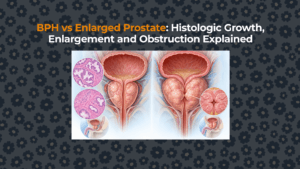
The prostate sits immediately below the bladder and surrounds the first part of the urethra.
This anatomy helps explain why inflammation or swelling can produce urinary symptoms.
When the prostate is acutely inflamed, tissue swelling around the prostatic urethra can contribute to:
- painful urination;
- hesitancy;
- reduced urinary flow;
- frequency;
- urgency;
- and, in severe cases, urinary retention.
The prostate also lies directly in front of the rectum and close to the pelvic-floor muscles, seminal vesicles, bladder neck and nerves of the pelvis.
That is why prostatitis-related symptoms can be felt well beyond the gland itself.
Is prostatitis the same as an enlarged prostate?
No.
Benign prostate enlargement and prostatitis are different clinical problems.
An enlarged prostate can obstruct urine flow because of the amount and location of prostate tissue.
Prostatitis refers to an infectious, inflammatory or pain syndrome.
The two can produce overlapping urinary symptoms, but one should not automatically be diagnosed from symptoms of the other.
Is prostatitis the same as prostate cancer?
No.
Prostatitis is not prostate cancer.
However, some symptoms and test abnormalities can overlap.
For example, both prostatitis and prostate cancer can be associated with an elevated PSA, but PSA cannot determine which condition is present by itself.
The distinction therefore depends on the complete clinical setting rather than on one laboratory value.
02. What Are the Main Types of Prostatitis?
How is prostatitis classified?
The NIH classification divides prostatitis syndromes into four major categories.
| NIH category | Clinical name | Defining feature | What separates it from the others? |
|---|---|---|---|
| I | Acute bacterial prostatitis | Acute infection of the prostate. | Usually begins abruptly and may cause fever, malaise, urinary symptoms and significant pelvic pain. |
| II | Chronic bacterial prostatitis | Chronic or recurrent bacterial prostate infection. | Bacteria can be demonstrated or localized; recurrent UTIs may be an important clue. |
| III | Chronic prostatitis / chronic pelvic pain syndrome | Chronic pelvic pain without a demonstrated bacterial infection explaining the syndrome. | Pain, urinary symptoms, pelvic-floor dysfunction and sexual symptoms may coexist. |
| IIIA | Inflammatory CP/CPPS | Inflammatory cells are found in selected prostate-related specimens. | No demonstrated bacterial infection despite inflammatory findings. |
| IIIB | Non-inflammatory CP/CPPS | No inflammatory cells are demonstrated in those specimens. | Symptoms can still be substantial despite no measurable prostate inflammation. |
| IV | Asymptomatic inflammatory prostatitis | Inflammation discovered without prostatitis symptoms. | Usually found incidentally during evaluation for another reason. |
What is acute bacterial prostatitis?
Acute bacterial prostatitis is a bacterial infection that typically presents abruptly.
Current EAU guidance describes a characteristic combination of:
- voiding symptoms;
- poorly localized pelvic or prostate-region pain;
- malaise;
- and often fever.
The prostate may be swollen and tender on digital rectal examination.
Enterobacterales—particularly Escherichia coli—are prominent causes.
Because acute infection can progress to bacteremia, sepsis, urinary retention or abscess, this category is clinically very different from chronic nonbacterial pelvic pain.
What is chronic bacterial prostatitis?
Chronic bacterial prostatitis is a persistent or recurrent bacterial infection involving the prostate.
EAU guidance defines the chronic clinical pattern by symptoms persisting for at least approximately three months.
Possible symptoms include pain in the:
- perineum;
- scrotal region;
- penis;
- and inner thigh;
along with lower urinary tract symptoms.
The history may also include recurrent urinary infections.
What is chronic prostatitis/chronic pelvic pain syndrome?
CP/CPPS is characterized by chronic or recurrent pelvic pain without a demonstrated bacterial infection that explains the syndrome.
The clinical picture can include:
- perineal pain;
- penile or genital pain;
- suprapubic discomfort;
- urinary symptoms;
- pain with or after ejaculation;
- pelvic-floor muscle tenderness;
- and symptom flares that vary over time.
The 2025 AUA male chronic pelvic-pain guideline emphasizes that these patients can have pain mechanisms and associated symptoms beyond the conventional urological examination.
That is why treatment may involve several disciplines rather than simply repeated prostate-directed therapy.
What is asymptomatic inflammatory prostatitis?
Asymptomatic inflammatory prostatitis is different again.
The person does not have a symptomatic prostatitis syndrome.
Instead, inflammation is identified incidentally in:
- prostate tissue;
- expressed prostate secretions;
- semen;
- or another specimen collected for a different clinical reason.
The finding is therefore not equivalent to acute bacterial infection and should not automatically trigger infection-directed treatment.
03. What Symptoms Can Prostatitis Cause?
What are the most common symptom groups?
Prostatitis symptoms can be grouped into several clinical domains.
| Symptom domain | Examples | Which prostatitis patterns can involve it? |
|---|---|---|
| Pelvic or genital pain | Perineal, penile, scrotal, suprapubic, rectal, lower abdominal or lower-back pain. | Common in chronic bacterial prostatitis and CP/CPPS; can also occur acutely. |
| Urinary symptoms | Burning, urgency, frequency, weak flow, hesitancy or incomplete emptying. | Can occur in bacterial prostatitis and CP/CPPS. |
| Systemic illness | Fever, chills, malaise, body aches. | Particularly important in acute bacterial prostatitis. |
| Sexual symptoms | Pain with or after ejaculation, reduced sexual activity because of anticipated pain, erectile symptoms in some men. | Especially relevant in chronic prostatitis and CP/CPPS. |
| Pelvic-floor symptoms | Muscle tenderness, tightness, pain triggered by sitting or pelvic activity. | Can be important in CP/CPPS. |
| Recurrent UTI pattern | Repeated bacterial urinary infections, sometimes involving the same organism. | Raises concern for chronic bacterial prostatitis. |
The dedicated next guide examines these symptoms in more detail, including how pain location, urinary symptoms and systemic symptoms change the differential diagnosis.
Does prostatitis always cause pain directly over the prostate?
No.
The prostate is deep inside the pelvis, so patients rarely point precisely to the gland itself.
Pain may instead be felt in the:
- perineum between the scrotum and anus;
- tip or shaft of the penis;
- testicular or scrotal region;
- lower abdomen;
- groin;
- rectal region;
- or lower back.
In CP/CPPS, the distribution of pain can also reflect pelvic-floor muscles and pain-processing pathways rather than prostate tissue alone.
What symptoms suggest acute bacterial infection rather than CP/CPPS?
Systemic illness is an important distinction.
Acute bacterial prostatitis commonly causes a sudden combination of:
- fever;
- malaise;
- significant urinary symptoms;
- and pelvic or prostate-region pain.
By contrast, CP/CPPS usually produces a chronic or recurrent symptom pattern without the febrile systemic illness typical of acute bacterial infection.
Can prostatitis cause pain with ejaculation?
Yes.
Pain during or after ejaculation is a recognized symptom in chronic prostatitis and CP/CPPS.
Sexual symptoms can also include reduced sexual activity because of anticipated pain or associated erectile difficulties in some men.
However, painful ejaculation is not specific to prostatitis and should be interpreted alongside the rest of the history and examination.
04. How Are Prostate Infection, Inflammation and CP/CPPS Distinguished?
How is acute bacterial prostatitis diagnosed?
Acute bacterial prostatitis is primarily a clinical and microbiological diagnosis.
Current EAU guidance identifies midstream urine culture as the most important laboratory investigation in suspected acute bacterial prostatitis.
Evaluation can include:
- symptoms and physical examination;
- urine dipstick for leukocytes and nitrite;
- midstream urine culture;
- complete blood count;
- blood cultures when acute bacterial prostatitis is present;
- and imaging when a prostate abscess or another complication is suspected.
Why should the prostate not be massaged during acute bacterial prostatitis?
An acutely infected prostate may be swollen and very tender.
EAU guidance strongly recommends against prostate massage in acute bacterial prostatitis because manipulation can release bacteria into the bloodstream and increase the risk of bacteremia and sepsis.
This is an important distinction from selected chronic bacterial prostatitis investigations, where carefully performed prostate localization testing can be useful.
How is chronic bacterial prostatitis investigated?
When chronic bacterial prostatitis is suspected, clinicians may use localization testing to determine whether bacteria originate from the prostate.
Current EAU guidance supports the Meares–Stamey two-glass or four-glass approach.
These tests compare urine or prostate-related specimens before and after prostate massage.
This is very different from massaging an acutely infected prostate, which should be avoided.
How is CP/CPPS diagnosed?
There is no single definitive laboratory test for CP/CPPS.
The diagnosis relies on the clinical pattern and exclusion of other explanations.
Evaluation may include:
- detailed pain history;
- urinary symptoms;
- sexual and ejaculatory symptoms;
- history of documented infections;
- urinalysis and culture;
- pelvic-floor examination;
- neurological and musculoskeletal assessment when indicated;
- and selected additional tests when the presentation suggests another condition.
The current AUA male chronic pelvic-pain guideline emphasizes that the presentation is highly variable and that pain outside the pelvis can coexist with urological symptoms.
Does PSA diagnose prostatitis?
No.
PSA may rise during active prostatitis, particularly bacterial prostatitis, but it is not a diagnostic test for prostate infection or pelvic pain.
EAU evidence reports PSA elevation in approximately 60% of men with acute bacterial prostatitis and approximately 20% with chronic bacterial prostatitis.
Because the result adds little diagnostic information for the prostatitis episode itself, EAU guidance recommends avoiding PSA testing when the purpose is to diagnose active prostatitis.
An elevated PSA measured during inflammation must instead be interpreted in its clinical context.
How does treatment differ between the major types?
Treatment follows the diagnosis.
| Condition | Main treatment direction | Clinical boundary |
|---|---|---|
| Acute bacterial prostatitis | Prompt antibiotic treatment, supportive care and management of urinary retention or abscess when present. | Can be a systemic infection and may require hospital-level care when severe. |
| Chronic bacterial prostatitis | Culture-directed antimicrobial therapy over an appropriate prolonged course. | Requires evidence or strong suspicion of persistent bacterial infection. |
| CP/CPPS | Individualized multimodal management directed at pain, pelvic-floor dysfunction, urinary symptoms, sexual symptoms and other contributors. | Repeated antibiotics should not substitute for chronic-pain assessment when infection is not demonstrated. |
| Asymptomatic inflammatory prostatitis | Managed according to the reason the inflammation was discovered and the surrounding clinical context. | Incidental inflammatory cells are not equivalent to symptomatic infection. |
What Is Prostatitis? Key Questions Answered
| Question | Practical answer |
|---|---|
| What is prostatitis? | An umbrella term for bacterial prostate infection, chronic pelvic pain syndromes and asymptomatic prostate inflammation. |
| Is prostatitis always an infection? | No. |
| How many prostatitis categories are there? | Four main NIH categories, with CP/CPPS divided into inflammatory and non-inflammatory subtypes. |
| What is acute bacterial prostatitis? | A sudden bacterial prostate infection, often with urinary symptoms, pelvic pain, fever and malaise. |
| What is chronic bacterial prostatitis? | A persistent or recurrent bacterial prostate infection, often associated with prolonged symptoms or recurrent UTIs. |
| What is CP/CPPS? | Chronic or recurrent pelvic pain without a demonstrated bacterial infection explaining the syndrome. |
| Can CP/CPPS occur without measurable inflammation? | Yes. NIH category IIIB describes non-inflammatory CP/CPPS. |
| What is asymptomatic inflammatory prostatitis? | Prostate inflammation found incidentally in someone without a symptomatic prostatitis syndrome. |
| Are most prostatitis cases proven bacterial infections? | No. Current EAU guidance reports that fewer than 10% have proven bacterial infection. |
| Where can prostatitis pain be felt? | Perineum, penis, scrotal region, suprapubic area, pelvis, rectal area, lower abdomen, lower back or inner thigh depending on the syndrome. |
| Can prostatitis cause urinary symptoms? | Yes. Burning, frequency, urgency, hesitancy, weak flow and incomplete emptying can occur. |
| Can prostatitis affect ejaculation? | Yes. Pain during or after ejaculation can occur, particularly in chronic prostatitis and CP/CPPS. |
| Does fever suggest CP/CPPS? | Persistent or recurrent CP/CPPS is not defined by fever; fever and systemic illness raise greater concern for acute bacterial infection or another acute process. |
| Can pelvic-floor muscles contribute to prostatitis-like pain? | Yes, particularly in CP/CPPS. |
| Can a urine culture help? | Yes. It is central in suspected bacterial prostatitis. |
| Should the prostate be massaged during acute bacterial prostatitis? | No. EAU strongly recommends against it because of bacteremia and sepsis risk. |
| Can prostate massage be used in chronic bacterial testing? | Yes, in selected chronic cases as part of localization testing after acute infection has been excluded. |
| Does PSA diagnose prostatitis? | No. |
| Can active prostatitis raise PSA? | Yes. |
| Are antibiotics used for bacterial prostatitis? | Yes. |
| Does every man with CP/CPPS need antibiotics? | No. Management should be based on the actual symptom and pain contributors when bacterial infection is not demonstrated. |
Summary
- Prostatitis is a group of prostate infection, inflammation and pelvic-pain conditions rather than one disease.
- Prostate infection, prostate inflammation and prostate pain are related concepts but are not interchangeable.
- The NIH classification separates prostatitis into acute bacterial prostatitis, chronic bacterial prostatitis, CP/CPPS and asymptomatic inflammatory prostatitis.
- CP/CPPS is further divided historically into inflammatory and non-inflammatory categories.
- Acute bacterial prostatitis is an acute prostate infection.
- It typically begins abruptly with urinary symptoms, pelvic pain and often fever or malaise.
- Acute bacterial prostatitis can progress to bacteremia, sepsis, urinary retention or prostate abscess.
- Chronic bacterial prostatitis is a persistent or recurrent bacterial infection.
- Current EAU guidance describes chronic bacterial prostatitis symptoms as lasting at least approximately three months.
- Repeated urinary infections can be an important clue to chronic bacterial prostatitis.
- CP/CPPS produces chronic or recurrent pelvic pain without a demonstrated bacterial infection explaining the syndrome.
- CP/CPPS can involve pelvic-floor muscles, urinary symptoms, sexual symptoms and wider chronic-pain mechanisms.
- Some men with CP/CPPS have inflammatory cells in prostate-related specimens; others do not.
- Asymptomatic inflammatory prostatitis is inflammation found without a symptomatic prostatitis syndrome.
- Current EAU guidance reports that fewer than 10% of prostatitis cases have proven bacterial infection.
- Pelvic pain can occur in the perineum, penis, scrotal region, lower abdomen, rectal area, back or other pelvic regions.
- Pain with or after ejaculation can occur in chronic prostatitis and CP/CPPS.
- A swollen tender prostate can occur in acute bacterial prostatitis.
- Prostate massage should not be performed during acute bacterial prostatitis.
- Midstream urine culture is a key investigation in suspected acute bacterial prostatitis.
- Two-glass or four-glass localization testing can help diagnose chronic bacterial prostatitis in selected patients.
- There is no single blood test, urine test or scan that proves CP/CPPS.
- Pelvic-floor examination can identify a muscular contributor to chronic pelvic pain.
- PSA may rise during active prostatitis but should not be used to diagnose prostatitis.
- EAU evidence reports PSA elevation in approximately 60% of acute bacterial prostatitis and approximately 20% of chronic bacterial prostatitis cases.
- Bacterial prostatitis is treated as infection.
- CP/CPPS usually requires a broader individualized pain-management strategy rather than an infection-only approach.
- The correct type of prostatitis must be established because the different categories require fundamentally different management.
Educational disclaimer: This article provides general medical education about prostatitis, bacterial prostate infection, prostate inflammation and chronic pelvic pain syndrome. Sudden fever, severe pelvic pain, inability to urinate, confusion or rapidly worsening illness may indicate acute bacterial prostatitis or another urgent urological problem and requires prompt medical assessment. Chronic pelvic pain should also be evaluated because several urinary, pelvic-floor, neurological and other disorders can produce overlapping symptoms.
Explore the Prostatitis Pathway
For the broader overview of infection, inflammation, chronic pelvic pain, diagnosis and management, see Prostatitis and Prostate Pain.
The next guide explains prostatitis symptoms in detail, including pelvic pain, urinary symptoms, fever, painful ejaculation and the signs that suggest acute bacterial infection rather than chronic pelvic pain syndrome.
Evidence Sources
- European Association of Urology. Urological Infections Guidelines — Bacterial Prostatitis Classification, Symptoms, Diagnosis and Treatment.
- Lai HH, et al. Male Chronic Pelvic Pain: AUA Guideline Part I — Evaluation and Management Approach. Journal of Urology. 2025.
- Lai HH, et al. Male Chronic Pelvic Pain: AUA Guideline Part II — Treatment of Chronic Prostatitis/Chronic Pelvic Pain Syndrome. Journal of Urology. 2025.
- National Institute of Diabetes and Digestive and Kidney Diseases. Prostate Problems — Prostatitis Causes, Symptoms and Treatment.
- Diagnosis and Treatment of Chronic Bacterial Prostatitis and Chronic Prostatitis/Chronic Pelvic Pain Syndrome: Consensus Guideline.