

Is the Penis a Muscle? The Anatomical Facts
No, the penis is not a muscle; this common misconception arises from its ability to become hard, but anatomically, the penis shaft is primarily composed of specialized, spongy erectile tissue, not skeletal muscle.
Understanding the fundamental difference between this erectile tissue and true muscle tissue is essential for comprehending the true physiological mechanisms behind erections, ejaculation, and overall penile function. This knowledge helps replace myth with accurate, scientific understanding of the organ’s sophisticated engineering. The mechanism isn’t about contracting ropes like your biceps; it’s about inflating a complex hydraulic sponge.
Important Medical Disclaimer
This information is for educational purposes only and is not a substitute for professional medical advice, diagnosis, or treatment. Consult with a qualified healthcare provider regarding any medical condition or concerns about your health.
What Is the Main Tissue Inside the Penis If Not Muscle?
The main tissue inside the penis shaft, responsible for its size and rigidity changes, is not muscle but specialized erectile tissue organized into three parallel columns.
What Are the Corpora Cavernosa and Corpus Spongiosum?
The bulk of the penis shaft is composed of three cylindrical columns of spongy erectile tissue: the two paired Corpora Cavernosa dorsally and the single Corpus Spongiosum ventrally.
The Corpora Cavernosa are the two main columns that sit side-by-side on the top (dorsal) aspect of the penis and are primarily responsible for achieving the rigidity necessary for sexual function. The Corpus Spongiosum is the column running beneath them, surrounding and protecting the urethra as it exits the body. These tissues are characterized by a network of countless small, interconnected vascular spaces called sinusoids, separated by supportive walls called trabeculae containing connective tissue and smooth muscle.
How Does This Erectile Tissue Create an Erection Without Muscle Contraction?
Erectile tissue creates an erection through a hemodynamic process of blood engorgement, not through the contraction characteristic of skeletal muscle.
This is the key to understanding how does an erection work without muscle contraction. The process begins when nerve signals trigger the relaxation of the smooth muscles within the penile arteries and the erectile tissue itself, allowing arterial blood to rapidly flow into and fill the sinusoids.
This massive influx of blood causes the spongy tissue to expand, which in turn compresses the draining veins against a fibrous sheath (the tunica albuginea).
This blood trapping and expansion mechanism results in the tissue becoming rigid, resulting in an erection. This entire mechanism is a hydraulic system, fundamentally different from the mechanical contraction of skeletal muscle.
Although not a muscle, the penis is largely composed of erectile tissue such as the corpora cavernosa.
Why Isn’t the Penis Considered a Muscle?
The penis shaft is not considered a muscle because its primary tissue composition and its mechanism for achieving rigidity are fundamentally different from those of skeletal muscle. This clarifies the crucial distinction between erectile tissue vs muscle.
What Is the Key Functional Difference Between Erectile Tissue and Skeletal Muscle?
The key functional difference lies in their mechanism of action: skeletal muscles produce movement or force through voluntary contraction and relaxation of muscle fibers, whereas erectile tissue achieves rigidity through involuntary engorgement with blood.
Skeletal Muscle (like your quadriceps or biceps) attaches to bones and contracts voluntarily to create movement. Erectile Tissue, conversely, functions based purely on filling vascular spaces. Its structure does not allow it to contract to move a bone; it is engineered to fill up with blood, creating a hydraulic, rigid structure.
Does the Penis Shaft Contain Any Muscle Tissue at All?
While the penis shaft is not composed of skeletal muscle, it does contain significant amounts of involuntary smooth muscle integrated within its structure.
Smooth Muscle is involuntary muscle found in the walls of blood vessels and organs. Within the penis, it is located extensively within the walls of the penile arteries and within the trabeculae separating the sinusoids of the erectile tissue (Corpora Cavernosa and Corpus Spongiosum). The relaxation of this involuntary smooth muscle (triggered by nerve signals and Nitric Oxide) is the critical step that allows arterial blood flow to increase and cause an erection. Its contraction, conversely, maintains flaccidity or causes detumescence (the subsiding of the erection).
What Role Do Actual Muscles Play in the Function of the Penis?
While the penis shaft itself is not a muscle, specific skeletal muscles located at its base play crucial, active roles in supporting erections and facilitating ejaculation. These are the muscles involved in erection support and expulsion.
Where Are the Muscles Associated with the Penis Located?
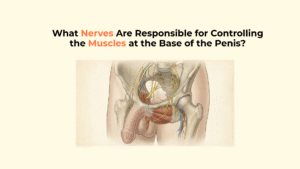
The true skeletal muscles associated with penile function, primarily the Bulbospongiosus Muscle and Ischiocavernosus Muscle, are not located within the pendulous shaft but at the internal root of the penis, within the pelvic region (perineum).
Their location at the base (or root) of the penis, deep within the pelvic floor, means they are physically separate from the shaft itself, which is composed of erectile tissue.
How Do These Base Muscles Support Penile Function?
These base muscles support penile function by contracting to enhance rigidity during erection and by undergoing rhythmic contractions to expel semen during ejaculation.
- Ischiocavernosus Muscle: Contraction of this muscle compresses the crura (the internal roots of the Corpora Cavernosa) against the pelvic bone. This action traps blood and increases intracavernosal pressure, which is essential for achieving and maintaining maximum rigidity.
- Bulbospongiosus Muscle: This muscle is crucial for bulbospongiosus function. Its contraction compresses the bulb of the penis (the internal root of the Corpus Spongiosum), aiding erection by compressing veins and, more visibly, providing the rhythmic pumping action necessary for the forceful expulsion of semen during ejaculation.
Comparison Matrix: Erectile Tissue vs. Skeletal Muscle
This table provides a direct comparison highlighting the fundamental differences between the erectile tissue found in the penis shaft and typical skeletal muscle.
| Feature | Erectile Tissue (in Penis Shaft) | Skeletal Muscle (e.g., Biceps) |
|---|---|---|
| Primary Composition | Spongy tissue with blood sinusoids | Bundles of contractile muscle fibers |
| Mechanism of Action | Engorgement with blood (hemodynamic) | Contraction and relaxation (mechanical) |
| Voluntary Control | No direct voluntary control | Direct voluntary control |
| Primary Function | To become rigid for sexual function | To produce movement by pulling on bones |
Conclusion: Not Muscle, But a Specialized Hydraulic System
In conclusion, the anatomical facts confirm that the penis shaft is definitively not a muscle; its erectile function relies on a sophisticated hydraulic mechanism involving specialized spongy tissues. Erection is a hydraulic process (blood engorgement) driven by the unique properties of erectile tissue (Corpora Cavernosa and Corpus Spongiosum), involving critical smooth muscle relaxation.
While true skeletal muscles (the Bulbospongiosus Muscle and Ischiocavernosus Muscle) are essential for supporting erection rigidity and enabling ejaculation, these muscles are located separately at the base of the penis, not within the shaft itself. Understanding this distinction is key to comprehending the precision and complexity of true penile anatomy and function.
Glossary of Clinical Terms
To ensure full clarity, this glossary defines the key anatomical terms used throughout this guide.
| Term | Definition |
|---|---|
| Erectile Tissue | A type of spongy tissue rich in vascular spaces (sinusoids) that fills with blood flow to cause an erection. |
| Skeletal Muscle | Voluntary muscle tissue (like a bicep) that contracts to produce movement. The penis shaft does not contain this. |
| Smooth Muscle | Involuntary muscle found in blood flow vessels and organs. The relaxation of smooth muscle in the penis is what causes an erection. |
| Corpora Cavernosa | The two main erectile tissue chambers in the penis shaft that hold 90% of the blood and create rigidity. |
| Corpus Spongiosum | The single erectile tissue chamber that surrounds the urethra to keep it open during an erection. |
| Bulbospongiosus Muscle | A skeletal muscle at the base of the penis that contracts rhythmically to cause ejaculation. |
| Ischiocavernosus Muscle | A skeletal muscle at the base of the penis that contracts to create maximum erectile rigidity. |
One Response