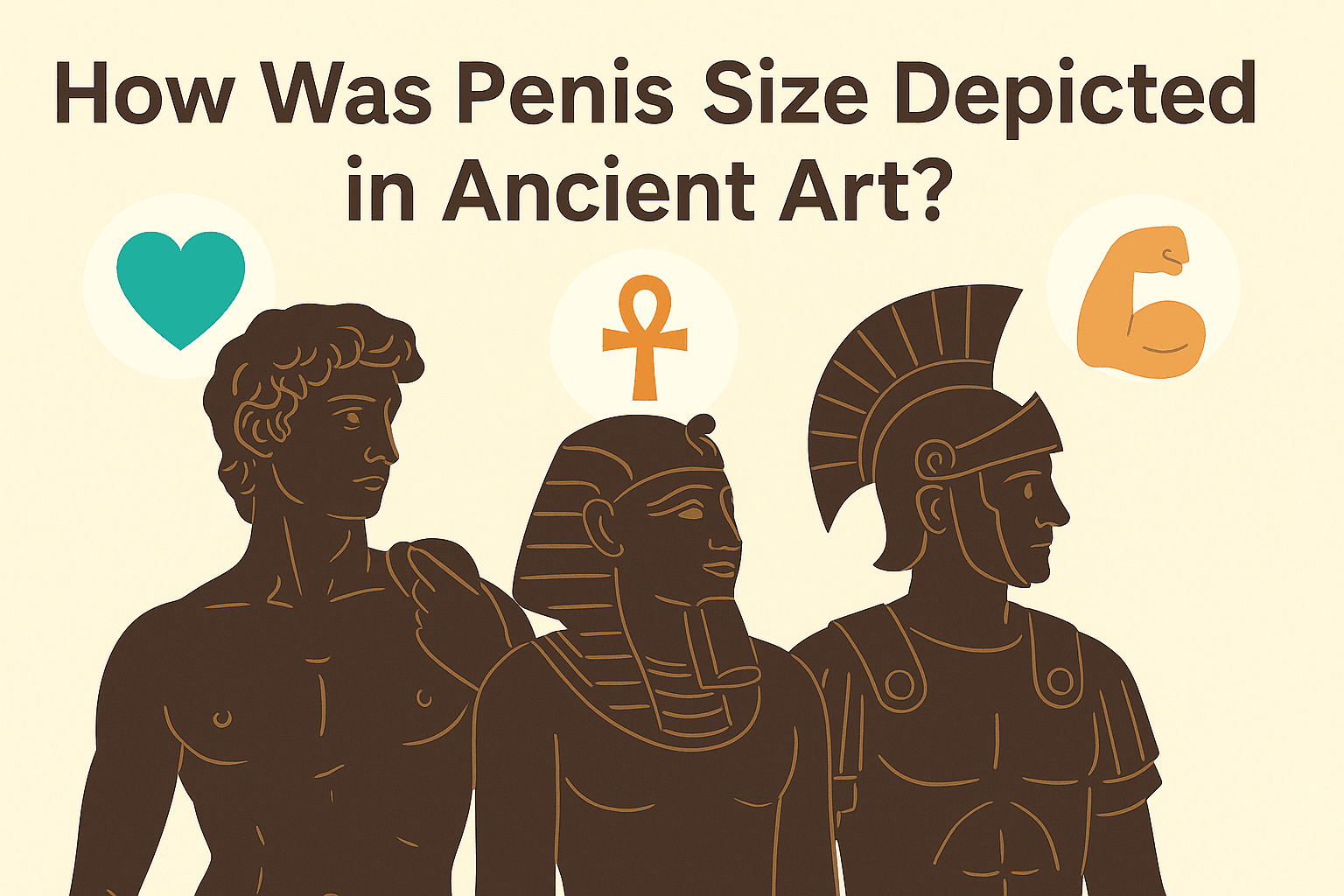
How Was Penis Size Depicted in Ancient Art?
The penis size depicted in ancient art, particularly in classical Greece, was a deliberate symbolic choice where smaller, non-erect genitalia represented the ideal virtues of rationality and self-control, while larger sizes were used to signify negative traits like lust and barbarism.
A tour through any museum of classical sculpture reveals a striking consistency in this artistic choice, presenting a physical ideal that stands in stark contrast to changing perceptions of the ideal in modern cultural standards.
This deliberate approach to the “penis size depiction in ancient art” was not about anatomical accuracy but was deeply rooted in the philosophical and cultural values of the time.
This guide provides a detailed analysis of how penis size was depicted in ancient art. We will examine the artistic standards for ideal figures like heroes, and contrast them with the depictions of mythological creatures and comedic characters.
By focusing on visual evidence and cultural interpretation, we can understand that the “penis size depiction in ancient art” was a key part of a complex symbolic language used to communicate the inner character of the subject.
Why Was the Depiction of Penis Size a Deliberate Choice in Ancient Art?
The depiction of penis size in ancient art was a deliberate choice, not an attempt at realism, because art was a primary medium for expressing cultural values, the nude male form was the pinnacle of ideal expression, and symbolism was consistently prioritized over anatomical accuracy.
Understanding these three principles is essential to interpreting why ancient artists made such consistent choices regarding the perceptions of the ideal penis, which often aligned with the average penis size of their era.
Art as a Reflection of Cultural Values
For the Ancient Greeks, art was not merely for aesthetic beauty but was a powerful medium for expressing and reinforcing their highest cultural values, such as reason, balance, harmony, and intellectual self-control, which were all reflected in the idealized human form.
Sculptures heroes were meant to be didactic, teaching the public about the virtues they should aspire to.
This value-driven approach meant that every detail of the sculpture, from the facial expression to the musculature, was carefully considered to communicate a specific message. This same philosophical rigor was applied to every aspect of the depiction of penis size in ancient art.
The Nude as the Ideal Human Form
The nude male figure was considered the pinnacle of artistic expression in Ancient Greece, meaning every part of the anatomy, including the genitals, was subject to specific and rigorous aesthetic and symbolic rules designed to represent an ideal, not a common, form.
From the early depictions of the flaccid penis in historical paintings, we can see how ideals evolved over time. kouros statues to the classical masterpieces of the 5th century BC, the male nude was the primary vehicle for exploring concepts of beauty, order, and human potential.
Because this form was so highly idealized, no feature was rendered casually or without purpose, similar to how ancient Greek sculptures have small penises to convey specific ideals.
This is why the penis size depicted in ancient art was so standardized; it was an integral part of this carefully constructed ideal reflecting the perceptions of the ideal penis.
Symbolism Over Realism
The primary goal of classical artists was symbolism over realism; they were not attempting to create a photorealistic copy of an average man, but rather to depict an idealized form where each physical feature, including penis size, symbolized a specific inner virtue or vice.
The physical body in Greek art served as a metaphor for the soul or character of the individual being portrayed, often reflecting the average penis size of the time and the perception of ideal penis size.
A calm, rational mind was reflected in a balanced, harmonious male body. Therefore, the “penis size depicted in ancient art” must be interpreted through this symbolic lens, where physical attributes are visual signifiers of internal qualities.
How Was the Ideal Penis Size Depicted in Ancient Greek Art?
The ideal penis size depicted in Ancient Greek art for revered figures like heroes, and athletes was consistently small, non-erect, and well-proportioned, a deliberate artistic choice meant to symbolize their divine rationality and civilized self-mastery.
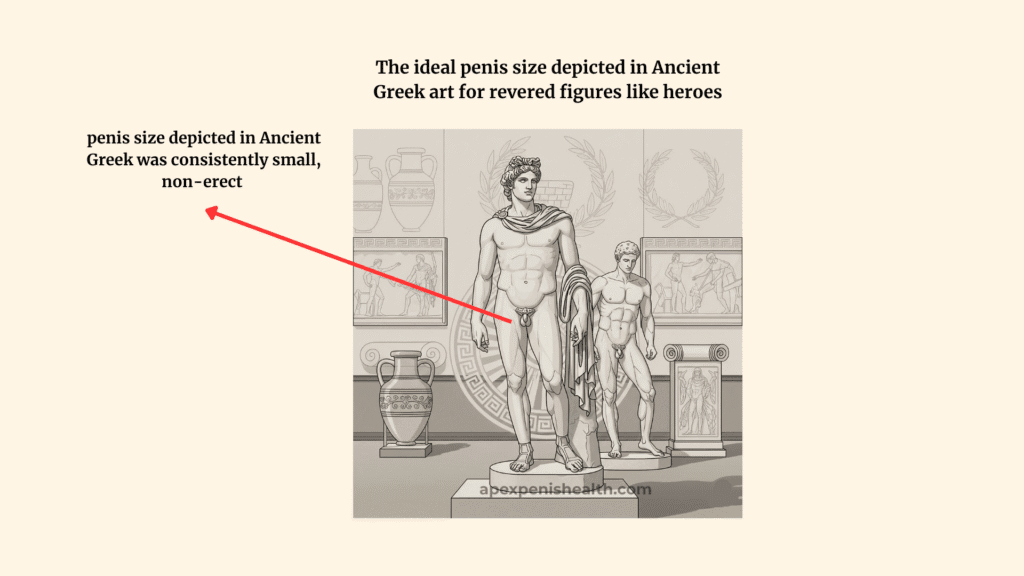
This standard is visible across countless surviving works and was central to the artistic representation of the ideal male, particularly in relation to the size of the penis.
The Depiction on Heroes
Major works of Greek sculpture consistently show heroes such as Heracles with small, non-erect, and proportioned penises to visually underscore their ideal nature, separating them from the base concerns of mortals.
For instance, the serene quality of Laocoön captures the essence of the idealized form. Apollo Belvedere or the powerful Farnese Hercules Both adhere to this standard, much like the depictions found in Michelangelo’s David, which highlight the significance of penis length in relation to character.
This depiction of penis size in ancient art was not a sign of weakness but of ultimate strength and control, as evidenced in works like Michelangelo’s David, which assess the ideal penis size.
It was a visual marker of their divinity and heroic status, signifying that they were governed by intellect, not carnal desire.
The Artistic Emphasis on Restraint
This artistic choice to depict a smaller penis size was meant to symbolize the subject’s divine rationality, emotional restraint, and complete self-mastery, visually demonstrating that they were above common human lusts and base instincts.
In Greek philosophy, the ideal man was one who could control his impulses through reason. The small penis became the visual shorthand for this triumph of mind over body.
It was a key component of the “ideal penis size depiction in ancient art” because it perfectly captured this core cultural virtue of sophisticated self-control, particularly in relation to the male body.
The Depiction on Athletes
Statues of victorious athletes, who represented the ideal Greek citizen in both physical and moral excellence, were also consistently depicted with smaller genitalia to align them with the virtues of discipline, moderation, and self-control.
Athletes were celebrated not just for their physical victories but for embodying the civic ideals of dedication and discipline (sophrosyne, or self-control, was a key virtue that influenced the perception of ideal penis size in ancient cultures.).
Therefore, their artistic depictions, including the “penis size,” needed to reflect these admired qualities, extending the divine and heroic ideal to the realm of idealized mortal men.
How Was a Large Penis Size Depicted in Ancient Art to Symbolize Negative Traits?
In direct contrast to the ideal, a large penis size was depicted in ancient art to symbolize a range of negative traits, including unrestrained lust, foolishness, drunkenness, and a lack of civilized self-control, often associated with non-Greek “barbarians” or bestial figures.
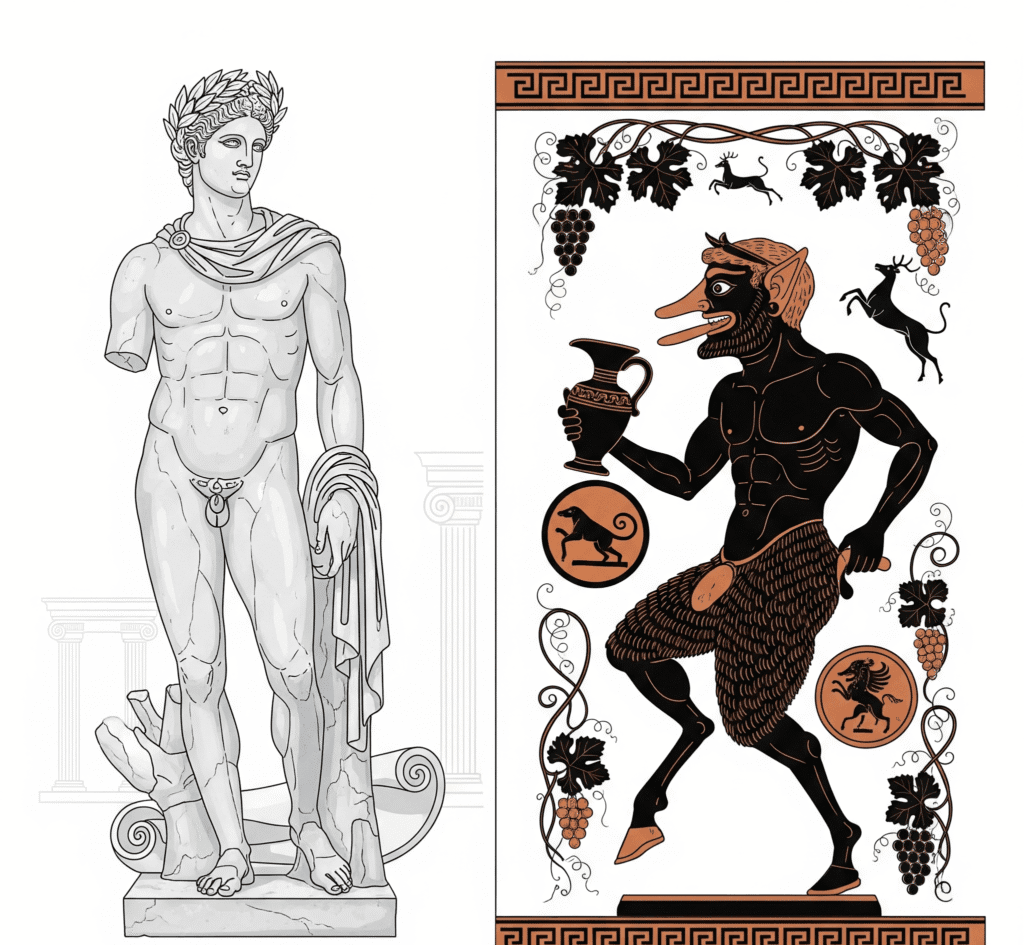
This artistic contrast created a clear visual binary: small genitals for the civilized ideal, and large genitals for the uncivilized anti-ideal, reflecting the average penis size in ancient Greek sculptures.
The Depiction on Satyrs and Lustful Figures
This anti-ideal is exemplified in the depiction of satyrs, who were always sculpted and painted with large, erect penises to visually represent their defining characteristics: unrestrained lust, drunkenness, and a complete lack of civilized control.
As companions of Dionysus, the god of wine and revelry, satyrs were mythological figures who embodied the base instincts and animalistic impulses that the ideal Greek man sought to master.
Their exaggerated genitalia made their character instantly recognizable, serving as the clearest example of how the “penis size depiction in ancient art” was used to symbolize negative traits.
The Use in Comedic Theatre
In Greek comedies, the use of the phallus prop an exaggerated, oversized leather phallus was a common device worn by actors playing foolish, boastful, or clownish characters to generate laughter and visually mock their lack of seriousness and self-control.
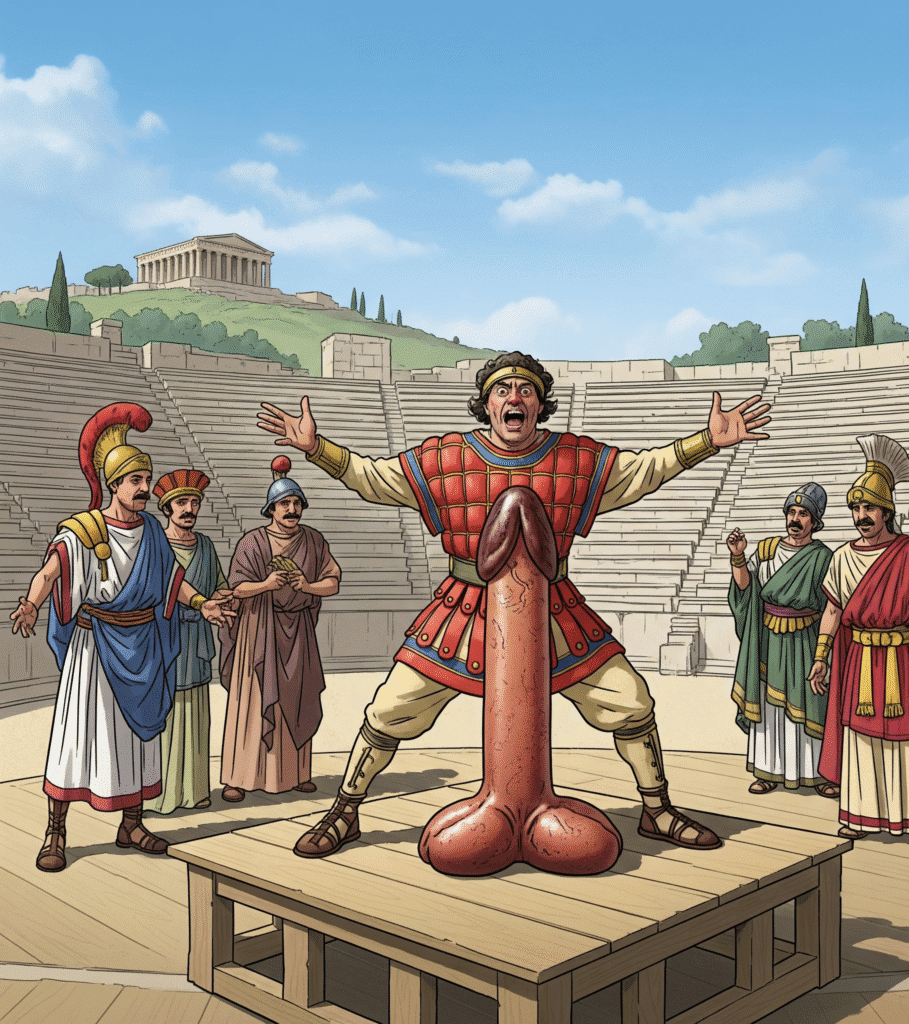
This theatrical device demonstrates how deeply ingrained the association between a large penis and foolishness was within the culture, particularly in paintings in which the penis was exaggerated.
The prop was not meant to be erotic but comical, linking exaggerated sexuality directly to buffoonery and a lack of the gravitas expected of a serious citizen.
The Depiction of “Barbarians”
Non-Greek figures, often termed barbarians by the Greeks, were sometimes depicted in art with larger genitalia to visually differentiate them from the civilized Greek ideal and to associate them with a more primitive, uncontrolled nature.
This artistic choice was a form of cultural “othering,” creating a clear visual boundary between the rational, self-controlled Greek and the supposedly lustful, uncivilized foreigner, highlighting the changing perceptions of the ideal.
In this way, the “penis size depiction in ancient art” was also used to reinforce a sense of cultural superiority and to visually codify their own societal values against those of outsiders, contrasting with the depictions of penises in historical paintings.
Symbolic Depiction of Penis Size in Ancient Greek Art
| Artistic Subject | Depiction of Penis Size | Symbolic Meaning in Art and the perception of penis size in historical paintings. |
| Gods, Heroes, Athletes | Small, non-erect, proportioned, much like the flaccid penis often depicted in historical paintings. | Idealism, rationality, self-control, civilization, and the perception of ideal penis size were all interwoven in the art of the time. |
| Satyrs, Comedic Fools | Large, erect, exaggerated forms were often depicted, contrasting with the average penis size seen in many ancient Greek sculptures that presented a more realistic portrayal of the flaccid penis. | Lust, foolishness, lack of control, and perceptions of the ideal penis are prevalent themes. |
What Are the Key Takeaways on How Penis Size Was Depicted in Ancient Art?
The key takeaways on how penis size was depicted in ancient art are that ideal figures were deliberately shown with small genitalia to symbolize virtue, negative figures were given large genitalia to symbolize vice, this was a conscious symbolic choice over realism, and this classical standard persisted for centuries.
Understanding the Artistic Rules of Ancient Depictions
☐ Ideal Figures Were Shown Small: In classical art, revered subjects, particularly men in classical depictions, have small penises to symbolize virtue.
☐ Negative Figures Were Shown Large: Uncivilized or foolish characters were given large genitalia to symbolize vice, contrasting with the depictions of penises in historical art.
☐ It Was a Symbolic Choice: Artists were not aiming for realism but were using anatomy to tell a story about the character’s inner nature.
☐ This Standard Persisted for Centuries: This classical ideal was revived during the Renaissance.
Conclusion
In conclusion, the way penis size was depicted in ancient art was a deliberate and consistent symbolic system where small size represented the ideal virtues of civilization and self-control, while large size represented the negative traits of lust and foolishness, a standard entirely opposite to modern ideals.
The vast body of surviving sculptures and vase paintings provides primary evidence that these ancient, influential cultures did not share the modern bigger is better ideal, often depicting the size of the penis in a more nuanced manner. Instead, they used anatomy as a sophisticated visual language to communicate complex ideas about character, culture, and the human condition, similar to the subtlety found in Michelangelo’s works.
Understanding the symbolism in ancient art provides a powerful perspective on how our own cultural ideals, including the perception of ideal penis size, are constructed and how dramatically they have changed over time.